


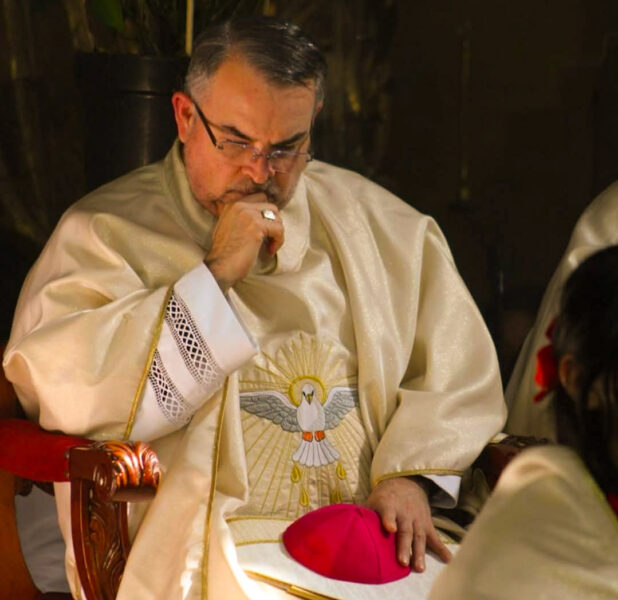
At the start of 2026, Carlos Garfias Merlos, Archbishop of Morelia, presented the canonical obligation of resignation due to age that should be accepted by Pope Leo in the coming days, although his succession represents an atypical tone since, from last March, it is known who will be his successor and as Garfias himself affirmed, with that decision all speculations and tensions that the change in an archdiocese as important as Morelia represents would end.
Nothing could be truer. In a country where the Catholic faith permeates the daily life of more than 100 million faithful, the Mexican Church finds itself at a particular moment due to the upcoming formation and configuration of the geography and ecclesiastical map of Mexico. The figures are timely to understand the scope of the successions that are emerging with interesting renewals that by 2027 could represent up to more than a quarter of the total bishoprics in the country.
In 19 archdioceses, 73 dioceses, and 4 territorial prelatures, the active episcopate consists of 18 archbishops, 68 bishops, three prelates, and 23 auxiliaries. This group faces an unprecedented generational turnover, with nearly a quarter of the total ecclesiastical circumscriptions entering a transition process between 2025 and 2027. The successions not only imply administrative changes, but also represent an opportunity to revitalize pastoral care in a context of social challenges such as violence, migration, educational changes, or the progressive secularization that is changing the way faith is lived.
The panorama is clearly outlined in the age statistics of the episcopate. The average age of active bishops is 67 years, with a median of 65, which reflects mature leadership but aging rapidly without taking into account the effects of illnesses as happened with the Archbishop of Tijuana, Francisco Moreno Barrón, who died of cancer at 71 years old.
Among the critical aspects, the group of bishops who have presented or will present resignations due to canonical age stands out. Born between 1949 and 1950, they represent 9 circumscriptions (8.49%), with resignations pending papal acceptance. For 2026, 7 more are added (6.60%), born in 1951, raising the total to 16 (15.09%) in immediate transition. Projecting to 2027, with 6 born in 1952 (5.66%), the cumulative reaches 29 circumscriptions (27.36%) to which 7 vacant sees (6.60%) are added, such as the Archdiocese of Tijuana and dioceses like Atlacomulco, Campeche, Ciudad Altamirano, Ecatepec, Tampico, and the Prelature of El Salto. In the 19 ecclesiastical provinces, 6 of 18 active archbishops (33.33%) have resigned or will resign between 2024 and 2026, which could reconfigure the map of the provinces.
Among them, there are two figures who stand out, not only for being important ecclesiastical heads like the influential Cardinal José Francisco Robles Ortega, Archbishop of Guadalajara (born March 2, 1949) or the overshadowed Carlos Aguiar Retes, Primate Archbishop of Mexico (January 9, 1950) who, however, have seen the prolongation of their episcopal governance which, in some way, may have been due to the juncture opened by the death of Pope Francis and the succession of Leo XIV. To them is added another factor: They are the two active cardinals with voting rights in a conclave. This is noteworthy because the Church becomes a potential candidate to have a new cardinal with the right to be in a conclave, the first from the new Pope for Mexico. Francis, on the contrary, bestowed most of the birettas on emeritus bishops as recognition for their pastoral merits.
Other important archdioceses also enter the game of successions; awaiting the relay are Leopoldo González González, Archbishop of Acapulco (October 29, 1950), Víctor Sánchez Espinosa, Archbishop of Puebla (May 21, 1950), and Pedro Vázquez Villalobos, Archbishop of Antequera Oaxaca (September 16, 1950), demarcations that also have significant weight due to their historical and political tradition in their relations with temporal power.
On the other hand, in 2025, seven residential bishops sent their resignation letter to the apostolic nunciature to be processed in Rome, and those who will turn 75 in 2026 are added, born in 1951, the bishops of 7 circumscriptions (6.60%). These are Carlos Garfias Merlos, Archbishop of Morelia (January 1, 1951), with a coadjutor appointed, who reached the age on January 1, followed by Miguel Ángel Alba Díaz of La Paz (January 23), also with a coadjutor ready to assume the bishopric; Rogelio Cabrera López, Archbishop of Monterrey (January 24). They continue with Julio César Salcedo Aquino, Bishop of Tlaxcala (April 12), Rutilo Muñoz Zamora, Bishop of Coatzacoalcos (June 4), Juan Pedro Juárez Meléndez, Bishop of Tula (June 26) and Sigifredo Noriega Barceló, Bishop of Zacatecas (October 12).
On the other side of the coin is the largest segment, those of the generation born between 1960-1969, 44 bishops (36.67%), with average ages of 60.5 years as of January 6, 2026. Those with the broadest influence due to their pastoral activity, such as the Bishop of Cuernavaca, Ramón Castro Castro, president of the CEM (1956) or the Bishop of Apatzingán, Cristóbal Ascencio García, (1955), for challenging the difficult situation in Michoacán, are on the threshold of 70 years; however, Jaime Calderón Calderón, Archbishop of León and vice president of the CEM (1966, 59) and bishops like Jorge Cuapio Bautista of Iztapalapa (1967, 58) are representatives or bridges in the «transition core» of bishops toward their sixties.
But what about the young bishops? In contrast, there is a discreet but emerging young relay. The bishops born between 1970 and 1978 total 18 (15%), with 5 incumbents like Jesús Omar Alemán Chávez of Cuauhtémoc-Madera (1970, 55 years), Guadalupe Antonio Ruíz Urquín of Huautla (1971, 54), Roberto Yenni García of Ciudad Valles (1972, 53), Oscar Efraín Tamez Villarreal of Ciudad Victoria (1973, 52) and Carlos Enrique Samaniego López of Texcoco (1973, 52). The rest are auxiliaries, like Luis Alfonso Tut Tún of Antequera Oaxaca (1978, 47) and Carlos Alberto Santos García of Monterrey (1976, 49). This group, with ages between 47 and 55, represents a bet on leaders formed in post-conciliar contexts, more exposed on social networks, sensitive to cultural diversity and digital challenges.
However, the main quarry is in the active auxiliaries, key in this transition. Of the 23 auxiliaries, thirteen are from the 1970s generation, the youngest being Luis Alfonso Tut Tún, auxiliary of Antequera-Oaxaca (1978) and ordained to the episcopate in 2024, and others could be good relays in vacant dioceses or archdioceses like the auxiliaries of Mexico Andrés Luis García Jasso, (1973), ordained bishop in 2021 and Luis Manuel Pérez Raygoza (1973), who received episcopal ordination in 2020; Francisco Figueroa Fernandez, auxiliary of Zamora (1975), consecrated in 2021; Héctor Mario Pérez Villarreal, current general secretary of the CEM, auxiliary of Mexico (1970) elevated to the episcopate in 2020 or Francisco Javier Martínez Castillo, auxiliary of Puebla (1974) made bishop in 2024.
In conclusion, this generational turnover poses profound challenges for the renewal of the Mexican Episcopate toward the great jubilees. The Global Pastoral Project (PGP), presented by the CEM in 2018, seeks an encounter with Jesus the Redeemer under the gaze of Guadalupe, encompassing the 500th anniversary of the apparitions (2031) or the 2000 years of the Redemption (2033). This framework demands strengthening pastoral structures, promoting vocations, and addressing deficits in integral formation. The challenges include vocational scarcity—with declines in seminaries—, the need for culturally sensitive bishops in dioceses with new realities, and the emergence of digital challenges in which young people move, adaptation to issues like migration and the construction of peace.
Prolonged vacancies could interrupt programs, but they could also displace the urgency of changes in the face of pastoral disasters and paralysis as happens in the Archdiocese of Mexico. Perhaps a good example of that generational transition and even charisma is in the Diocese of Cancún-Chetumal with the rise of Salvador González Morales (1971) and ordained bishop in 2019, who ended the era of the Legionaries of Christ and will imprint a new dynamic that, at least, could last twenty years.
And the Church does not seem to be in a hurry to find the appropriate profiles. The previous arguments demonstrate that in addition to the scarcity of bishops, specific formation to create new prelates is not a common subject in Seminaries or in the ongoing studies of the clergy; you raised the idea that the main quarry are the auxiliaries or that vacancies are filled by leaving others without a pastor when, from the presbyteries, the pastors that the holy people of God needs should be taken.
Toward the jubilees of 2031 and 2033, the renewal must prioritize continuing education, permanent and serious formation, clerical health, priestly virility, and digital evangelization, in addition to forging holiness by transforming this turnover into a milestone of Guadalupan vitality for a missionary Mexican Church, but above all, of pastors who, as John Paul II said, the first Pope to visit Mexico in 1979, when those bishops of the seventies were still children, will depend “in good part on the fate of the Church in the sectors entrusted to their pastoral care” and that imposes on them “a profound awareness of the greatness of the mission received and of the need to adapt more and more to it” because they, as the Polish Pope affirmed, “are the people who have made the Gospel a profession of life”. (John Paul II, January 27, 1979, Basilica of Guadalupe).