In the midst of a landscape marked by charred vehicles and the echo of recent clashes, dozens of faithful gathered on February 27, 2026, to participate in a procession for peace, presided over by the bishop of Apatzingán, Cristóbal Ascencio García. This manifestation of faith not only commemorated the 60th anniversary of Colegio Las Américas, but also became a symbol of resistance and spiritual hope in the face of the wave of violence unleashed following the capture and death of the leader of the Cártel Jalisco Nueva Generación (CJNG) on February 22. In a municipality that has suffered profound material and emotional damage, the procession reminded that hope can prevail over fear.
The violence erupted immediately after the military operation that resulted in the death of «El Mencho» in Tapalpa, Jalisco. CJNG members responded with a wave of coordinated attacks in at least 20 states, including Michoacán, Jalisco, Guanajuato, and Colima. In Aguililla, the cartel leader’s hometown, road blockades and vehicle fires turned the streets into scenes of chaos. Authorities reported more than 250 blockades across the country, with burned vehicles obstructing highways and leaving columns of black smoke on the horizon. In Michoacán specifically, at least 14 deaths were recorded, including seven National Guard members, during the subsequent clashes.
Images captured in the following days show carbonized cars along roadsides in Aguililla, such as those that blocked access to the municipal seat, and burned letters forming the name of the town, a symbolic act of intimidation by the cartel. Residents described nights of terror, with shootouts and the forced closure of businesses.
«I’ve seen charred cars along the road… here at the combi station also charred…, on the street cars likewise,» recounted Bishop Ascencio in his homily, reflecting the direct impact on daily life. People stopped working out of fear, and the emotional trauma affected children and adults alike. Questions like «Is there anyone who will pay for those damages to their burned vehicles, for those who didn’t work because they weren’t allowed to?» echoed in the community, highlighting the injustice and impunity that accompany these events.
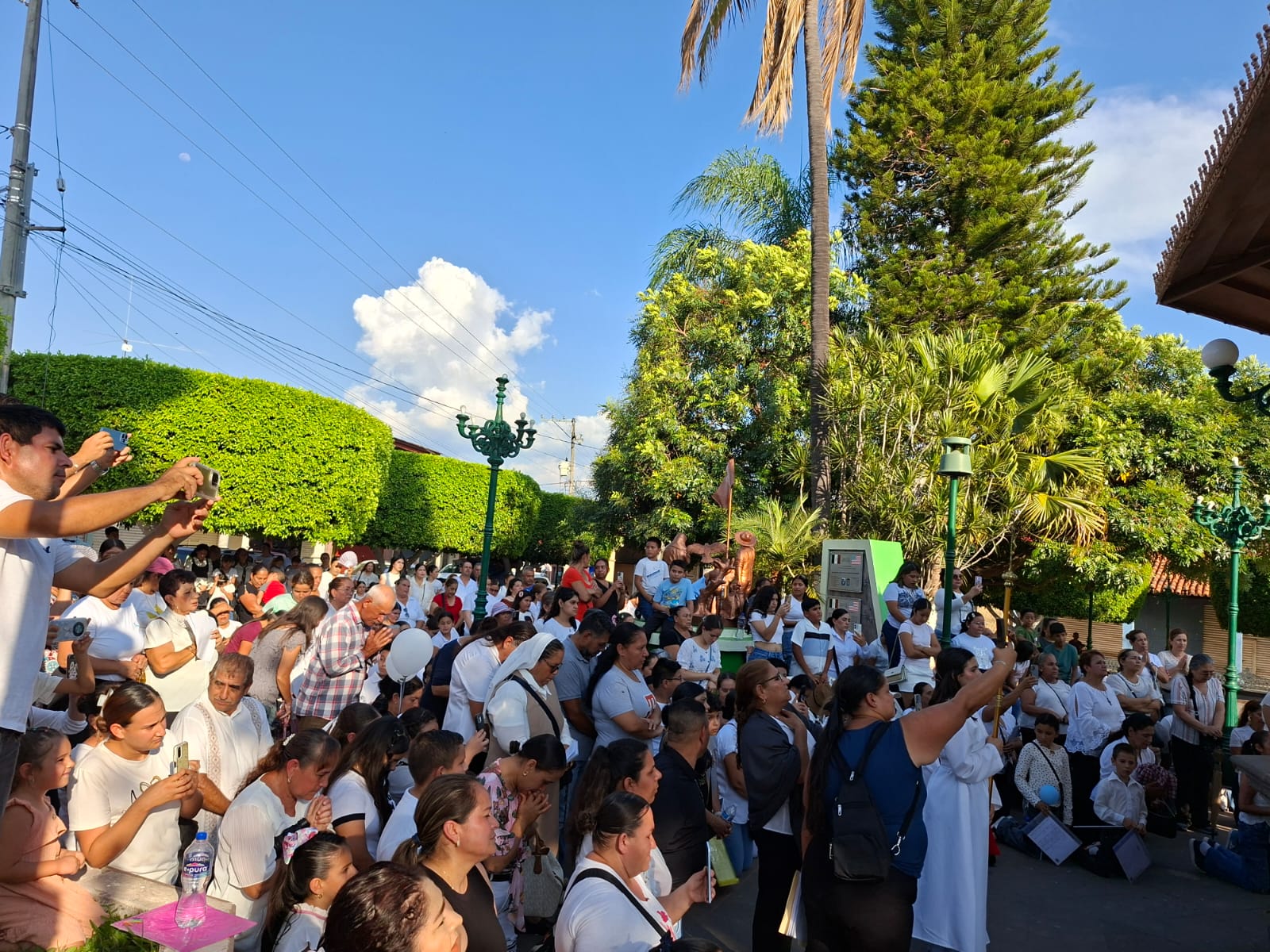
Despite this somber context, February 27 brought a ray of light. The procession began at Colegio Las Américas around 4 p.m. with the Blessed Sacrament. Led by Bishop Cristóbal Ascencio García and accompanied by priests from the diocese of Apatzingán, the procession traversed the main streets of the municipal seat. Some sources estimate nearly 250 people dressed in white as a symbol of peace joined the march, singing hymns and praying for reconciliation. The march culminated in the main square, where the bishop gave a solemn blessing, and afterward a mass for peace was celebrated in the parish church of Our Lady of Guadalupe.
The church was packed with devotees, transforming the space into a refuge of peace and hope. In his homily, Bishop Ascencio emphasized that «peace in Mexico, in Aguililla, begins with your decision and mine not only not to harm someone but also to tolerate it, but also with our decision not to be indifferent to evil and the suffering of others.» He acknowledged the local suffering: «You have suffered damages, injustices… I’ve seen charred cars along the road… people who have stopped working, the emotional harm of fear to children and adults.» He invoked Lent as a time of reconciliation, urging to «fast from quarrels and discord, let us strive to forgive. Fasting from discord and revenge means choosing Peace even if it costs… Forgiveness is not weakness, it is freedom, it is the bridge that restores peace to us and returns joy to us.»
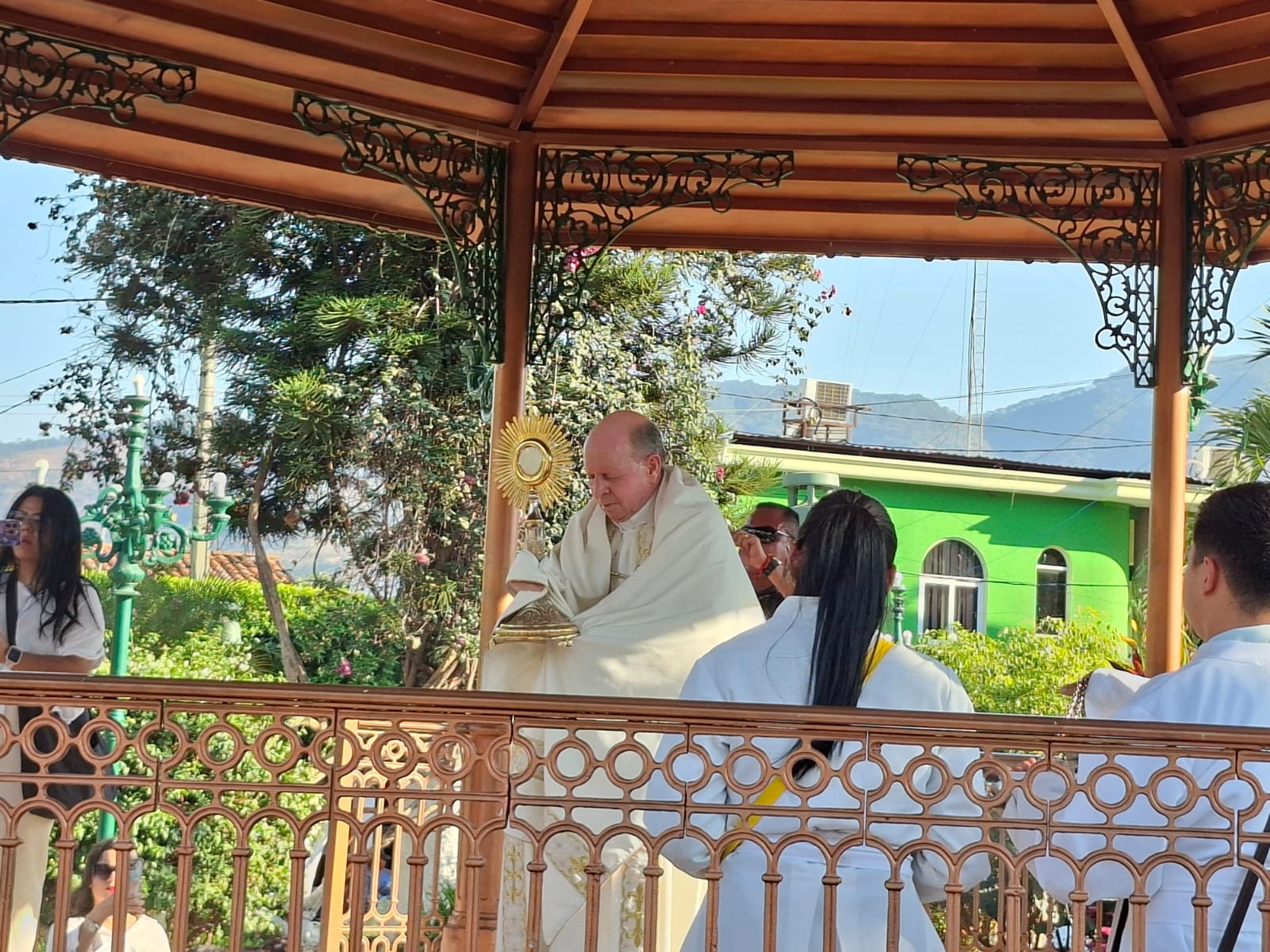
Ascencio also quoted reflections from the weekly message of Cardinal Felipe Arizmendi, emeritus bishop of San Cristóbal de las Casas, from February 25: «Let the government do what it must, we offer Jesus Christ as a guarantee of a new homeland… where we are all brothers, incapable of harming others, respectful and supportive of all. We have the treasure of Jesus Christ, way, truth, and life. We have no gold or silver, much less armies to protect the people, but we have what can give a different meaning to life and society.»
In the Gospel of the day, the bishop recalled the words of Jesus mentioning: «It is not enough not to kill, but it is necessary to uproot from the heart the root of violence: resentment, ambition, and contempt. Reconciliation with the brother becomes a priority even before worship. Lent is a time of conversion, to convert is to return to the God of life.»
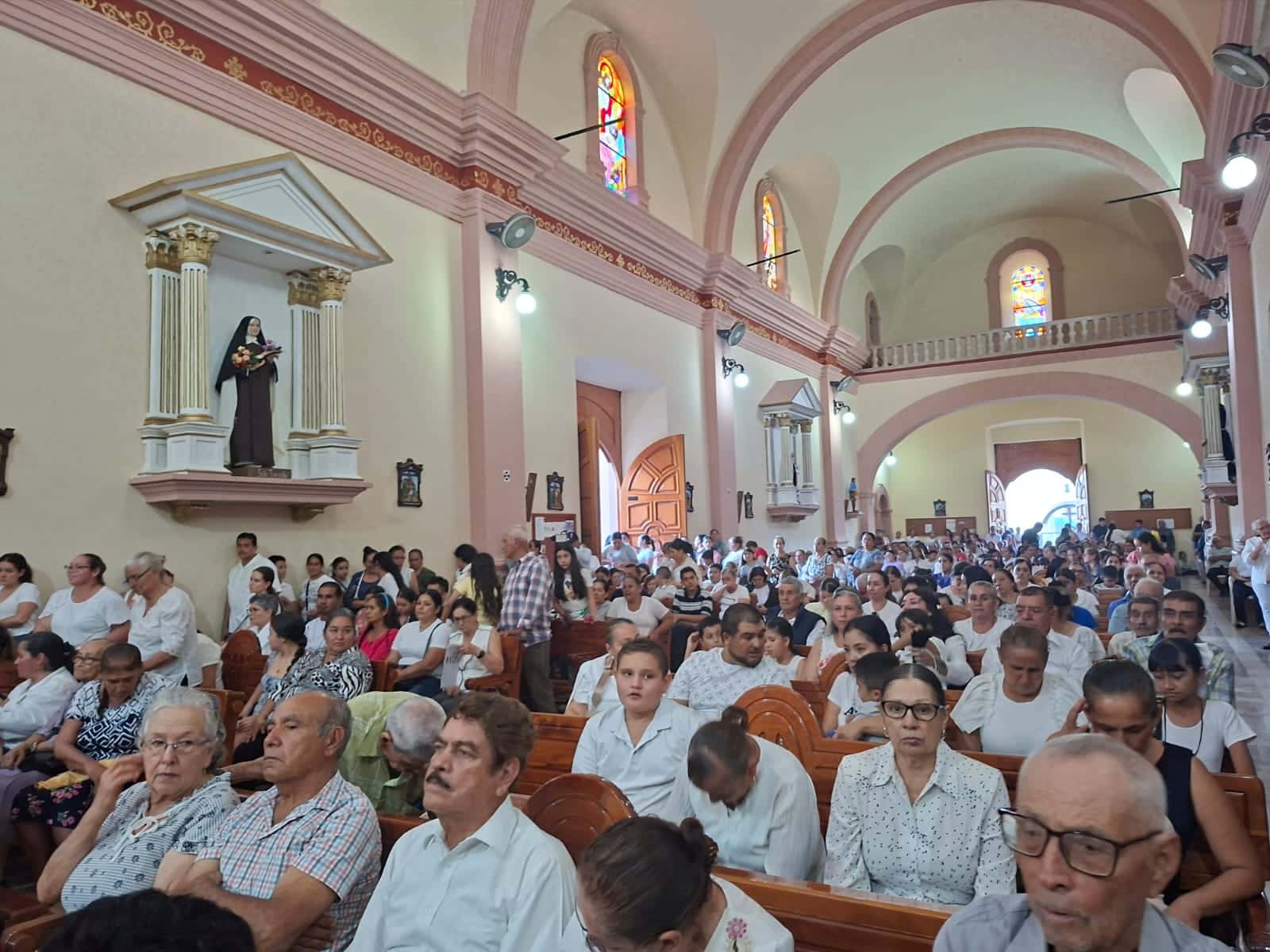
The participation of the faithful was notable. Entire families, including children and the elderly, joined the blessing in the public square, a public act of faith that contrasted with the isolation imposed by the violence days before and now dressed in white as a symbol of peace. The event was not only a collective prayer, but a call to community action, highlighting aspects of joy despite the «violent hours» following the detention of «El Mencho.»
This type of procession is not new in regions plagued by organized crime. The Catholic Church in Mexico has played a fundamental role in peace efforts, as evidenced by similar initiatives in other dioceses. In Aguililla, where the CJNG has disputed territories with rival groups like Los Viagras, the presence of Bishop Ascencio represents spiritual accompaniment to the holy people of God.
The Aguililla procession sends a clear message: violence, though devastating, does not define the spirit of its people. In the words of the bishop, «Where there is reconciliation, the Kingdom of God begins to become visible.» As the smoke from the fires dissipates, the hope for lasting peace ignites in the hearts of the inhabitants, reminding that, in the midst of chaos, the people walk with faith.