


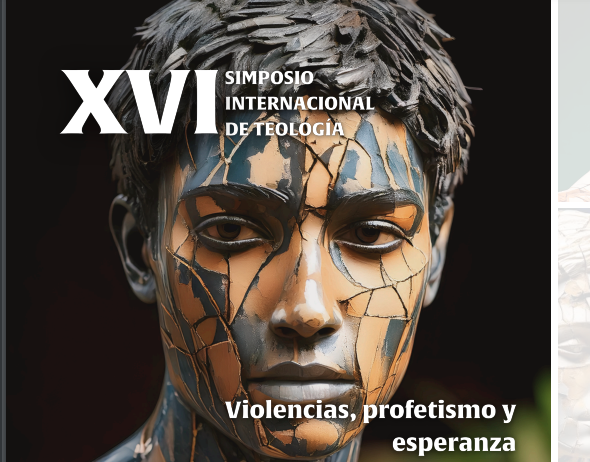
In a context where violence permeates various aspects of Mexican society, the Universidad Iberoamericana (UIA) in Mexico City is preparing to host the XVI International Theology Symposium, an event that will bring together experts in theology, social sciences, and activism to analyze, resist, and counter this issue from interdisciplinary perspectives. The symposium, titled «Violences, Prophecy, and Hope: A Response for Peace from Faith and Commitment», will take place from September 9 to 11 in the Crescencio Ballesteros Auditorium of Building F, Ground Floor, and aims to foster an ecumenical dialogue that contributes to the construction of peace.
The event, organized by the Department of Religious Sciences at the UIA, arises as a response to the erosion of the social fabric caused by multiple forms of violence in Mexico. According to the official description, the symposium emphasizes the need for a socio-analytical mediation, incorporating contributions from disciplines such as anthropology, philosophy, political science, and sociology, to then interpret these realities from the Christian theological perspective, including biblical, systematic, ethical, and pastoral approaches.
The symposium is divided into three thematic days, each designed to delve into specific aspects of violence and its antidotes:
Starting Tuesday, September 9, reflection will focus on Scenarios of Violence in Mexico* (from 9:00 to 14:00 hours). This inaugural session will explore the various contexts of violence affecting the country, directed toward vulnerable groups such as human rights defenders, migrants, women, religious actors, and the sex-gender community. The symposium's motivation will be provided by three distinguished speakers: Dr. Yves Bernardo Roger Solís Nicot, PhD in Social Sciences and History and expert in the history of the Catholic Church in Mexico; Dr. Humberto José Sánchez Zariñana, S.J., PhD in Theology with a specialty in Ecclesiology and full-time professor in the Department of Religious Sciences at the UIA; and Lic. Javier Ávila Aguirre, S.J., philosopher and theologian with extensive experience accompanying the Rarámuri people in Chihuahua, where he co-founded the Committee for Solidarity and Defense of Human Rights. The main lectures will be delivered by Lic. Ernesto López Portillo Vargas, lawyer and coordinator of the Citizen Security Program at the UIA, and Lic. Clara Jusidman Rapoport, economist and former coordinator of the Social Fabric Commission of the National Dialogue for Peace.
Wednesday, September 10: How to Resist Violence? Biblical, Theological, Ethical, and Pastoral Approaches (from 9:00 to 17:00 hours), will focus on historical and current resistance to violence from the Christian tradition, recognizing both internal violences within the Church and external ones in social contexts. With an interdisciplinary and ecumenical approach, proposals for building peace will be discussed. The panel will feature the participation of Dr. Mireia Vidal i Quintero, PhD in New Testament and coordinator of the Master's in Theology and Contemporary World at the UIA, Dr. Juan Esteban Santamaría Rodríguez, PhD in Education and Theologian, teacher at the Theological Formation Center of Javeriana University in Bogotá, Colombia, Dr. Nicolás Esteban Panotto, PhD in Social Sciences and Theologian, researcher at Arturo Prat University in Chile and director of the «Otros Cruces» network, focused on religion, politics, human rights, and democracy, and Mtro. Abel Rodríguez Pacheco, sociologist and theologian, collaborator in the Churches and Spiritualities Axis of the National Search Brigade for Disappeared Persons.
Thursday, September 11: Some Current Initiatives to Counter Violence in the Country (from 9:00 to 15:30 hours), closing day that will present concrete initiatives from ecumenical groups and social organizations promoting peace in Mexico with the aim of imagining alternatives of hope for interpersonal and planetary well-being.
Among the participants stand out Mtro. Jorge Atilano González Candia, S.J., master's in Social Ethics and Human Development, founder of CIAS for Peace and general coordinator of the National Dialogue for Peace, Dr. Ruhama Abigaíl Pedroza García, PhD in Social Anthropology and coordinator of the Planning and Monitoring Area for Social Projects at the Mennonite Central Committee of Mexico, Mtro. José Avilés Arriola, S.J., theologian with more than 40 years of experience as a parish priest in the Bachajón mission, Chiapas, accompanying the struggles of the Maya-Tzeltal people, Mtro. Santiago Aguirre Espinosa, lawyer and master's in Human Rights and Democracy, former director of the Miguel Agustín Pro Juárez Human Rights Center, Lic. Clara Torres Acevedo, S.M.C., theologian and religious sister of the Combonian Missionary Sisters, member of the Rahamim Network dedicated to preventing human trafficking, and Mtro. Conrado Bonifacio Zepeda Miramontes, S.J., master's in Social Anthropology and Theologian, member of the University Program on Migrations and the Scalabrini Center for Migration Studies at the Universidad Iberoamericana in Puebla.
This symposium not only seeks to diagnose scenarios of violence but also to inspire transformative actions based on faith and social commitment. As highlighted in the promotional materials, the event invites to «find paths and concrete proposals to imagine another possible world, especially in Mexico». The participation of international and local specialists underscores the global nature of the issue, while the ecumenical approach promotes inclusive dialogue.
For more information and registrations, interested parties can contact Dolores Barcenas at dolores.barcenas@ibero.mx. The XVI International Theology Symposium represents a key opportunity for academics, activists, and society in general to contribute to a more peaceful and just Mexico.
/blogs/blogs/wp-content/uploads/sites/3/2025/09/XVI-SIT-Panelistas-y-Conferencistas.pdf
Help Infovaticana continue informing