


VC Noticias / Mexico City. – On the hundredth anniversary of the start of the religious conflict in Mexico, the Ecclesiastical Province of Guadalajara issued a public message to guide the faithful on how to commemorate that period. To explain the scope of the document, priest and historian Armando González Escoto met with journalists in the country’s capital, organized by the Education and Culture Dimension of the Mexican Episcopate, where he detailed the keys to understanding the Cristero conflict without falling into extremism or ideological manipulations. The episcopal message, signed by Cardinal Francisco Robles Ortega and the bishops of eight dioceses in western Mexico, proposes a reading of the events that occurred between 1914 and 1929 based on rigorous historical sources and the Church’s magisterium. González Escoto emphasized that the text seeks to balance the narrative about a phenomenon that, he said, «has been greatly mythified, both positively and negatively.»
The causes of the conflict: beyond the Calles Law
González Escoto recalled that the Cristero War cannot be reduced to the implementation of the Calles Law in 1926. The conflict, he explained, had deeper roots: the crisis of authority stemming from the caudillista revolution, the religious persecution prior to the 1917 Constitution, the involvement of Catholics in the coup against Francisco I. Madero, and the support of the Archbishop of Mexico for Victoriano Huerta. To this was added, he noted, the resentment of anticlerical sectors for the privileges the Church received during the Porfiriato. “We must also understand that in that conflict, Catholics were not only victims; the Church at that time also made mistakes – such as the suspension of worship or partisan activity – that must be recognized and accepted in a very mature way,” González Escoto added.
Priest Eduardo Corral Merino, advisor to the Dimension, contextualized the relevance of a serene, broad, and proactive review: “When there are deaths – and here there were more than a hundred thousand –, we have to speak with great objectivity and above all looking to the future. So that this does not happen again. And it cannot happen again because the circumstances are totally different. We must always seek a better relationship between all the actors in society, particularly between the Church and the State.”
González Escoto pointed out that, although the 1917 Constitution established persecutory articles, not all bishops reacted in the same way. There were at least three stances among them: intransigence, peaceful resistance, and conciliation. This division, he said, is one of the aspects that must be analyzed in depth to carry out the centennial commemorative acts. “There are anniversaries that we cannot ignore because the importance of remembering them is not to repeat them; [therefore] from the Church’s perspective, we must be clear that we celebrate the martyrs, remember the Cristeros, and also remember so many people who suffered on both sides during that period,” the historian affirmed.
The Cristero War: a mistake for the majority of Catholics
One of the points most highlighted by González Escoto was the regional character of the armed uprising: «The Cristiada was not a national phenomenon,» he affirmed. It manifested in between twelve and fifteen states, but that was enough to affect the entire country. The cost in human lives, he recalled, is complex to calculate. It is known that on the part of the Mexican army there were around 50,000 casualties; and in the civilian population, around a hundred thousand people.
The priest emphasized that, at the time, the war was considered a grave mistake by the majority of Catholics, both in Mexico and abroad. Of the 34 Mexican bishops, only five supported the rebellion. The Vatican Secretary of State, he said, also disapproved of it. «War is a defeat for humanity,» González Escoto quoted, drawing on words from Pope Francis. The message from the bishops of Guadalajara incorporates that teaching as a permanent moral criterion: violence is not the way of the Gospel.
In addition, in remembrance of the peaceful resistance movement led also a century ago by the blessed Anacleto González Flores to foster the construction of political participation instances, the priest stated: “It is easier to take up arms than to democratically educate a society”. For this reason, he asked to value and take as an example the efforts of believers who sought to influence social transformation without resorting to arms, as was the custom of the time.
Martyrs and peaceful resistance
One of the most sensitive topics of the centennial is the difference between those who died in defense of their faith and those who participated in the armed struggle. González Escoto was categorical: not all can be called martyrs; but a just memory must be made of those who, in the particular post-revolutionary historical context of armed uprisings, rose up in defense of their faith.
The martyr, according to the criteria of the Holy See used for decades in canonization processes, is the one who did not take up arms, did not support the uprising, nor provoked his own death. In contrast, many of those who participated in the Cristero War, although they died for their faith, do not meet those requirements.
Regarding the end of the conflict or at least the arrangements reached between the government and the Catholic bishops in 1929, González Escoto recalled that the agreements included the government’s promise of amnesty for the Cristeros, a condition demanded by Pope Pius XI. That promise, however, was not kept by the government, which took more than seven years to fulfill its part, already during the presidency of Manuel Ávila Camacho.
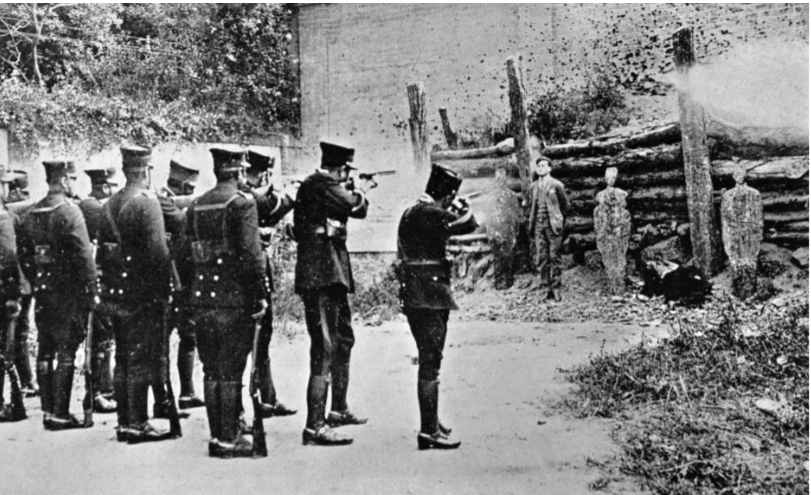
In that sense, the priest also considered it timely to recognize in this historical reconciliation the criminal excesses of the Mexican government; for example, he recounted the case after the Arrangements celebrated between the bishops and the government to lay down arms and the promise of amnesty to the insurgents, where the army continued to shoot down Cristeros who were surrendering their weapons: «The government would have to, if we enter into that plan, recognize that it committed that crime,” he affirmed.
Call for reconciliation and learning
The bishops’ message, González Escoto explained, does not seek to reopen wounds, but to heal those that remain open. To that end, it proposes knowing the facts with objectivity, accepting that both the Church and the government made mistakes, and identifying the values that emerged in that period, such as the defense of religious freedom and the witness of faith.
In the present, the priest called for education as a fundamental tool to avoid ideological manipulation. And the opportunity to commemorate this centennial is useful for contemporary Mexico. In the words of Corral Merino, the Church in its magisterium has insisted on a collaborative secularism: “The relationship between the Church and the State must always be collaborative, always constructive, precisely because there is a division between the State and the churches, there is an autonomy of temporal realities in the State and we have a particular sphere proper to religions: the transcendent, the eternal, etc. So each one must occupy its place with careful respect and above all distinguishing very well our respective autonomies.”
Father González Escoto converged on this approach and added a question: “If we live and understand what multiculturalism is in today’s Mexico, where everyone must enjoy the same rights… at what point will the Mexican government understand that peace in the country will be built to the extent that all the instances present in the nation are convened?”
Finally, he recalled that the current Mexican Constitution no longer contains persecutory articles like those of 1917, although it maintains mechanisms of control over the churches. The challenge, he concluded, is to continue working for religious freedom and social justice in a country different from that of a hundred years ago.
On behalf of Archbishop Alfonso Cortés Contreras, president of the Education and Culture Dimension, priest Eduardo Corral, advisor and responsible for special projects of the same, thanked the journalists and Father Armando González Escoto for the opportunity to participate in a respectful and necessary dialogue to understand national history and nurture hope in our times.