


In a context of growing inequalities and debates about the role of the State in society, the Catholic Citizenship and Social Analysis Observatory has published its report number 42, titled «What Evaluation Do the 4T Social Subsidies Deserve? Elements for Discernment». Dated February 2, 2026, this document offers a critical perspective from the Social Doctrine of the Catholic Church on the welfare programs promoted by the governments of Andrés Manuel López Obrador and Claudia Sheinbaum. The report not only details the facts and economic analysis but also emphasizes ethical criteria such as the principle of subsidiarity, questioning whether these subsidies foster human dignity or perpetuate political dependencies.
The document begins with a quote from Pope Benedict XVI in his encyclical Deus Caritas Est (2005), which serves as the central ethical criterion: «A State which would provide everything, absorbing everything into itself, would ultimately become a mere bureaucracy incapable of guaranteeing the most basic thing of all: the personal concern for the afflicted, every human being.» This warning resonates in the OCCAS analysis, which criticizes how the 4T subsidies have transformed social assistance into a mechanism of electoral control, rather than promoting the autonomy of individuals and communities.
Among the highlighted facts, the report describes the drastic change implemented by the AMLO government in 2018: the replacement of comprehensive packages of material support with direct cash deliveries through the Banco del Bienestar. This, the document argues, eliminated intermediate bureaucracies under the pretext of combating corruption, but in reality created a personalized relationship between the president and the beneficiaries. Phrases like «López Obrador’s pension» or «López Obrador’s scholarship» illustrate this personalization, which has generated almost devotional loyalties, with images of the leader on family altars, especially in vulnerable sectors such as rural elderly, people with disabilities, single mothers, and unemployed youth.
Currently, according to the report’s data, there are nearly 19 million beneficiaries in the programs of the Secretaría del Bienestar. The Pension for Older Adults reaches 12.4 million people with 6,200 pesos bimonthly; Jóvenes Construyendo el Futuro benefits 2.2 million with a monthly minimum wage (around 9,500 pesos); the Pension for People with Disabilities covers 1.4 million with 3,200 pesos bimonthly; and others like Sembrando Vida (433,890 beneficiaries with 6,250 pesos monthly) or the Mujeres Bienestar Pension (964,556 women with 3,000 pesos bimonthly). The 2026 budget allocates nearly one trillion pesos (987 billion) to 16 priority programs, a 14.1% increase from 2025, including novelties such as Salud Casa por Casa and the Beca Rita Cetina.
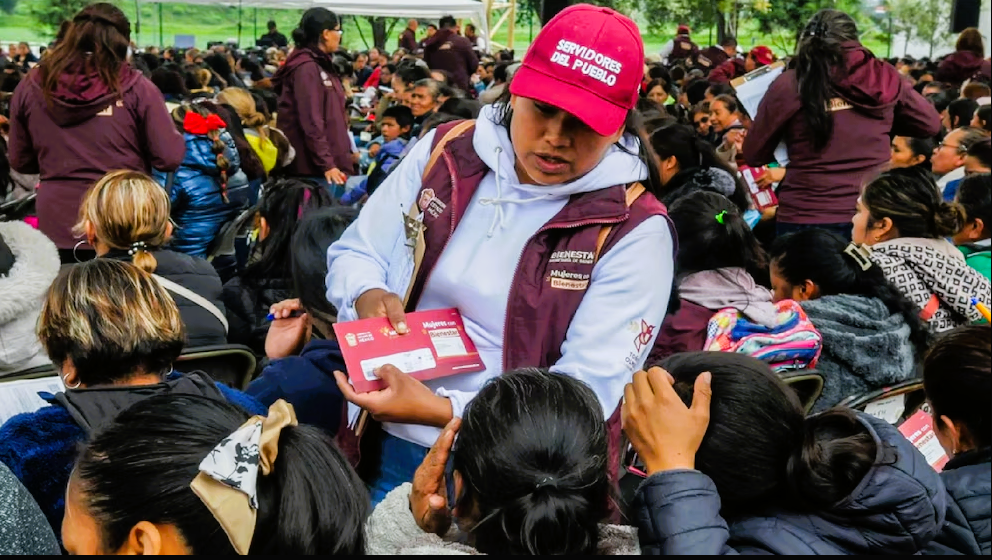
However, the Observatory questions the ethics of this universal and indiscriminate distribution. Is it a success to deliver cash without conditions, or should it be diversified to foster personal development? The principle of subsidiarity, key in Catholic teaching, proposes that the State generously support the initiatives of social forces, uniting spontaneity and closeness to those in need, rather than dominating everything. The report warns that the 4T subsidies pervert this principle by becoming a «political alliance» for electoral purposes. For example, the «Servidores de la Nación»—19,394 young people who operate as an electoral army—disperse resources and mobilize voters, as seen in the 2024 elections, where AMLO urged them to «oil the machinery» to keep Morena in power.
In the analysis, the document highlights that, although poverty has decreased (with 13.4 million Mexicans escaping it between 2018 and 2024), the main driver has been the tripling of the minimum wage (from 102 pesos daily in 2018 to 315 in 2026), not the subsidies. The latter, financed by excessive public debt, generate fiscal deficits and inflationary risks, without being sustainable in the long term. The report projects that the elderly population will double by 2050, raising the cost of pensions, while tax collection remains insufficient without new oil revenues. Ethically, this raises whether the subsidies promote social justice or merely a fleeting gratitude, ignoring the need for education and dignified jobs for integral development.
It also criticizes the lack of targeting: universal subsidies do not prioritize the most vulnerable, contrasting with previous governments that, although neoliberal, failed to connect policies with the majorities. Moreover, the current regime, with its authoritarian populism, hinders private investments and opens doors to pacts with organized crime, damaging the social structure.
The report’s conclusions are forceful: the subsidies have significantly increased total social spending and shifted toward electoral loyalties via debt. Truly, what develops society is education and work, not dependent welfare. As lines of citizen action, it proposes: 1) Consult whether these subsidies apply subsidiarity healthily or pervert people, families, and institutions; 2) Reflect in recipient families on the use of the money; 3) Demand from Morena governments that they not turn public money into a mechanism of dependency and electoral control.
This report invites an urgent ethical discernment in Mexico where the 4T calls itself revolutionary, but insists on perpetuating inequalities by prioritizing political loyalties over human dignity. In a country with more than half the population in persistent poverty, Catholic teaching reminds us that the State must subsidize, not absorb, to foster a just and supportive society.
The full report can be consulted here