


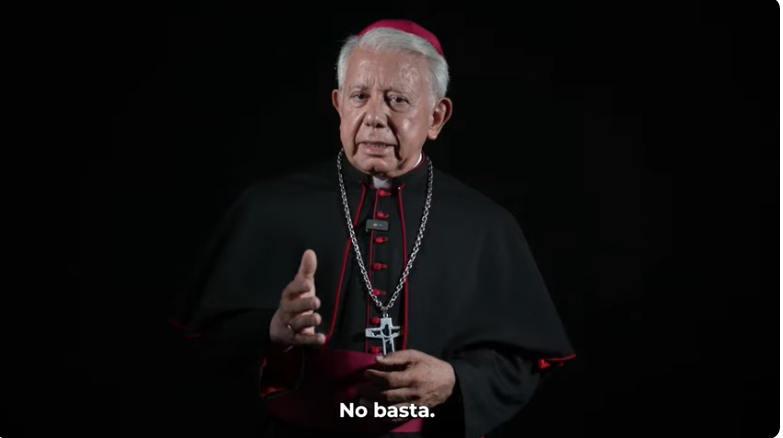
In chapter 23 of the catechesis series “Thy Kingdom Come,” preached by Ramón Castro Castro, bishop of Cuernavaca and president of the Mexican Episcopal Conference (CEM), the theme “Height of Vision and Generosity” is addressed with a profound invitation to lift our gaze toward the common good as the axis of Christian life in society.
This series, promoted by the CEM to commemorate the centenary of the encyclical Quas Primas by Pius XI (1925), which instituted the feast of Christ the King, seeks to make present the Kingdom of God in the hearts of Mexicans, amid the social challenges facing the country.
Castro Castro compares the orientation of Christian life to a journey in which we need a “moral GPS.” The Church’s Social Doctrine offers four permanent principles: the common good**, the universal destination of goods, subsidiarity, and participation.
The common good is not just the fulfillment of individual norms, but the full realization of the good that pacifies the heart and reveals the harmony of a well-lived life. Quoting Saint Francis of Assisi, the bishop reminds us that “it is not enough” to occupy ourselves only with ourselves: the suffering of others—of the family, of our neighbor—prevents us from fully enjoying our own good.
The common good is indivisible, belongs to all and to each one, and is only achieved together. In Mexico, this reality is wounded by a grave fracture in the social fabric, aggravated by individualism that makes us indifferent to the pain of others. Problems such as drug trafficking, prostitution, corruption, homicides, and forced disappearances are not resolved in isolation; they require collective effort, joy in each one’s contribution, and trust in God and in our brothers and sisters.
With a reconciling but firm tone, Castro Castro directs a special call to political authorities, who have a singular responsibility for the custody of the common good. He reminds them that governing is not for a few, but for all Mexicans, especially the most vulnerable: the poor, the searching mothers, the migrants, the youth without opportunities, and families in extreme poverty. To neglect this responsibility would be a grave moral fault.
Finally, the bishop elevates the reflection to the eschatological dimension: the common good that we build in history is the seed of Christ’s eternal Kingdom. The true height of vision and generosity consist in thinking big, in working for the integral transformation of the homeland, giving everything for the good of others and seeing in each effort a step toward fullness in Christ the King.
This chapter invites all Catholics—and all Mexican society—to be “navigators of the Kingdom,” with unlimited generosity and a vision that transcends the immediate to build a more just, fraternal Mexico oriented toward God.
The full episode can be watched here