


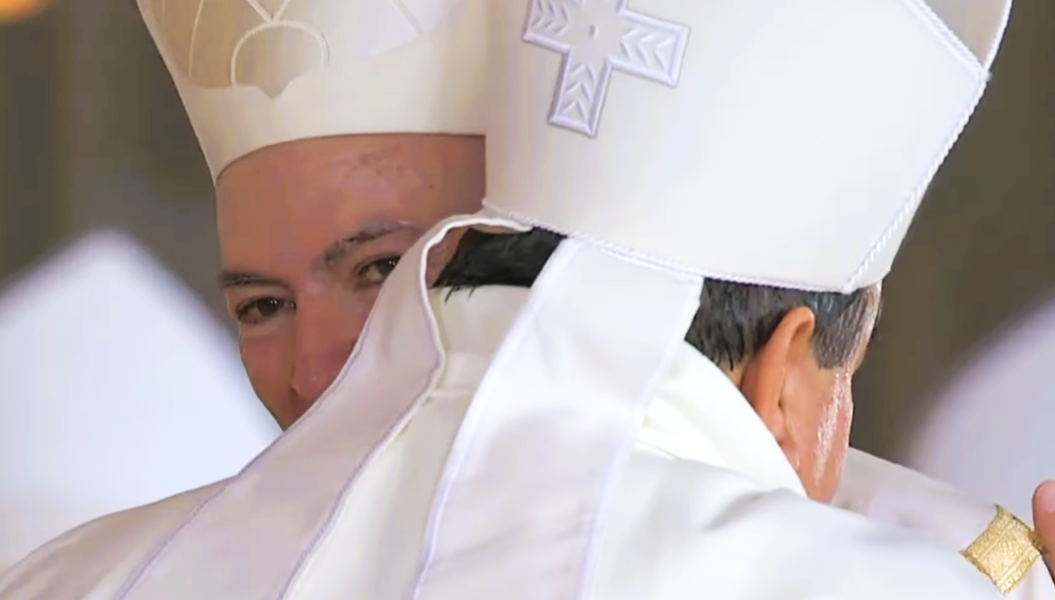
On this February 5th, the Archdiocese of Mexico remembers the start of Archbishop Aguiar’s pastoral government. An anniversary without glory and with much sorrow. In other times, the commemoration would have meant a feast of joy and gratitude for the shepherd’s life to the sheep and the strengthening of the faith that, however, is weakened, putting the Catholic faith in Mexico City at frank risk.
Throughout these eight years of pastoral government, this blog has documented in detail this situation that we can only call devastating. If the Church of the Archdiocese of Mexico is still alive, it is thanks to the action of thousands of faithful and committed priests who only await a decisive moment in this part of history: the replacement of Archbishop Aguiar.
Comparisons are odious, says the adage, but they prove necessary. Eight years ago, the acceptance of Archbishop Norberto Rivera’s resignation brought a bustling spirit to move forward with fresh airs, but what resulted was a putridity plugged in a sewer of unheard-of opacities and harmful to the people of God. Not only is this pontificate of Aguiar a mess of pastoral improvisations left in the hands of curial bureaucrats, but it also weighs on him the scandalous lack of transparency of its resources and patrimony, of which no one knows anything, no consultant is aware, and, in few hands, the wealth of an archdiocese necessary for evangelization tasks. Simply, it is submerged in thick mists controlled by dark figures who, since they were imposed by Aguiar, believed that this archdiocese was the goose that lays the golden eggs.
Perhaps it is necessary to refresh the memory. Unlike Aguiar, who is about to leave, the faithful of this archdiocese had concrete information thanks to a report from the last archbishop, which had the virtue of being widely disseminated in the media. Today, if someone wants to download or consult it from the archbishopric’s website, it is simply impossible; all files, documents, reports, gazettes, and information that, by canonical obligation, should be available have been eliminated because they simply form part of the historical memory.
However, true to the vocation of this blog, we remember this report so that it serves as a historical backup that can already serve to make a comparative exercise of what was devastated. When that report was made public, we agreed that that transition would outline new particularities, but it consolidated an objective evaluation granted directly by those responsible for each pastoral area of the Archdiocese of Mexico. In 84 pages, the summary of the entire archdiocese offered an enviable dynamic that allowed understanding the complex management of the archdiocesan machinery including entities now in question like the Basilica of Guadalupe.
In January 2018, the new archbishop, at that time, received the entire administrative organization and the set of vicarages of the archdiocesan curia. Data on the general patrimonial and economic situation, in addition to health programs and social security for the priests of the Archdiocese of Mexico and eight territorial vicarages, were part of the handover in a well-structured compendium when the archdiocesan territory comprised the geographical space of the entity called Mexico City.
In addition to the strengthening of specific areas linked to the archives and history of the archdiocese, the public and media efficiency of Social Communication in the spheres and of an Archdiocese of Mexico in which there were 467 parishes constituted in January 2017 to 2023 there were 307, after the archdiocesan dismemberment. Up to 2018, 2,067 presbyters provided their priestly service (651 from the archdiocese, 167 non-incardinated who belong to other dioceses, and 1,059 religious priests, that is, who belong to Institutes or Societies of Apostolic Life). In 2023, there were 1,328 priests between diocesan and religious. Also, there were 190 permanent deacons, a ministry that Aguiar Retes insisted on destroying, ordaining only a few. In 2023, there were 150.
In eight years, Aguiar Retes has not given a single specific report on the most urgent matters of the archdiocese. There is no follow-up on the administration of properties, for example, which were mentioned in Cardinal Norberto Rivera Carrera’s report. Nothing is known about the consultants’ meetings… and everything hangs on a supposed synodalism democratist that has plunged us into chaos. That is Aguiar’s debt, and he could not leave without all, all the faithful of the archdiocese, knowing what he has done with the Primate Archdiocese of Mexico.
–00—
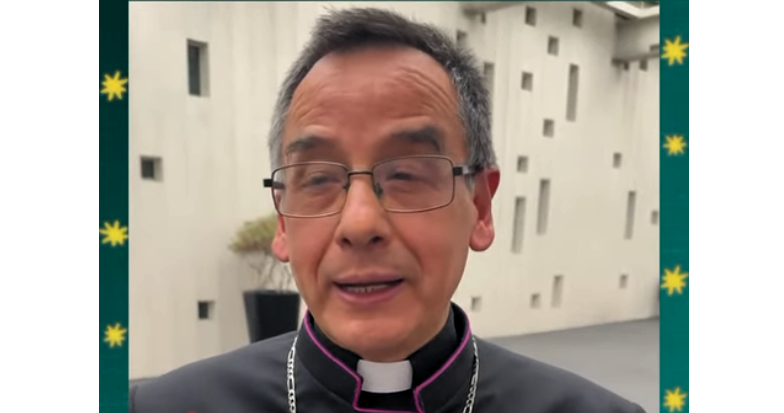
What has happened in the Basilica? After announcing that there were canonical processes open against the rector, the presbytery’s concern has manifested itself for not having up-to-date data on what has happened. That hermeticism raises doubts and generates suspicions. And not without reason. It is estimated that around 20 million pilgrims visit the Basilica of Guadalupe each year, an average of 2,300 scheduled pilgrimages and an infinity of unscheduled pilgrimages such as family groups, business, or associations.
The number of visitors is increasingly greater, and that venue operates without a head. Its management is quite complex, given the characteristics of the venue and the services that are continuously required. According to the manual, there should be an Administration Council, headed by the rector and seconded by the vice-rector, a secretary, the administrative director, and area directors. This council used to meet once a week and was backed by the Council of Economic Affairs (CAE), with monthly meetings, and a Finance Committee convened every 15 days. Up to the rectory of Canon Enrique Glennie Graue, an Administrative Strategic Planning scheme had been given. The information available up to before the covid-19 pandemic forecasted rising income at the Basilica. In 2016, they presented an increase of 15.3% compared to 2015, and in those, according to the data, 65 percent of the income came from collections and religious goods stores. However, the pandemic arrived, and that horseman of the apocalypse faced by Rector Salvador Martínez Ávila had another problem, the demands of Aguiar Retes.
Having handed over the economy to the now defenestrated Efraín Hernández, witnesses indicate that soon the resources were not even enough to buy flowers for the Virgin. There was a bottomless pit that led to the valley of shadows that only Rector Efraín knew where they ended up and in whose hands. The shortages were evident, and the chapter reacted to get immediate answers.
The result was action through canonical processes. The matter gains relevance because after the investigations, a way would be made for an audit ordered by the Mexican Episcopal Conference. Some assure that the prior investigation process has come to an end and facts manifested by the chapter towards the rector such as administrative and economic deficiencies would have been corroborated, but it is unknown to what extent the accusations pronounced by the chapter were recognized: Extraction of documents, undue possession of reserved information that compromises the security of laypeople and ecclesiastics who serve in the Basilica, contracts given to people of “doubtful” tax and fiscal conduct, links with suspicious groups, intimidation, and even threats. The action that activated the procedure indicated that there were suspicions that the former rector Efraín Hernández would be suffering from a “notorious lack of judgment, psychological and spiritual disorder,” and the canon, “advised by third parties who make up these corrupt groups of power and evil”, took erroneous decisions, removing the Guadalupe Chapter from compliance with statutory norms and regulations. The penalty? Efraín Hernández would be removed from the position, it being unknown if he should repair the damages. Up to January, that one who rose like foam thanks to Aguiar still occupied one of the Basilica’s houses as personal residence, but such a situation could entail that the former rector should already separate from his obligations to the point of being deprived of all privileges.
With the expectations of a prompt succession in the archbishopric, this cannot turn into a dead file. If the CEM has taken a hand in the matter, this should point to more thorough investigations and reach those who are above. Archbishop Aguiar, strolling in Madrid, boasting with Pope Leo XIV, pretends that everything is fine when reality speaks of other things…