


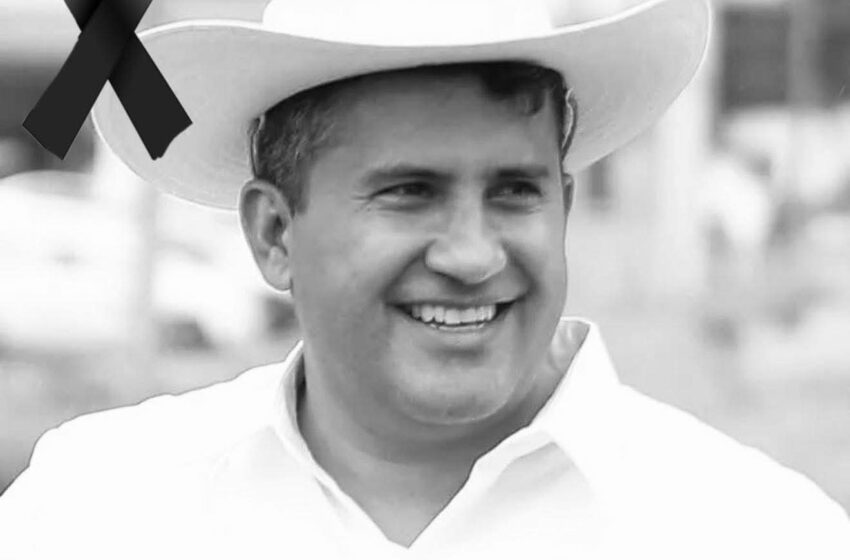
On the threshold of the Day of the Dead, death burst in with ferocity on November 1, 2025. Carlos Manzo Rodríguez, mayor of Uruapan, was gunned down during the Festival of Candles, an event intended to weave community ties amid tradition. In front of hundreds of witnesses, in the historic center, three attackers opened fire; one was killed by Manzo’s bodyguards, and two were detained by federal authorities.
The 42-year-old mayor was rushed to a hospital where he breathed his last, becoming the rawest symbol yet of a political violence that makes no distinction between altars and shootouts. Weeks earlier, Manzo had begged for protection from President Claudia Sheinbaum and Security Secretary Omar García Harfuch, warning: «I don’t want to be just another executed mayor.» His warning now echoes like a requiem for stability and peace in Michoacán, the state that can no longer bear it.
Manzo was the first independent mayor of Michoacán, elected in 2024, representing a break from a party system entangled in the web of narcos and corruption. He denounced extortion of avocado and lime producers, the territorial dominance of cartels like the Jalisco New Generation Cartel (CJNG) and La Nueva Familia Michoacana, and infiltration in municipalities.
Mexico drags into the first half of 2025 an alarming toll. While federal authorities claim everything is on the decline and security is at one of its best points, 112 murders of candidates and officials, 74 threats, 33 armed attacks, 17 kidnappings, and 11 disappearances, according to Integralia’s monitoring. Michoacán overshadows Michoacán, an entity that is already a narco-state; additionally, it adds 98 cases of political violence against women up to May, figures that sink into an ocean of 99% impunity, as denounced by Human Rights Watch in its annual report.
In recent days, the state has been a rosary of mourning: the nephew of the murdered self-defense leader Hipólito Mora, Alejandro Torres Mora, executed in La Ruana, hours before the murder of Carlos Manzo and Bernardo Bravo Manríquez, leader of the lime growers in Apatzingán, killed in Tierra Caliente a month earlier.
The decomposition of Michoacán is not a geographical accident, but the rotten fruit of a criminal fragmentation that devours the social fabric. The cartels, according to the 2025 DEA report, dispute the state in six main factions: CJNG, Nueva Familia Michoacana, Cárteles Unidos, Familia Michoacana, Cártel del Noroeste, and Golfo, in a war over cultivation areas, ports, and fentanyl routes.
Tierra Caliente, one of the epicenters of this nightmare, sees producers paying extortion fees or facing summary executions, with displaced families burning their own businesses to flee, as documented in recent chronicles. Narco leaders strut in pilgrimages and concerts, monitored by an Army that, paradoxically, «protects» them from rivals, according to leaks. This is not mere delinquency; it is a parallel state that infiltrates elections, finances campaigns, and dictates loyalties with lead.
In this panorama of horror, the voice of the Church seems to be a voice crying in the wilderness. The bishops of Michoacán have raised cries against the insecurity that gnaws at the state. Particularly, Cristóbal Ascencio García, bishop of Apatzingán, has made the pulpit one of his main means of prophetic denunciation. On August 19, 2025, in his Sunday homily, he debunked the «official peace» proclaimed by the government by denouncing the violence, extortions, and the hundreds of displaced people forced to leave their communities due to the tremendous violence perpetrated by organized crime.
Ascencio García has prayers and pilgrimages for peace, visiting communities with the only weapon of faith and prayer. Other prelates, like the archbishop of Morelia, have added echoes: they ask not to yield to the narco and to advocate for the displaced, recalling that four priests have been murdered in the diocese. These denunciations are not rhetorical; they are a call to ethical action in a state where faith is tinged with blood.
But the future outlook is not too optimistic. If the pattern holds, there are high probabilities that, by 2026, the State of Michoacán will experience a kind of “narcobalkanization” in fiefdoms controlled by the CJNG in the Bajío, Nueva Familia on the coast, Cárteles Unidos in Tierra Caliente, with self-defense groups mutating into paramilitaries to the highest bidder. The agro-export economy would collapse by 20-25%, according to independent projections, with thousands of families migrating to Morelia or the north, leaving sterile fields and a regional GDP in freefall. Political violence would escalate: elections boycotted by terror, empty municipalities, and a power vacuum that invites more chaos, especially as an electoral year begins to renew the Chamber of Deputies in 2027.
In the worst-case scenario, a massive federal intervention would generate more corruption and resentment, strengthening the cartels in their labyrinth of impunity. Without unity, law enforcement, and effective reforms, Michoacán will not be a state of legality, but a great cemetery where the just will lie for the sinners, those who now, from power, only accept observing and rejecting what is evident: That Mexico is sinking without remedy at a point of no return toward total decomposition.