


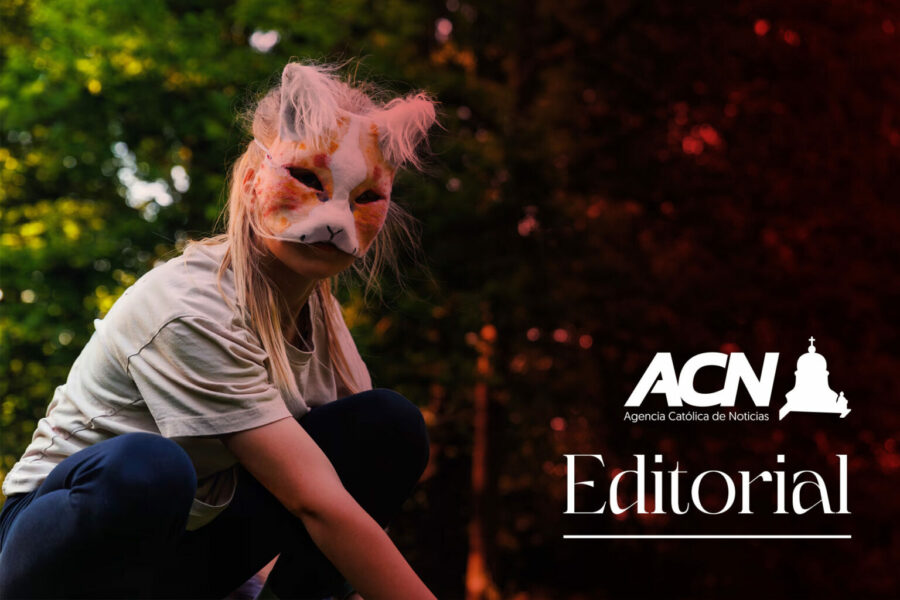
In a world where identity has become a viral wildcard, the phenomenonof the «therians», a transliteration from Greek meaning “beast”, θηρίον (Teríon), emerges, individuals, mostly young people identified spiritually or psychologically as non-human animals.
This is not about playful costumes or metaphors, but a deep conviction that leads them to adoptbeastly behaviors –barks, howls, quadrupedal movements– in public and virtual spaces. This movement, amplified by platforms like TikTok and X, is not mere youthful eccentricity; it is the alarming symptom of a profound anthropological crisis, asocial pathology that erodes the foundations of the human and reveals the void of values in a hyperconnected society.
The therians emerge in virtual communities dating back to the 90s, but their recent explosion –with thousands of videos accumulating billions of views– is a direct product of social networks. In forums like Reddit or Telegram groups, narratives of «awakening» are reinforced where the individual «discovers» their animal essence as an escape from human alienation.
This belonging to digital ecosystems accelerates the pathology, algorithms that prioritize the sensational create bubbles of mutual validation, transforming personal confusion into a valid collective identity that must be respected. What begins as a search for meaning in adolescence –a stage of identity vulnerability– becomes an addiction to online approval, where the «like» replaces a real sense of purpose. Psychiatry experts warn of underlying emotional sufferings, trauma, low self-esteem or dissociation, aggravated by post-pandemic social disconnection.
This «therian crisis» is not harmless; it demonstrates a devastating anthropological erosion. In an era of absolute relativism, where everything goes if it «feels» authentic, we lose sight of the inherent dignity of the human being. Classical anthropology –from Aristotle to the Judeo-Christian tradition– defines us as rational, social and transcendent beings, crowned by a higher vocation. Identifying as a wolf, dog or cat is not liberation, it is degradation, a cowardly escape from human responsibility toward a primitive instinct. Accelerated by networks that commodify identity, even with memecoins like $THERIAN, this social pathology reflects a collapse of values, fragmented family, superficial education and a culture that prioritizes the ego over the community. In Latin America, where the phenomenon has exploded in countries like Mexico and Brazil, the economic and social crisis is added, turning young people into easy prey for trends that promise belonging without effort.
But reducing it to a psychiatric problem like zoanthropy or species dysphoria might be reductionist. Here there is a spiritual challenge; the therians not only suffer a disturbed mind, but a soul in crisis. Alienated from their Creator, they seek in the animal an illusory refuge, ignoring that the human being is the image of God (Genesis 1:27).
This spiritual disconnection, exacerbated by digital secularism, reveals a hunger for transcendence that networks do not satisfy. The Catholic Church, as guardian of Christian anthropology, faces an urgent pastoral imperative: to transcend mere medical diagnosis to offer spiritual discernment.
The response should not be sterile condemnation, but a proactive balance. The Church could launch innovative pastoral initiatives, youth groups that integrate technology with training in the Social Doctrine, emphasizing the human vocation as co-creators with God. Accompaniment programs, inspiredby Saint Francis of Assisi, friend of nature and creation but firm in human superiority–, to rediscover identity in Christ. Virtual retreats that counteract online bubbles, fostering real communities where the young therian finds empathy, not ridicule, and tools to integrate their longings into a full life. Bishops and pastors must train catechists in spiritual psychology, recognizing that behind the «shift» animal there is a cry for eternal meaning.
In the end, the therian crisis is not just youthful; it is civilizational. If we do not act with proactive mercy and intellectual talent, we run the risk of asociety where the human dissolves into the instinctive. The Church, as a beacon in the digital storm, holds the key; in thistherian crisis to remember that we are more than animals; we are children of God, called to steward creation, not to collapse into it.