


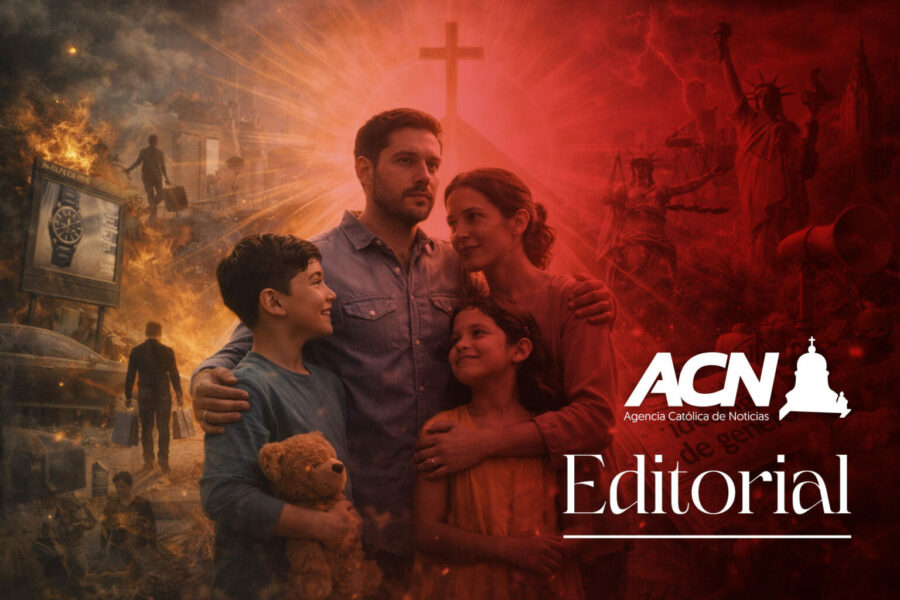
March represents a month in which reflection is made on an increasingly changing reality, that of the family. Although every May 15, the United Nations celebrates the International Day of Families, a date established in 1993 by the General Assembly through and which arose after the International Year of the Family (1994) to raise awareness about the irreplaceable role of the family in child education, lifelong learning, and sustainable development. Far from being a mere symbolic reminder, this day invited analysis of how social, economic, and demographic processes affect family unity and to promote policies that protect it. In a world marked by urbanization, migration, and climate change, the UN emphasized that families are key to eradicating poverty, reducing inequalities, and building more just societies.
In Mexico, the family is not an abstraction: in 2020, according to the analysis of specialists based on the Population and Housing Census of INEGI, there were 34,987,915 households, of which 86.4% were family-based. The report “Families in Mexico 2020” from the Panamerican University Aguascalientes campus and the Anáhuac Universities network identified four major categories that break down into 22 specific subtypes.
Married couples predominate (43.59%), with classic nuclei of couple and common children (24.50%) or extended with relatives (8.02%). They are followed by couples in free union (20.43%), likewise with nuclear, extended, and reconstituted variants. Single-parent families headed by single female heads represent 17.70% (mainly with their own children), while single male heads account for 4.69%. There are also single-person households (12.19%) and minorities such as same-sex couples or complex reconstituted ones. These data reveal a profound transformation; families founded on marriage have fallen from 60% in 2000 to the current 43.59%, while free unions, single-parent households, and single-person ones are growing.
The challenges are multiple and urgent. Institutional de-structuring—separations, divorces, and reconfigurations—coexists with poverty, intrafamily and social violence, forced migration, and economic precariousness. Single female heads face greater salary vulnerability and overload of care; extended families absorb grandparents and grandchildren in contexts of insecurity, and reconstituted ones deal with emotional and legal complexities. Mexico cannot ignore these realities; the family remains the first social buffer, but it requires public policies that address its concrete needs without idealizations and romanticisms.
Special relevance takes the Christian vision of the family, masterfully exposed by Saint John Paul II in the apostolic exhortation “Familiaris Consortio” and which in 2026 will mark 45 years since its appearance.
The Polish Pope defines the family as a “domestic church,” a community of love and life called to reflect the mystery of Christ and the Church. Its mission is articulated in four inseparable tasks. First, to be a community of love, spouses forge an indissoluble and faithful pact that educates in gratuity and forgiveness. Second, service to life, to open responsibly to procreation and extend welcome to the elderly, the sick, and the marginalized, rejecting all contraceptive or abortive manipulation. Third, education, parents exercise an irreplaceable right-duty to integrally form their children in human and Christian values, the first school of social virtues. Fourth, evangelization. The family announces the Gospel with its daily witness, becoming a vital cell that transforms society from within.
John Paul II insisted that the Christian family does not isolate itself; it faces the same challenges of the current world—selfishness, consumerism, secularism—but illuminates them with the light of the sacrament of matrimony. “The future of humanity is forged in the family,” he affirmed. That is why he demanded from the Church an accompanying pastoral, not condemnatory, and from society policies that respect its autonomy and subsidiarity.
In Mexico, this double gaze—that of the UN and that of faith—converges in an imperative conclusion. To forge solid family bonds without denying the painful realities, violence, inequality, migration, and economic fragility. Neither to idealize the traditional family nor to resign ourselves to its dissolution. It is about promoting family-oriented policies, but also recovering its Christian vocation of fruitful love and service. Only in this way will the Mexican family continue to be the first space of dignity, the seedbed of responsible citizens, and the silent engine of national development.
The family is not an abstraction; it faces challenges and trials; soon the growth of new realities that impact the world, such as the rise and adoption of AI, will have to provide perspectives that we do not even imagine. For this reason, it is urgent to rebuild from the home what society so needs and which is only given in the family, values that lead to peace and love.