


In an increasingly polarized world, Christmas, that millennial celebration of hope and redemption, faces persistent attacks that seek to strip it of its Christian essence.
In Europe, where Christmas traditions have been a pillar of cultural identity, attempts are observed to rewrite its history or dilute it in the name of «inclusivity». These episodes distort the past and threaten the future of a holiday that unites communities around the birth of Christ.
One of the most scandalous cases occurred recently in France, where the public channel France Info published a video linking Christmas markets to Nazism, claiming that ideology adapted this tradition in the 1930s to legitimize National Socialism. The piece, which generated massive indignation, ignores the medieval origins of these markets, dated to the 13th century in Germany, and reduces a joyful custom to a dark legacy. Critics like the European Conservative called this «historical indecency», arguing that it is an attempt to delegitimize Europe’s Christian roots in a context of aggressive secularism in a «war on Christmas», where progressive media equate innocuous traditions with totalitarianism to justify their erosion.
Another alarming example comes from the United Kingdom where the Portsmouth city council, controlled by the Liberal Democrats, has banned tenants from placing Advent wreaths on doors threatening fines. Although argued as a practical measure to avoid damage to doors or fire risks, the context reveals an exacerbated sensitivity toward «diversity». In a Europe that promotes plurality, why is the wreath – symbol of eternity and Christian welcome – seen as offensive? This directive, issued in December 2025, reflects a broader trend. In order not to «offend» minorities, they suppress public manifestations of faith.
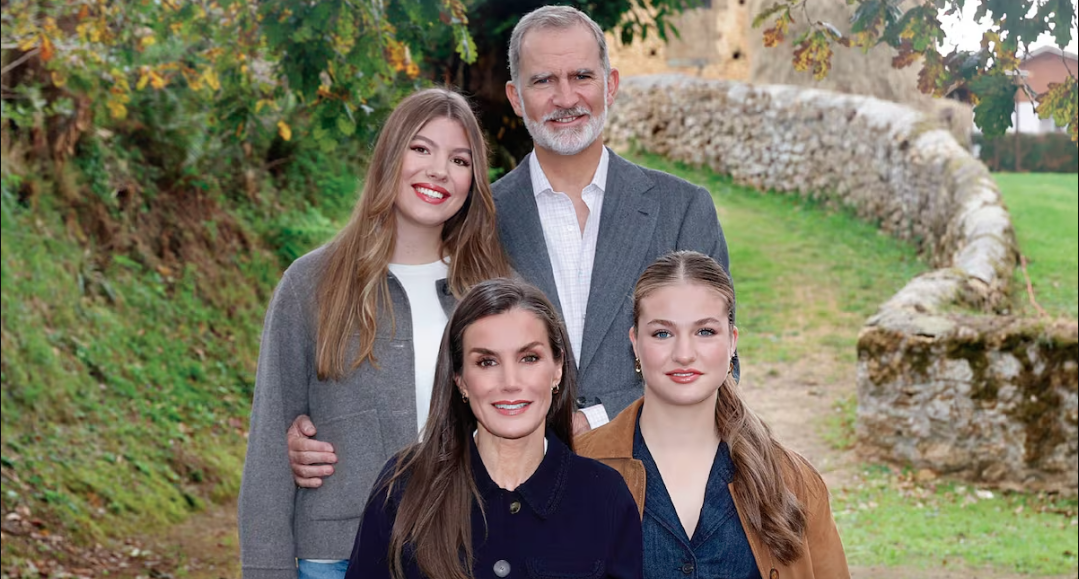
In Spain, the royal family’s Christmas greeting for 2025 has sparked criticism for its total absence of festive symbols. The card shows King Felipe VI, Queen Letizia, and their daughters in a summer photo and only a generic message of «Merry Christmas and Happy New Year 2026». This was perceived as capitulation to secularism, diluting the Christian message into a neutral greeting. Critics see it as a symptom of European monarchies that, pressured by diversity, opt for the «politically correct», abdicating their identity and reason for being.
These attacks are not isolated; they are part of a current that empties Christmas of its spiritual core.
In Mexico, we cannot allow this erosion to cross the Atlantic. As the bishops affirm in their 2025 Christmas message, «From the Manger to Hope», Christmas is contemplation of the mystery where God becomes vulnerable to heal us. They emphasize the family as a sanctuary, Our Lady of Guadalupe as bearer of divine love, and 2026 as a year of hope commemorating the Cristero martyrs. «Hope does not disappoint because the love of God has been poured into our hearts» (Rom 5,5), they remind us, urging us to rebuild our homeland with faith. Mexico, with its Guadalupan devotion and tradition of posadas, must strengthen these values against relativism, otherwise we run the risk of a Christmas where the Child God is just a meaningless ornament.