


In the framework of the centenary of Pope Pius XI’s encyclical *Quas Primas*, which instituted the feast of Christ the King exactly one hundred years ago, the Bishop of Cuernavaca and president of the Mexican Episcopal Conference (CEM), Ramón Castro Castro, delivered a special catechesis titled «Thy Kingdom Come – Special Chapter: Centenary of the Feast of Christ the King». This reflection, part of the homonymous Series that has accompanied the Mexican Catholic people for months, resonates with an urgent call to rediscover Christ as the source of peace in times of global and local crisis.
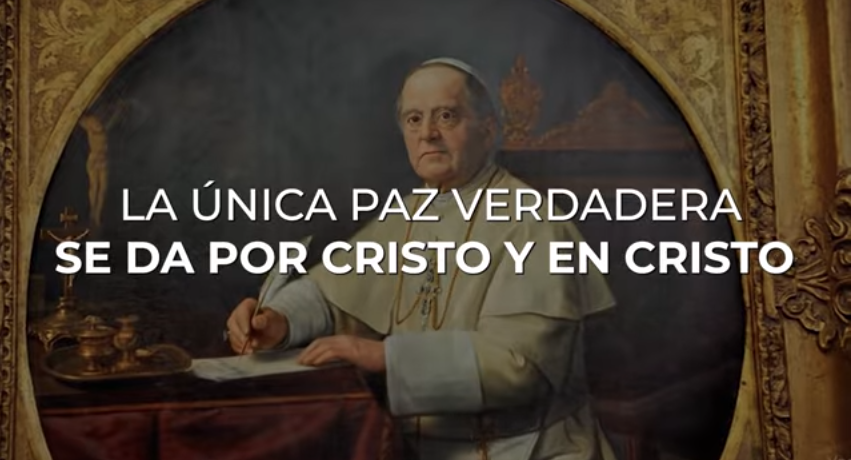
The message, delivered on December 11 – the exact anniversary of the encyclical’s promulgation in 1925 –, evokes the turbulent interwar years that inspired Pius XI to establish this feast as a bulwark against ideologies such as Nazism, fascism, communism, and radical secularism. «Those were very difficult times, peace was threatened everywhere, within individuals and homes, in all societies and in all nations,» recalls the prelate in his text, emphasizing that «the only true peace is given by Christ and in Christ.»
Castro Castro links this commemoration to national history. He recalls the ecclesiastical persecution during the Cristero War (1926-1929), when thousands of faithful cried out «Long Live Christ the King!» inspired by Quas Primas. «Mexicans expressed, and we continue to express, the longing for Christ to reign and transform our lives,» he states, connecting the Cristero cry with the Lord’s Prayer: «Thy kingdom come.» The bishop quotes St. John Paul II to emphasize that «the kingdom of God is not a concept, a doctrine, or a program […] but above all a person who has the face and name of Jesus of Nazareth».
In a prophetic tone, the prelate details the areas where Christ must reign: the spiritual, with «hunger and thirst for justice and taking up the cross»; the temporal, ordering «the things of this world toward him»; and the individual and social, generating «freedom, tranquility, peace, and concordia». Invoking Pope Francis, he concludes that «to the extent that he manages to reign among us, social life will be a realm of fraternity, justice, peace, and dignity for all.» The catechesis culminates with a Long Live Christ the King! and a link to a YouTube video (https://www.youtube.com/watch?v=aNPaLI2rlKY), where the bishop shares the message in audiovisual format for greater reach.
This special installment closes a cycle of formation that Castro Castro has woven in response to Pius XI’s own exhortation to precede the feast with «a course of preaching to the people in all parishes» so that the faithful «undertake and order a way of life that is truly worthy of those who long to serve their King lovingly and faithfully.» Prepared in the «School of Mary» – on the eve of the Guadalupe feast –, the series invites faith to mature in a Mexico wounded by violence, polarization, and inequality.
The Thy Kingdom Come series, launched in July 2025 has consisted of 22 weekly catecheses that explore the building of God’s Kingdom in the Mexican context. Started as a commemoration of the centenary of Quas Primas, it has addressed topics from the family to politics, always with a focus on social transformation through faith. Some relevant chapters were:
Introduction and Chapter 1 of July 2025, the launch editorial presents the series as a «catechesis to redeem a wounded Mexico,» prioritizing the proclamation of the Kingdom as a response to contemporary crises.
Chapter 2 of July 18 focused on the family as the basic cell of the Kingdom, the Mexican Episcopate urges protecting it as a space for evangelization and solidarity
Chapter on the laity of September 6, 2025 as a call to the laity to «transform the world» from their everyday vocation, emphasizing their starring role in society.
Citizenship of the Kingdom of September 27, 2025 that invites to be «citizens of the kingdom to transform the country,» promoting active citizenship inspired by the Gospel.
Living Gospels of October 17, 2025 and that exhorts the faithful to be «living gospels» amid social hypocrisy, denouncing the incoherence between faith and action.
Transparent Democracy of November 22, 2025 and warns that «a democracy without transparency becomes authoritarian demagoguery,» calling for political ethics at the service of the common good.
Kingdom of Solidarity of November 29, 2025, which calls for «responsible creativity» to weave a kingdom of solidarity, responding to social fractures with works of mercy.
Kingdom of Healing that describes the Church as a «hospital of mercy» to heal the world’s wounds, emphasizing compassion in times of crisis.
Christian Dialogue of December 6, 2025 that culminates with a call to overcome political polarization through Christian dialogue, fostering national reconciliation.
This thematic progression – from the personal and family to the social and political – has prepared the ground for the centenary catechesis, reminding us that the Kingdom is not an abstract ideal, but a reality incarnated in Christ. As Castro Castro concludes: «Accepting Jesus’ reign in our lives is accepting […] that evil, injustice, and death do not have the last word. Christ is the last word».