


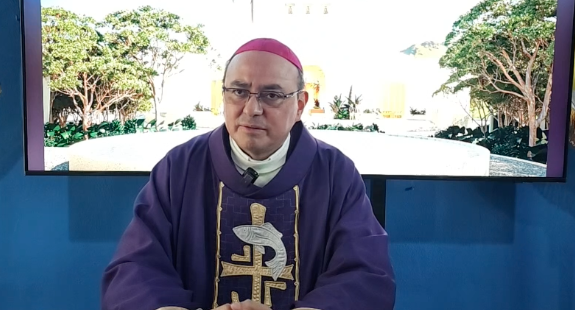
The Congress of the State of Quintana Roo approved on March 19 the decree that declares December 4 of each year as the State Day of Religious Freedom, an institutional recognition of the fundamental human right enshrined in the Political Constitution of the United Mexican States and in the local Constitution. The bishop of the Diocese of Cancún-Chetumal, Salvador González Morales, celebrated the measure and exhorted priests, deacons, consecrated persons, and lay faithful to receive this “event” with a spirit of gratitude and responsibility,” promoting a culture of respect, dialogue, and charity.
The initiative was presented on February 23, 2026, during Session Number 04 of the Second Ordinary Period of the XVIII Legislature. It was jointly proposed by the presidents of 17 ordinary commissions. The matter was referred to the Commission on Legislative Points and Parliamentary Technique, which issued its opinion on March 9, 2026.
In the 13-page document, the commission highlighted that the declaration is based on article 24 of the federal Constitution and article 20 of the Constitution of Quintana Roo, as well as three international instruments: article 18 of the Universal Declaration of Human Rights, article 12 of the American Convention on Human Rights, and article 18 of the International Covenant on Civil and Political Rights.
The opinion emphasizes that religious freedom is “one of the essential manifestations of freedom of thought, conscience, and convictions,” guarantees human dignity and strengthens the secular state by allowing the exercise of beliefs “without undue interference from public power or acts of discrimination”. The Legislative Plenary approved the project on March 19. The decree consists of a single article that declares December 4 as “Religious Freedom Day” and a transitory provision that establishes its entry into force on the day following its publication in the Official State Gazette.
The following day, on March 20, the bishop of Cancún-Chetumal, Salvador González Morales, addressed a message to the diocese. With “profound pastoral joy,” the bishop recalled that the decree arose from “a path of respectful and co-responsible dialogue between religious associations and civil authorities”.
He quoted the Declaration *Dignitatis Humanae* of the Second Vatican Council: “The human person has the right to religious freedom” and “all men are to be immune from coercion… in such a way that, in religious matters, no one is forced to act against their conscience, nor is anyone prevented from acting in accordance with it”.
For Catholics, he added, this recognition not only defends freedom, but invites us to live “with greater authenticity our Christian vocation” and to give “public witness to the Gospel.” Therefore, the prelate explicitly exhorted: “I exhort the entire diocesan community to welcome this event with a spirit of gratitude and responsibility, promoting a culture of respect, dialogue, and charity”.
The declaration of December 4 seeks to foster tolerance, combat discrimination, and strengthen social ties in a multicultural state like Quintana Roo. Both the legislative opinion and the episcopal letter agree that religious freedom is not a privilege, but a pillar of democratic coexistence and the inherent dignity of every person.