


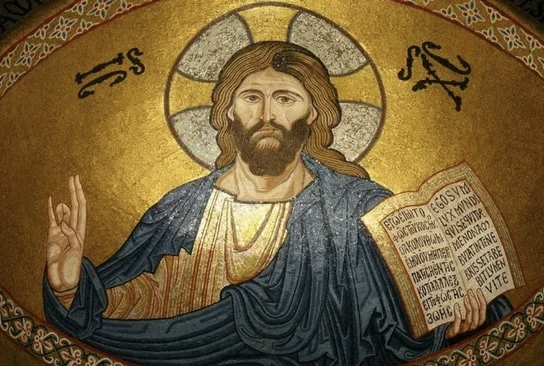
In an urgent call for spiritual transformation amid the violence and corruption plaguing the country, the Bishop of Cuernavaca, Ramón Castro Castro, president of the Mexican Episcopal Conference (CEM), delivered the nineteenth catechesis of the series Venga a Nosotros Tu Reino. Titled «Kingdom of Holiness and Grace«, the reflection contrasts the ephemeral power of political promises with the radical humility of the Gospel, proposing a model of leadership in service to the most vulnerable.
The catechesis, part of a CEM initiative celebrating the 100 years of the feast of Christ the King and seeking to inspire «families that transform» and «a Church on the move». Bishop Castro Castro, with his characteristic serene yet firm tone, demystifies the earthly notion of the kingdom of God, presenting it not as an empire of force, but as a «mystery of redemption» embodied in everyday acts of forgiveness and service.
«Citizens of heaven, with each of his words, in each of his acts, Jesus renews the face of the earth and shows us the path to true perfection», the prelate begins, recalling that the kingdom of Christ «has no armies, nor riches, nor extensive territories».
In a passage especially directed at the Mexican context, he criticizes the social admiration for «the power of ill-gotten money» and the respect for the «successful corrupt» over the «honest poor«. «Christ teaches us a different path», he emphasizes, elevating the cross –symbol of torture turned into a «throne» of redemptive love– as the emblem of this inverted kingdom.
The bishop illustrates this vision with the image of Jesus washing his disciples’ feet: «His king girds himself with a towel, gets on his knees and washes the feet of his friends». What would happen, he asks rhetorically, «if our leaders understood that governing is serving, if instead of seeking privileges they sought opportunities to wash the feet of the most needy?«. This call resonates in a Mexico marked by corruption scandals and a homicide rate that, according to data from the Executive Secretariat of the National Public Security System, exceeded 30,000 victims in 2024.
Castro Castro, who assumed the presidency of the CEM in 2024, extends the reflection to the Christian mission: to be «prophets who denounce injustice, priests who intercede for the people, and servant kings who build with their lives an anticipation of the kingdom of God«. He recognizes hopeful signs in gestures like «a mother who forgives her son’s murderer» or «a young person who rejects the easy money from narco», but warns against utopian illusions. In a context of «proposals for social and political transformation that promise immediate earthly paradises», he urges not to lose sight of the divine kingdom, for «many human promises turn out to be ephemeral or respond more to promotional strategies than to lasting transformations».
Invoking The Creation of Adam by Michelangelo in the Sistine Chapel, the bishop describes the kingdom as «the point where the hand of the Father and of the human being touch», a divine gift that demands a human response. «Amid violence and hopelessness, God continues to extend his hand toward Mexico», he affirms, closing with an echo of the Our Father: «Thy kingdom come».
The series Venga a Nosotros Tu Reino, produced by the CEM, has gained traction on social media under hashtags like #VengaANosotrosTuReino, #CristoRey and #100AñosCristoRey. This chapter 19, available on the official channel of YouTube of the Conference invites the faithful to prioritize values such as generosity over money, humble service over fame, and self-giving love over selfish pleasure. For Castro Castro, these are «the values of the kingdom that Mexico needs», a spiritual antidote against the national «hopelessness«.