


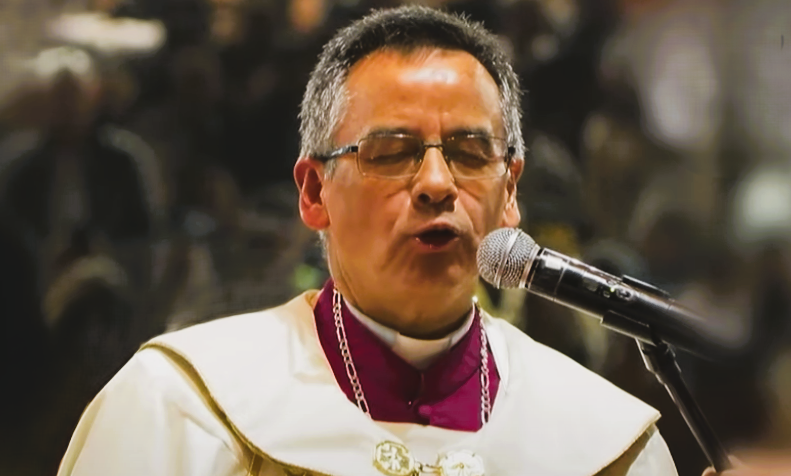
Thousands of pilgrims are already arriving on pilgrimage to the Insigne and National Basilica of Santa María de Guadalupe, opening the most intense pastoral time of the year, but Mexico’s most important sanctuary could be in a serious situation that would unleash a harsh storm over the Primate Archbishop of Mexico and the missing rector of the Basilica, Canon Efraín Hernández.
After the celebration of the mass of the roses, last October 12—commemorating the 49th anniversary of the inauguration of the new Basilica in 1976—various indications point to a possible internal crisis. Absences, tensions, and rumors of interventions have generated doubts about the management of the Archbishop of Mexico, especially during the period of his imminent replacement that could occur in the coming months.
From the symbolic and complicated languages, it is the Church’s liturgy that holds many meanings. The closeness of a presbyter to a bishop, the forms and gestures, reveal preference or distance. The prolonged absence of the current rector of the Basilica, Canon Efraín Hernández Díaz, who has not been seen in functions since August 2025, confirms that something, unless it is for health reasons, would be happening in the Basilica. Missing from the mass of the roses is not a coincidence or fortuitous event and could suggest that there is no longer a relationship, at least functional, with the archbishop and the Guadalupan chapter, possibly due to internal conflicts or higher pressures.
Speculations point to the fact that the vice-rector has assumed de facto the responsibilities, without a formal decree of interim. The lack of official communication from the archdiocese fuels these doubts, contrasting with the visibility that Hernández Díaz maintained until his trip to Spain on September 18 along with the auxiliary bishop Francisco Javier Acero.
Another point was the absence of the episcopal college. Although the archbishop presided over the celebration without auxiliaries, this could be interpreted in the facts as a matter between the prelate and the venerable chapter that must be resolved without intermediaries; the presence of one of the most respectable emeritus canons, the apostolic protonotary, Guillermo Moreno Bravo, canonist and expert in curial matters, drew attention, which could mean an attempt at stability. Moreno Bravo was vicar general and moderator of the curia during the times of Archbishop Rivera Carrera.
Another moment revealed the discomfort of the Primate Archbishop. His features, generally arranged and made up, tensed in an evident way when delivering the roses to the clerics of the chapter. This gesture, in a ceremony that should radiate joy and unity, could reflect the weight of internal pressures; it was noteworthy when Canon Horacio Palacios Santana announced the jubilee for the 50 years of the opening of the new Basilica in 2026 with liturgical and cultural festivities to honor this milestone. Any archbishop in his right mind would have announced this proclaiming a jubilee year, but in the cardinal, who submitted his resignation to the Pope last January, it had no greater effect. This jubilee year would have been the perfect occasion to extend his government after the submission of the resignation, but this already raises doubts about his commitment beyond 2025.
The archbishop faces harsh criticism for the authoritarian management left in the hands of front men who have seen in the archdiocese a machinery of gains. This fact is strengthened by the dismantling of the presbyteral senate which, as far as is known, only exists on paper, but not in functions when it should be the counterweight to the synodal decisions of his eminence.
Rumors of a possible apostolic intervention from the Vatican to investigate the irregularities in the handling of human, material, and financial resources of the Basilica and of the entire archdiocese are also becoming increasingly frequent. Other reports point to an internal canonical investigation in the Basilica regarding Efraín Hernández’s management and call for action from the Mexican Episcopate or the Holy See to avoid a greater crisis. However, the presbyterate of the Archdiocese of Mexico navigates the stormy sea of uncertainties and its right to know must be summarized in confirming what is stated here, demanding urgent responses from the archdiocese to restore trust.
One thing is certain. The Guadalupan chapter has responded to what may be one of the worst abuses in the management of the Basilica. Its role has given a clear guideline: the patrimony of the Virgin of Guadalupe is superior to anything, even to the worldly pretensions of the one who calls himself the “successor of Zumárraga”.