


El tiempo vuela, febrerico el corto va adelante y los temas se van agolpando. La táctica de dejar las cosas para mañana puede ser peligrosa y nos puede introducir en una situación en la que cada uno haga de su capa un sayo ante el silencio de la autoridad. Empezamos otro día.
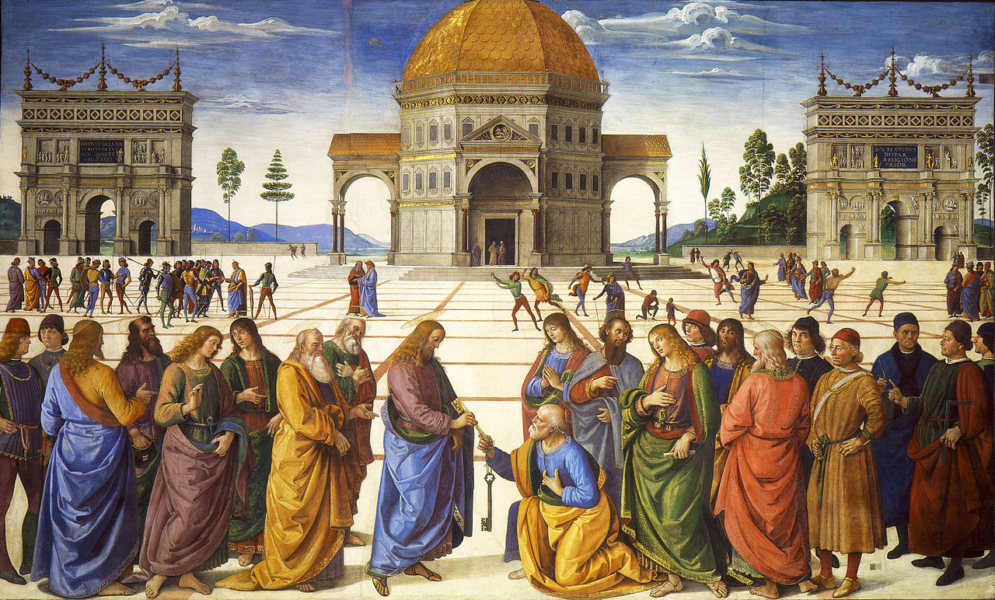
The Vicar of Christ on earth.
Pope Leo arrived late to the audience with priests and monks from the Oriental Orthodox Churches, on a study visit, and apologized: «I am the Vicar of Christ on earth, but I have no power over my agenda.» «The historical and cultural differences in our Churches represent a wonderful mosaic of our shared Christian heritage, something we can all appreciate. At the same time, we must continue to support each other so that our faith in Christ, which is the true source of our peace, grows.» «This requires us to learn to disarm ourselves,» echoing Patriarch Athenagoras, «pioneer of the ecumenical movement.» «When we eliminate the prejudices we carry within and disarm our hearts, we grow in charity, work more united, and strengthen our bonds of unity in Christ.»
The rights of the child.
Pope Leo XIV addressed the organizing committee of the initiative «From Crisis to Care: Catholic Action for Childhood», which follows up on the work of the International Summit on the Rights of the Child, promoted last year by Pope Francis. «We must ask ourselves if global commitments to sustainable development have been set aside when we see in our global human family that so many children still live in extreme poverty, suffer abuses and are forcibly displaced, not to mention that they lack adequate education and are isolated or separated from their families». “This reminds me of Pope Francis’s strong emphasis on the child’s right to receive the love of a mother and a father; both are necessary for their integral and harmonious development.”
Leo XIV and San Egidio.
This morning, Pope Leo XIV received the founder of Sant’Egidio, Professor Andrea Riccardi, in audience at the Vatican. According to reports, during the meeting—which takes place on the eve of the 58th anniversary of the Community—they addressed the numerous conflicts that persist in the world and the countless victims they generate, along with poverty and the indescribable suffering endured by people.
Leo XIV’s silence.
The eternal Becciu process.
The Appeals Court of the State of Vatican City has adjourned the trial today Friday pending a ruling on some preliminary issues. At the center is the issue of Pope Francis’s Rescripts and the proposal that has been presented to consult Pope Leo XIV to clarify their scope and effects on the procedure. Pope Leo intends to stay out of the matter, but this is impossible, he is the ‘supreme’ authority both civil and ecclesiastical in the Vatican. The sought inhibition is a way of acting, whether one wants it or not. «The Court reserves its decision; the parties will be summoned again.» What has been debated in detail in the last three hearings and will be the subject of an order issued by the Tribunal: the nullity of the first instance; the acquisition of documents related to the Italian investigation of the Striano case; and the evaluation of conversations and drafts involving certain witnesses and members of the Vatican Gendarmerie. The million-dollar question: Is the Vatican justice system on the verge of collapse? The ironclad defense of the papal rescripts (laws modified during the trial) serves to shore up a structure that risks collapsing at any moment. The credibility, the little that remains, of the Holy See is at stake: justice cannot be administered with the methods of a suburban theater, with a script written by improbable authors and improvising chaotically.
Will reasons of State prevail or the inalienable obedience to conscience on the part of the judges committed to the truth?. It should not be forgotten that the form of government of the State of Vatican City is an absolute monarchy. The sovereign of the State is the Supreme Pontiff, who holds full legislative, executive and judicial powers. The legislative function, except for cases that the Supreme Pontiff wishes to reserve, is exercised by the Pontifical Commission for the State of Vatican City, composed of cardinals, including the President, and other members, appointed by the Supreme Pontiff for a period of five years. The executive function is exercised by the President of the Pontifical Commission, who is the President of the Governorship and is assisted by the Secretary General and the Vice Secretary General. The jurisdictional function is exercised, in the name of the Supreme Pontiff, by the bodies established according to the legal order and by other bodies to which the law attributes competence for specific matters.
Deposing Pope Francis.
The pedophile Jeffrey Epstein and Donald Trump’s former campaign chief, Steve Bannon, exchanged messages about funding Catholic organizations to incursion into the Vatican with the intention of deposing Pope Francis, according to emails that were made public in the latest batch of declassified documents. A video of a long interview between Bannon and Epstein recorded in 2019, shortly before his arrest, has been published.
Varden, a bishop without complexes.
The young Norwegian bishop Erik Varden will lead the Pope and the Curia’s exercises, with the theme: «Illuminated by a hidden glory». The young Trappist bishop, born in 1974, is a convert: born into a Lutheran but non-practicing family, and agnostic, he experienced an encounter with God at 15, listening to the Symphony No. 2 ( Resurrection ) by Gustav Mahler. That spark began a path that first led him to attend Anglican services during his studies at Cambridge and then to a retreat at Caldey Abbey. Later, he converted to the Catholic Church and, years later, became a member of the Cistercians of the Strict Observance (Trappists), being ordained a priest in 2011. Nine years later, he received episcopal consecration. Varden is a bishop without complexes: «It seems to me that we are surrendering to secular modernity».
The Lefebvrian schism.
The Priestly Fraternity of Saint Pius X (FSSPX) published a statement explaining the reasons for the announcement of the upcoming episcopal consecrations. Superior General Davide Pagliarani directly addresses the current pontificate of Pope Leo XIV, describing it as a continuation of the «irreversible trajectory» marked by Pope Francis. In addition to explaining the Francis/Leo crisis, the statement addresses the silence of conservative bishops in the Church, the possibility of sanctions, their hopes, the ultimate reason for their action, and their perspective on the traditional Latin Mass. «Furthermore, the main orientations that are already emerging in this new pontificate, particularly through the last consistory, only confirm it. An explicit determination is perceived to preserve Pope Francis’s line as an irreversible trajectory for the entire Church. It is sad to recognize it, but it is a fact that, in an ordinary parish, the faithful no longer find the necessary means to ensure their eternal salvation. They lack, in particular, both the integral preaching of Catholic truth and morality and the worthy administration of the sacraments, as the Church has always done. This deprivation constitutes a state of necessity. In this critical context, our bishops are aging and, as the apostolate continues to expand, they are no longer sufficient to meet the demands of the faithful around the world». «The response from Cardinal Fernández does not address the possibility of an audience with the Pope. It also evokes the possibility of new sanctions». What will the Fraternity do if the Holy See decides to condemn it? First of all, let us remember that in such circumstances any canonical sanction would have no real effect. However, if they were pronounced, the Society would undoubtedly accept this new suffering without bitterness, as it has accepted past sufferings, and offer it sincerely for the good of the Church». «Last summer, I wrote to the Holy Father to request an audience. Receiving no response, I wrote to him again a few months later, in a filial and direct manner, without hiding any of our needs. I mentioned our doctrinal divergences, but also our sincere desire to serve the Catholic Church tirelessly, for we are servants of the Church despite our irregular canonical status. To this second letter, we received a response from Rome from Cardinal Fernández a few days ago. Unfortunately, it did not take into account at all the proposal we presented nor does it offer any response to our requests.»
Against ordinations without mandate.
Bishop David Waller of the Personal Ordinariate of Our Lady of Walsingham has warned against the consecration of bishops by the FSSPX without papal mandate. «The announcement is a very serious matter and the best response is to pray for the Holy Father and for the FSSPX.» «The Holy Father is the center of unity and we can be sure that he will be anxious to avoid further disunity or schism. That said, it is difficult to see how he can allow bishops to maintain an irregular relationship with the See of Peter. The fact that the Fraternity believes it has the authority to consecrate bishops without papal mandate is indicative of a serious ecclesiological problem in itself, regardless of whether such consecrations take place. We can only pray that conversations continue and a solution is found.» He trusts that Pope Leo XIV is deeply committed to preventing any new schism or greater division. Under the papacy of Benedict XVI, efforts intensified with doctrinal conversations from 2009 to 2012, exploring the FSSPX’s acceptance of Vatican II. In June 2012, Cardinal William Levada presented a draft protocol and reiterated the personal prelature as the canonical vehicle, allowing an FSSPX bishop to be exempt from local supervision but under the Pope’s tutelage. Disagreements over the Council stalled progress, despite Benedict XVI’s 2007 motu proprio, Summorum Pontificum, which liberalized the traditional Latin Mass.
The German schism.
Article by Gaetano Masciullo published in The European Conservative. The German Church is unique in the Catholic landscape, it is the richest Church in the world. It should be noted that, in 2025, the assets of the Holy See amounted to approximately 4 billion euros, while the German Church owned estimated assets of 250 billion euros. While money cannot explain the entire dynamic at play, it undoubtedly plays an important role in understanding certain decisions. The Vatican is very cautious about breaking ties with a Church that, voluntarily or involuntarily, represents a considerable financial asset. And the German bishops know this well.
The entire process had been triggered by the issue of sexual abuses in the Catholic Church, which had become, during the pontificate of Benedict XVI, a global problem, amplified and exploited by numerous media outlets and progressive institutional sectors to tarnish the «conservative bias» that Pope Benedict had given to the government of the Church. In Germany, the pressure was particularly intense, both because of Joseph Ratzinger’s German origins and because of the strong progressive and pro-Protestant presence in the clergy. In Germany, more than anywhere else, the abuse problem was presented and interpreted publicly by Catholics themselves not only as a moral failure, but as a symptom of a systemic failure of the Catholic Church: doctrinal, legal, and cultural. Hence the Synodal Way to comprehensively rethink the Church.
Pope Francis also decided to gradually introduce the «synodal method» into the Catholic Church, but he did so differently from the German bishops. The most important difference lies in the speed of implementation. The German bishops proposed «reforming» the Church through voting, therefore immediately and democratically. Francis, who was also a revolutionary in acceleration , but with a more practical sense, knew that reforms had to be introduced through non-democratic actions, certainly decisive, but gradual. Hence the inevitable friction between the German Church and the Holy See on issues of morality and doctrine. Francis aspired, like the German bishops, to a democratic reform of the Church, but disguised as a process of listening and discernment, and therefore composed of numerous phases.
Naturally, the progressive German bishops will need the approval of the Holy See, which, after the election of Leo XIV on May 8, 2025, has become even less likely than under Francis’s reign. This decrease in probability became more evident when Filippo Iannone, the man who first explained to the German bishops the difficult situation they were in, was appointed Prefect of Bishops. This is no coincidence: the Pope needs a man who knows the reality of the German bishops well to handle it with kid gloves. While on one hand, Pope Leo continues Francis’s steps by appointing progressive episcopal representatives around the world, on the other, he wants to contain the German hemorrhage as much as possible to avoid a schism.
During the last Consistory, held on January 7 and 8, Cardinal Marx intervened asking for the introduction of the female diaconate and expressing his intention to extend the «German synodal model» to the entire Church. This happened despite the fact that the topic of the female diaconate was not even on the agenda, and despite the fact that Cardinal Mario Grech, a staunch Bergoglian and general secretary of the Synod of Bishops convened by Francis, had clarified in his speech that the Pope has the «right to interrupt» any «synodal process», in clear allusion to what has been happening for too many years in Germany. Bätzing has announced that he will not seek re-election as head of the German episcopate. Who does he intend to make room for? The outcome remains to be seen. A bitter paradox persists: Pope Leo XIV, elected with the intention of reconciling opposing positions, runs the risk of being remembered as the pontiff under whom the most serious Catholic schism since the Lutheran Reformation developed.
Can morality change?
This question is central and constitutes the central theme of the book dedicated to the topic by two professors from the Alphonsian Academy of Rome. We must never forget that morality is a practical science, more than a theoretical reflection, that is, it deals with people’s real experiences and the existential dramas that involve the responsibility of choices that assume the complexity of existence. It is quite easy to agree on general universal norms, but then the closer we get to the concrete choice, the more uncertainties and doubts increase about which norms to refer to, conflicts arise between values that seem alternative and in competition with each other, freedom must deal with contingent conditions and limits, often of a systemic and structural nature.
In recent decades, the epistemological framework of moral theology has changed significantly. Attention to experiences and the psychological dimension is no longer considered predominantly therapeutic or reductionist, as was often the case in the past, but is placed in a broader historical, cultural, and ecclesial perspective. The individual is no longer considered isolated, but situated in complex contexts. Psychology no longer serves as the ultimate criterion for interpreting faith, but dialogues with other disciplines. Experiences become places of meaning and revelation, not just symptoms to explain.
Paul VI and Latin.
In the summer of 1966, just over a year after the conclusion of the Second Vatican Council, St. Paul VI wrote a brief but dense text reflecting on monastic life and liturgical reform. The Pontiff himself quickly realized that it had been widely misinterpreted. Sacrificium laudis , dated August 15, arose from a concrete observation: in several monasteries and religious provinces of the Latin rite, divergent requests had multiplied regarding the language of the choral Office and the form of liturgical chant. Some firmly defended Latin; others demanded the use of national languages; others wanted to replace Gregorian chant with «fashionable» music; some even demanded the abolition of Latin itself.
The Pope confessed to being «not a little surprised» and «not a little saddened.» Paul VI takes the issue to a deep level: preserving Latin in the choral Office means, yes, preserving a language «worthy of being carefully guarded», source of Christian civilization and treasure of piety; but it also means protecting the integrity, beauty, and original vigor of sung prayer. The choir is not a mere communal reading: it is the «voice of the Church» that sings, it is a form in which faith allows itself to be shaped by the inspired word and by the tradition that has made it prayer. Montini thinks of the founders, teachers, and saints of religious families who transmitted a way of praying that forged their glory and fostered their development. Underestimating this legacy is to weaken the living memory that sustains the identity and fruitfulness of a community.
The most incisive passage, for its depth and forward-looking vision, is the one in which the Pope poses a question that sounds like an ecclesial examination of conscience: what language, what chant, can replace, in that context, the forms of Catholic piety practiced until now? Paul VI fears that, once the formative continuity of Latin and Gregorian choirs is broken, the choral Office will degenerate into an «inform recitation,» poor and monotonous, whose sterility would be the first to affect the religious: will the faithful, attracted by the Church’s prayer, continue to flock to religious temples en masse if the ancient language and the seriousness and beauty of the chant, which for centuries have offered people a sensible experience of the sacred, no longer resound there? Latin and Gregorian choirs are not simply a relic of the past; they are an ecclesial form of prayer that has generated holiness.