


The night has been cold, very cold for what is usual in Rome, the sun is conquering the day and promises a beautiful Roman autumn day. Yesterday Monday, Pope Leo XIV met with the heads of the dicasteries of the Roman Curia. The Vatican’s machinery is paralyzed, almost all positions are unconfirmed, it’s been six months already and everything points to Leo XIV having set his dates. To finish the Holy Year and the commitments derived from hundreds of meetings with groups, more general audiences than normal and only one already scheduled trip. The extraordinary consistory of January seems to point to the moment when Leo XIV intends to take off, it’s not long before we know. The two personal secretaries have already been appointed and today we have a new ‘vice regent’ of the pontifical household with a 73-year-old regent and no prefect.
Pope Leo XIV has appointed an old companion and friend, the Nigerian priest Edward Daniang Daleng, OSA, as vice-regent of the Prefecture of the Pontifical Household, the second most important position in the Vatican office that organizes audiences with the Pope. The prefecture is also responsible for preparations related to papal ceremonies, the Holy Father’s spiritual exercises, and meetings of the College of Cardinals and the Roman Curia. Likewise, it manages the necessary preparations when the Holy Father leaves the Apostolic Palace to visit various places in Rome or Italy. Father Daniang was general counselor and, more recently, procurator general of the Order of St. Augustine, the religious order of Pope Leo XIII. As procurator general, the priest was in charge of preparing and carrying out the order’s affairs before the Holy See. Born on April 4, 1977, in Yitla’ar, Kwalla, Plateau State, Nigeria, Daniang made his first profession in the Order of St. Augustine on November 9, 2001, and his solemn vows on November 13, 2004, at the age of 47. He was ordained a priest on September 10, 2005, and received a doctorate in moral theology from the Pontifical Alphonsian Academy in Rome in 2012, with a thesis on “Respect for the dignity and care of patients with incurable and terminal illnesses”. In statements to Vatican News after the election of Pope Leo XIV, Father Daniang said that “Africa is at the heart of [Leo]” and that when he was prior general of the Augustinians, the then Father Prevost visited Nigeria at least 10 times».
Since 2020, the Prefecture of the Pontifical Household has been de facto directed by Monsignor Leonardo Sapienza, RCI , who served as chief of protocol for thirty years and was appointed Regent by Benedict XVI in 2012. The position of Prefect has been de facto vacant since 2020, when Gänswein stopped attending the Pope Francis’s audiences and official meetings. On June 15, 2023, the Holy See Press Office officially confirmed that Archbishop Georg Gänswein had concluded his term. Gänswein, appointed Prefect in 2012 by Pope Benedict XVI , had gradually ceased to exercise his functions due to his poor relationship with Pope Francis. In recent years, Archbishop Leonardo Sapienza has assumed the management of the Prefecture, a concentration of responsibility that, in the Vatican, rarely turns out to be beneficial. It is an ordered transitional phase , conceived for a progressive renewal of the position. The choice of an Augustinian priest is not accidental: the Pontiff wishes to surround himself with trusted, discreet, and competent collaborators , people capable of working in silence and with loyalty, like shadows that accompany his daily ministry.
Message from Leo XIV at the opening of the National Missionary Congress of Mexico, which takes place every 15 years. Over the 4 days, seven thousand missionaries from Mexico and the world gathered. The Pope highlighted the presence of the Virgin of Guadalupe, of Bishop Juan de Palafox, and of his visit as Superior of the Order of the Augustinians to Puebla. «The same happened in Mexico. The leaven of the Gospel arrived in the hands of a few missionaries. They were the hands of the Church, which would begin to knead the leaven they carried with them, the deposit of faith, with the new flour of a continent that still did not know the name of Christ. Upon integrating both, the slow and admirable process of fermentation began». «The Gospel did not erase what it found, but transformed it. All the incredible richness of the inhabitants of those lands, such as languages, symbols, customs, and hopes, was kneaded with Faith, until the Gospel took root in their hearts and flourished in works of unique holiness and beauty». «In that dawn of Faith, God gave the Church a sign of perfect inculturation. On Tepeyac, the Mother of the true God by whom one lives, appeared as a visible testimony of the love with which the Lord drew near to the inhabitants of those lands and of the believing response of a people who raised their eyes to their Savior, determined to heed the invitation of Our Lady, as in Cana, to do whatever He told them». «The message of Guadalupe became a missionary impulse. The first evangelizers, diocesans, Franciscans, Dominicans, Augustinians, and Jesuits, faithfully assumed the task of doing what Christ commanded». «Among those who continued to knead the Faith in those lands, the figure of the Blessed Juan de Palafox y Mendoza stands out in Puebla, a pastor and missionary who understood his ministry as service and leaven».
On Saturday, November 15, a parade of movie stars will arrive at the Vatican. As in previous occasions, when painters or comedians met with Pope Francis, this time it will be Leo XIV who receives, in the Vatican Apostolic Palace, actors, directors, and protagonists of the seventh art in an encounter promoted by the Dicastery for Communication and the Vatican Museums. Among the artists who will be present at the November 15 meeting with the Pope, Gianni Amelio, Roberto Andó, Judd Apatow, Francesca Archibugi, Marco Bellocchio, Monica Bellucci, Wang Bing, Catherine (Cate) Elise Blanchett, Stéphane Brizé, and Sergio Castellitto have already confirmed their attendance. The Pope will speak about four «significant» films in a video message before an audience on Saturday with directors and actors.
The investigation into alleged antisemitic reactions by a Swiss Guard continues. From the evidence available so far, a central element emerges: currently there is no objective evidence —neither audio nor video— that confirms the verbal abuse or the spit denounced. The reconstruction, moreover, initially indicates that it was a spit, but then the witness mentions a simulated gesture. The matter is delicate due to its location (St. Peter’s Square), its timing ( Nostra Aetate ) and the people involved (the Jewish delegation and the Papal Guard). Precisely for this reason, public discourse requires proportionality : an accusation without documentary evidence cannot become the paradigm of «antisemitism in the Vatican».
A contraption has appeared in the middle of St. Peter’s Basilica. Was it really necessary to inaugurate a «listening center» with a vague New Age air in St. Peter’s? Weren’t the confessionals enough? And isn’t confession the primordial moment of listening between the faithful and the priest who acts according to Jesus’s mandate? Its appearance is similar to that of the Bluetooth headphone cases so common today (probably a mere coincidence), and they bear very little relation to the architectural style of the Basilica. Weren’t the confessionals enough? Why add these «New Age» style boxes? Isn’t there a risk, by introducing this secular form of confession, that it will gradually replace the already discredited and despised sacramental form, thus taking another step toward the Protestantization of the Catholic Church? Could this be the «other door they want to open in the Basilica», for the exit from the Catholic Church? A whole image of these times of spiritual and material decadence.
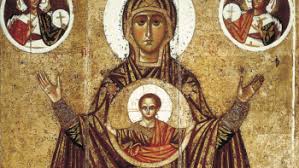
And we meet with Tucho and his surroundings. If Pope Leo’s desire is to calm things down, it seems we are on the worst of paths. The document on monogamy, as well as the one on the titles of the Virgin Mary, had been widely announced by the Prefect of the Dicastery for the Doctrine of the Faith in January of this year, shortly before Pope Francis began his hospitalization and his last journey. It remained to be seen whether Leo XIV intended to publish these documents. Thus, now it seems that Leo XIV intends not to leave any unfinished or wasted work, already started by his predecessor. The document on Mary’s titles seems to clash significantly with the idea of unity and reconciliation in the Church, which permeated the election of Prebost as Pope and the first steps of Leo XIV. By its very nature, the document from the Dicastery for the Doctrine of the Faith was destined to generate controversy. Not only did it qualify the title of co-redemptrix as «inappropriate», but it also showed coldness toward the title of Mary Mediatrix; this document opens a new front in the intra-ecclesial debate, which perhaps was not necessary.
The document had the same gestation time as the document on the blessing of irregular couples, which Fernández had claimed had been presented to the dicastery for review. Finally, it was learned that a document on the subject had only been discussed in general terms, but the final result had not been discussed in detail during the feria quarta, the Wednesday meeting of all the dicastery’s officials, which serves to address matters with an interdisciplinary focus. It is no surprise, in this sense, that the document was questioned even during its presentation, even by laypeople. Was this document necessary? Probably not, just as the document that blessed irregular couples was not necessary—when has anyone been denied a simple blessing?—, nor was Traditionis custodes , which severely limited the celebration of Mass and other liturgical rites according to the ancient custom. All these documents are divisive, they neither add nor subtract anything from the debate, but rather tend to stifle discussion through the exercise of authoritarian power; that is why they have the effect of driving people away from the faith. Each document represents a test for the new Pope. Will he passively accept the decisions made? Or will he react to Francis’s Revolutionary Guard, which has surrounded him from the first day of his pontificate?
Roberto de Mattei doesn’t like Tucho’s latest emanation either: «With profound sadness we have read this text which, after a syrupy tone, hides a venomous content. In a historic hour of confusion, in which all the hopes of fervent souls are directed to the Most Holy Virgin Mary, the Congregation for the Doctrine of the Faith intends to strip her of the titles of Co-redemptrix and Universal Mediatrix of all graces, reducing her to a woman like any other: “mother of the faithful”, “mother of believers”, “mother of Jesus”, “companion of the Church”, as if the Mother of God could be confined to a human category, stripping her of her supernatural mystery». «It is difficult not to see in these pages the culmination of the post-conciliar mariological drift which, in the name of the «middle way», has opted for a minimalism that degrades the figure of the Most Holy Virgin Mary… Men may try to «decapitate her», reducing her to a simple woman, but Mary remains the Mother of God, Immaculate, ever Virgin, Assumed into Heaven, Queen of Heaven and earth, Co-redemptrix and Universal Mediatrix of all graces, because, as St. Bernardino of Siena explains: «Every grace granted to men proceeds from a triple ordered cause: from God it passes to Christ, from Christ it passes to the Virgin, and from the Virgin it is given to us» (Sermon VI on the feasts of B.M.V., a. 1, c. 2). For this reason, according to St. Augustine, quoted by St. Alphonsus Liguori, everything we say in praise of Mary is always insufficient compared to what she deserves by her exalted dignity as Mother of God (Le glorie di Maria, vol. I, Redemptorists, Rome 1936, p. 162).
Mario Proietti sees positive aspects in the Marian note on the doctrine of the Faith. «We were so worried about what could be taken away from Mary that we didn’t realize that the Note of the Dicastery for the Doctrine of the Faith denies with words what it actually affirms with the doctrine. The document prefers to remain silent on the traditional titles, but exposes their essence with almost surprising clarity. Mary, we read, «cooperated in a singular way in the redemptive work of her Son», uniting her faith and obedience to his saving mission. This is precisely what theology has always understood by the term co-redemption. When it states that her “yes” to the Annunciation finds its fullness under the Cross, “where she remains united to the Son in the same offering of love”, the Note implicitly recognizes the principle of maternal cooperation in the Redemption: the Virgin does not add anything to the Son’s work, but participates in it as a united instrument, instrumentum coniunctum, as St. Thomas would say. And again: the document teaches that Mary «continues to exercise in the Church a function of intercession and maternal mediation». It is the very formula of the Second Vatican Council ( Lumen gentium , 62): «The Most Holy Virgin is invoked in the Church as Advocate, Helper, Benefactress, and Mediatrix». This is the classic doctrine of the Mediatrix omnium gratiarum (Mediatrix of all graces): a subordinate but real mediation, founded on the intimate union between the Mother and the Son.
This is precisely the theological definition of Co-redemptrix and Mediatrix. There is no need to force it: it is already there, in the heart of the text. Only, instead of stating it explicitly, the document hides it behind linguistic caution. It is as if it defends the truth, but fears its own name. Mater populi fidelis does not fall into error, but suffers from a pastoral timidity that impoverishes it. It does not deny traditional Mariology, but rather its vocation. In trying to limit what it considers ambiguous language, the Dicastery for the Doctrine of the Faith has ended up offering one of the clearest and most coherent expositions of the doctrine of Marian co-redemption and mediation in recent decades. The reality that the Note fears to name is precisely the one it defends in its theological development. It wanted to avoid the titles of Co-redemptrix and Mediatrix, but to do so it had to explore, point by point, the entire path that justifies them. Thus, paradoxically, the Note ends up establishing what it fears to name.
The Vatican doctrinal office’s suggestion that the titles of «Co-redemptrix» and «Mediatrix» are not appropriate ways to describe Mary’s participation in salvation is not a minor error that can be corrected and forgotten over time. Rather, it is an unacceptable confusion of the meaning of the Incarnation and Redemption, a grave offense against the Mother of God and her Son, Jesus Christ. A article today makes a broad review of what divine revelation means and the role of St. Mary. It concludes thus: «From Genesis to the Apocalypse, she is present as servant of her Son in the work of redemption. She does not obscure the work of grace. Grace dwells bodily in Christ and divinizes him; grace fills her, she is full of grace and distributes what she receives. She is not the sun, nor the heavenly East, nor the Redeemer. She is like the moon: she gently reflects the rays she receives and scatters them upon us. The moon is her symbol, as shown in the representations of Our Lady of Guadalupe. To say that she is an obstacle to the glory of her Son is an aberration. The task of the Magisterium is to teach, and what must be taught is not difficult to understand; it only requires correct interpretation. May those who published against Mary’s titles, and those who approved it, receive some of the graces she pours out and repent of the harm caused. They did not damage Mary’s reputation before her sons and daughters; they damaged the reputation of the Vatican, already so discredited before its faithful.
We move on to other news and Cardinal Robert McElroy’s troubles are growing and the conflict with Father Michael Briese increases after McElroy allegedly refused the priest’s request to hold a meeting. He claims to have been involved in three homosexual matters over the years prior to his appointment as archbishop of Washington. These accusations represent a significant escalation in the Father Briese, whose previous accusations—that McElroy dismissed as defamatory—had focused on cover-ups of predatory clerical sexual abuse for years by McElroy and his predecessor, Cardinal Wilton Gregory, has decided to direct his new allegations toward the cardinal-archbishop’s personal life. In an open letter published on November 1, Briese suggested in explicit and graphic terms that McElroy had engaged in sodomitic practices during the 40 years of his priesthood. The indignant priest accused McElroy of «lifelong infidelity to celibacy and of not living a moral priesthood», and declared: «Your immoral behavior as a priest and ordained bishop of the Catholic Church is despicable!». The specific accusations made by Briese in his letter include three alleged cases. McElroy has asked the Vatican to laicize Father Briese.
Good reading.