


The statute of limitations in abuses.
We start with a heavy dish and one that we believe is a very weak point, in a certain way inherited, but seemingly assumed, from the previous pontificate. Second installment by Federica Tourn on how the statute of limitations is being handled in the abuse issue in the Vatican at this moment. It focuses on an Italian case but we all have in mind parallel cases like the one in Chiclayo: «The Church of León XIV, in perfect continuity with that of Francisco, says many nice words about pedophilia and then does the opposite. In the case of Don Valentino Salvoldi, which we addressed in a previous article , the statute of limitations declared by the Italian judicial system was quickly followed by the ecclesiastical system. Pope Francis had repeatedly reiterated that the Church’s view on child abuse does not expire and, therefore, the statute of limitations is always suspended in such cases.
Lawyer Dutto was appointed to investigate, but from the first moment it was clear that something was off: the investigator contacted the victims from an email address managed by the Child Protection Service of the Diocese of Bergamo. When Stefano Schiavon, one of the victims of the Bergamasque priest, pointed it out and asked if anyone interested in providing testimony in the case should contact her at that email address, the lawyer, frankly, redirected him to her private address. «As it is a legal procedure, in compliance with the principles of impartiality and third parties, it is preferable to use the written contact (the email address I have provided you, from which I am writing to you)».
Dutto provides the victims of Salvoldi with a personal email address to use in her investigation into the reported abuse, and this solves everything for her. She does not seem to see any problem in maintaining her dual role as a member of the Diocese’s Child Protection Service and as the person in charge of assessing the responsibility of a priest reported for child abuse, as if the simple change of address were enough to guarantee her status as ‘third and impartial’. Not to mention that, in many of the lawyer’s email exchanges with the victims, the Diocese’s Child Protection Service is copied.
Lawyer from the Milan Bar Association and expert in crimes against persons not only is part of several child protection commissions, but she is also a trusted lawyer of the Church. She represents the Italian Episcopal Conference (CEI) in the ongoing trial regarding the alleged misuse for private purposes of more than two million euros from 8% of taxpayers’ income tax and Vatican funds intended for the Diocese of Ozieri, in the province of Sassari. The trial involves Antonino Becciu, brother of Cardinal Angelo Becciu, the Bishop of Ozieri, Corrado Melis, and seven other people, accused of various charges of embezzlement, money laundering, false statements to the Public Prosecutor’s Office, and complicity.
Dutto has a clear conflict of interest, and she is not the only one in the Church who, on the right, deals with abused minors and, on the left, with abusers. Thirty-two of the 130 diocesan listening centers for victims were examined in a two-year study conducted by Rete l’Abuso, which highlighted how they essentially serve to provide the diocese with information on abusive priests: «When a report of a crime is received, the listening centers established by the CEI guidelines do not conduct a formal investigation, but act as an informal access point: they listen, sometimes record the information, and transmit it to the bishop».
According to the results of the study when a victim approaches a diocesan listening center, they find themselves facing three structures that do not communicate with each other: The first is an office that collects victims’ data and transmits it to the bishop, who will decide whether to proceed with a preliminary investigation and refer the complete file to the Dicastery for the Doctrine of the Faith. This office, as mentioned, collects the victim’s data and transmits it to the second office, but does not have access to the complete files. Therefore, it knows the individual data provided by each victim, but is unaware if the main file contains other victims of that priest. From now on, as before the assistance services, it is at the bishop’s discretion to initiate a preliminary investigation and refer everything to the third body—the Dicastery for the Doctrine of the Faith—or not. Obviously, no one, neither the victim nor the assistance service that received them, will have access to those files nor be able to verify their actual progress. We will have to trust what the bishop says.
And this is what happened to Stefano Schiavon, who, after having presented his testimony on November 18, 2024 (within the six days allowed), received no further news on the development of the preliminary investigation until February 11, 2025, when lawyer Dutto, always through the email address of the Diocese of Bergamo’s Minors Protection Service, notified him of the conclusion of her work with her usual fraternal empathy: «Dearest, Regarding the canonical preliminary investigation initiated by the Diocese of Bergamo against Rev. Father Valentino Salvoldi, I inform you that, the diocesan phase having concluded, the file has been duly delivered to the Dicastery for the Doctrine of the Faith for its competent determinations».
In response to Schiavon’s legitimate request to be informed of the conclusions of the ‘diocesan phase’, the official response gives chills: «The file is confidential and at this moment the diocese is not authorized to provide any information to the persons who expressed their offense and offered their contributions, nor to the person under investigation. The documents have been delivered to the Dicastery for the Doctrine of the Faith because this Dicastery is competent in the matter according to canon law and, at this point, the Bishop will have to await communications or instructions from it regarding the matter. Once the documents of the preliminary investigation have been received and carefully studied, the Dicastery for the Doctrine of the Faith has several options: to archive the case; to request a more thorough preliminary investigation; to impose non-penal disciplinary measures, usually through a penal precept; to impose penal remedies or penances, or warnings or admonitions; to initiate a penal process; or to identify other pastoral avenues of interest. At that time, the decision will be communicated to the Bishop, with the pertinent instructions for its execution. As for the time, there is no strict deadline; generally, a decision can be expected within six months, but, as you will understand, each case has its own unique characteristics and, therefore, the Dicastery might examine the documents and make a decision in a shorter or longer period than the one indicated above. There are no specific provisions that regulate the communication of the investigation result to persons who, like you, manifested their offense and contributed their inputs during the preliminary investigation phase».
According to canon law, the victim has no right to any information about the outcome of the case. While victims of abuse are encouraged to contact diocesan child protection services, in reality, those who report a pedophile priest do not even have the right to be informed of the outcome of the investigation. So the Salvoldi file has reached the Vatican, and here, practically, all trace has disappeared. Victims are asked to wait indefinitely, without even the guarantee of receiving a response soon.
In response to complaints, a second unacceptable response: «Once the diocesan phase was completed, the file was forwarded to the Dicastery for the Doctrine of the Faith, so I am no longer in possession of the documents, which moreover cannot be disclosed according to canon law (not even to the cleric against whom the preliminary investigation was conducted). For reasons of confidentiality, I cannot respond to your question about other persons. I provide you with the address of the Dicastery for the Doctrine of the Faith, to which you can address yourself if you wish (I do not have an email address). Dicastery for the Doctrine of the Faith, Palazzo del Sant’Uffizio, 00120 Vatican City. Sincerely
The abused Schiavon, understandably, has difficulty accepting this and asks Dutto for further clarifications: so Salvoldi, after all that has been proven even in the criminal process, will continue to be a priest, saying Mass surrounded by altar boys and hearing confessions from teenagers? The response: Dear Professor Schiavon:
As in any other legal system, also in the canonical system the archiving of a process due to statute of limitations entails the impossibility of applying a penalty, including—in the canonical system—the dismissal from the clerical state. The priest in question—also by virtue of the age limit reached—is not assigned any office or ecclesiastical task, including, therefore, those that involve contact with minors. Finally, I would like to inform you that my role in the procedure in question has largely and completely concluded, so I take this last opportunity to wish you all the best». Incredible.
The case has expired and nothing more can be demanded from the Church, much less the dismissal of the priest from the clerical state. However, the diocese assures us that he is already elderly and has no official functions. Schiavon and all the other teenage victims deceived and abused by a priest, instead of the promised justice, will have to accept this fragile axiom: their abuser has retired and can no longer cause (much) harm. Word of the bishop. Terrible, we remember León XIV on January 8, 2026, closing the extraordinary consistory: «Often, the scandal in the Church arises because the door has been closed and the victims have not been welcomed, accompanied by the closeness of authentic shepherds». The Church pretends to be scandalized by what it does but the reality is what it is.
A Swiss Guard butler.
It is not a minor topic although it may seem very domestic, with the imminent return to the palace we already have a butler. Lieutenant of the Swiss Guard Anton Kappler is the new chamber assistant to Pope León XIV. He replaces Piergiorgio Zanetti, who retired last week and previously served in the Pontifical Gendarmerie, just like the late Angelo Gugel, who accompanied John Paul II during his 27 years of pontificate. Anton Kappler, born on August 16, 1979 in Wattwil (SG), has been a member of the Pontifical Swiss Guard since February 2001. For many years he was in charge of the armory. Before being promoted to lieutenant, he also served as a squad sergeant. As a lieutenant, he was responsible for directing the third section, which also includes members of the Corps band. The butler is a discreet but central figure in the Pope’s daily life: he is not just a high-ranking assistant, but a kind of guardian of his private life, the man who sees what almost no one else sees and who accompanies him in the most everyday moments of the day. A constant presence, characterized by absolute trust, confidentiality, and dedication.
Over the decades, several names have become emblems of this delicate role. Among them stand out the chamber assistants of John XXIII, the brothers Giampaolo and Guido Gusso, and, as we mentioned at the beginning, Angelo Gugel, John Paul II’s butler for many years. For years, Gugel was a fixed figure in the papal apartment: discreet, efficient, always present, but never intrusive. Those who knew him remember his discreet professionalism and the relationship of trust he forged with the Polish Pope, built on small everyday gestures rather than formal protocols.
Different and more turbulent was the story of Paolo Gabriele, butler to Benedict XVI, who became the target of the Vatileaks scandal. In 2012, Gabriele was accused of stealing and leaking confidential documents from the papal apartment, convinced, according to his own statements, of wanting to expose the problems and corruption within the Curia. The case deeply shocked the Vatican precisely because it involved one of the figures closest to the Pope. The Pope’s butler remains an almost invisible figure: he does not appear in official documents or in the Church’s important decisions. However, in the Pontiff’s daily life, he is one of the few silent witnesses to a human dimension that rarely reaches worldwide attention.
The decision of León XIV is revolutionary, but those who do not know the dynamics of this small state have not understood it. It is an extremely delicate position: a layman called to assist the Pope in all aspects of his daily life, almost always at his side. A person is needed who is faithful and, above all, discreet, who does not turn his proximity to the Pontiff into an opportunity to go around telling facts and anecdotes, boasting of a supposed ‘ power ‘. You need someone who does not go home to tell his family what he did that day.
The background of the topic is that after the Vatileaks scandal, Sandro Mariotti was appointed by Benedict XVI himself to take Gabriele’s position. Pope Francis, once elected, immediately opted to add one more person, drawing him from the Gendarmerie of Vatican City State. A ‘perverse’ decision, as even some cardinals called it, because the Gendarmerie has always been known in the Vatican as a parking place for many recommended by prelates and influential people. This position is not accessed through a competition or a verification of ability, but according to who presents him and according to ‘unknown’ criteria to most.
Pope Francis wanted at his side the same body that, before his election, could not even access the Apostolic Palace. Over the years, it has borne fruit: from security failures to the involvement of commissioners in scandals with criminals, through the collection of files on prelates and cardinals, to the scandal of Domenico Giani and his expulsion from the State, with his entry into the Order of Malta as ‘soap to silence him’.
Pope Francis then paired Zanetti with the controversial figure of Stefano De Santis, who continues, often at his service as a driver. Santa Marta had become a theater of files and money coming in and out of the Pope’s safe. Let us hope that León XIV’s choice returns peace to the Sacred Palaces. The Swiss Guard is the Pope’s body, it must be valued by allowing only it access to the Apostolic Palace. The Gendarmerie must function as a police force for the State, as it was conceived from the beginning. Blessed Pius IX who lived such tumultuous moments in his long pontificate always said that the Swiss Guard can be entrusted with the custody of the entire palace with a single wise exception: the key to the cellar.
On Parolin and preventive war in Iran.
The condemnation of preventive war and the denunciation of violations of international law by the Vatican Secretary of State, Cardinal Parolin, are sacrosanct, but the Church’s duty goes much further. We have an interesting interview. Cardinal Parolin spoke of a ‘multipolarism inspired by the primacy of power’ and characterized ‘by the ability to demonstrate self-sufficiency’ on January 17, on the occasion of the anniversary of the Pontifical Ecclesiastical Academy. In an interview with Vatican News, he took up the theme, arguing that multipolarity, power, and self-referentiality are the three factors eroding the current international order.
«I seriously doubt that Iran would have carried out a preventive attack. I think what happened, frankly, is that when intelligence showed there was an opportunity to attack leaders, including the Supreme Leader, the president [Trump] decided it was an important target», admitted the former CIA director and former US Secretary of Defense, Leon Panetta.The words of the Vatican Secretary of State fit into this subtle chess game, plagued with sophistries and crude created interests. «If States were granted the right to ‘preventive war’, according to their own criteria and without a supranational legal framework, the entire world would risk being set on fire». Cardinal Parolin’s denunciation, and therefore that of the Holy See, is correct and necessary, but the factors that characterize the current international situation, such as self-referentiality and the primacy of power, deserve to be highlighted more forcefully by the Holy See, in light of the unique ethical contribution it can provide. It must be remembered that such violations occur because the current international system has been based on a relativist logic, that is, on conventional principles on which the greatest possible consensus has been sought, in the name of a deformed vision of ‘freedom’. It is necessary to restore the centrality of natural law, as an expression of man’s innate inclinations toward truth and goodness. Ratzinger recalled: «For the Church, natural law, inherent in the human creature itself, has been the means for dialogue with those who do not share the faith». Today the very concept of nature has been emptied from within, assuming a purely empirical meaning, reduced «to what can be observed with the sciences, with biology, to what can be found in evolutionary doctrine». The current international situation is going through a deep crisis due to the illusion that the United Nations Charter was sufficient to create a system of shared norms. When the ‘only guarantee of peaceful coexistence among peoples’ is ‘to deny citizenship to the truth about man and his dignity, as well as to the possibility of an ethical action based on the recognition of natural moral law’, it is evident that premises that are unstable by definition are being created. We continue with Benedict XVI: in this way, ‘a conception of law and politics is effectively imposed in which the consensus among States, sometimes obtained by conjunctural interests or manipulated by ideological pressures, seems to be the only and ultimate source of international norms’.
The Catholic Diocese of Iraq.
The Chaldean Catholic Archdiocese of Erbil in Iraq suffered a drone attack on an apartment complex where several Christian families live. No one was killed or injured in the attack. «Fortunately, the building had been largely evacuated several days earlier due to its proximity to Erbil International Airport.» The building housed archdiocese workers and young Christian families displaced by a previous attack in the region. The building was funded by the Knights of Columbus as a center for Christian refugees displaced during the 2014-2018 war. A nearby convent of the Chaldean Daughters of the Immaculate Mary was also damaged by the attack. The archdiocese asks Christians around the world ‘to remember and pray for the many marginalized people in Iraq, including the small and still threatened Christian minority struggling to remain in their homeland’.
Reciprocity with Muslims?
Muslims in our woke countries are pampered, evidently not because they like it at all but because they have to go against everything that smells Christian. In a tactic that can work in politics and that can cause damage in the religious world, but it is forgotten that what we must seek is not confrontation with Muslims but their conversion, and this occurs not infrequently. The principle of reciprocity no longer applies in international law, nor in Italy. In a school in Florence, Muslims are allowed to pray in a dedicated room, Florentine Catholics are not even allowed a crucifix. Until a few years ago, the pressing demands of Muslim immigrants in Italy, interested in building or using spaces for places of worship, called into question the principle of religious reciprocity. The Vatican, like citizens and associations, did so, openly complaining about the generally abominable treatment received by our brothers and sisters Christians residing in Islamic countries.
The brave Jesuits?
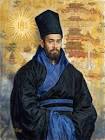
In Italy there is a song by Franco Battiato: «Euclidean Jesuits dressed as monks to enter the court of the emperors of the Ming dynasty». Under Pope Francis, Jesuit par excellence, the Vatican negotiated an agreement with China that still today has strong repercussions. Up to León XIV, when asked about the situation of Jimmy Lai, a Catholic publisher whom the regime sentenced practically to life imprisonment for his role in the pro-democracy riots in Hong Kong, had to capitulate: «I cannot comment».
It is very easy to send letters about migrants mistreated by Donald Trump. It is easy to start reprimanding the US president, a country where freedom of expression reigns and where the Church is not a victim of systematic governmental repression. With China, however, the story is different and the brave become submissive courtiers and the balance of power is inverted. The Chinese-Vatican pact of Pope Francis was supposed to protect the faithful in China, but apparently it has protected China from the faithful. The Holy See, despite the arrival of León XIV, takes care not to utter a single phrase that could irritate Xi Jinping. The party appoints bishops; the Pope cannot speak of a persecuted Catholic and we are told that this diplomatic agreement is a true success. There was a time when Jesuits dressed as monks and managed to begin the evangelization of an unknown world, today, with the communist successors of the Ming dynasty, it seems they have changed course and are becoming Chinese. Our image today is of Diego de Pantoja, less famous than Ricci but no less important, Italians always know how to sell themselves better.
The schism within the Anglican schism.
It seems there will be another primate born from the anger over the election of the primate, but with nuances. Gafcon describes itself as a global movement of ‘authentic Anglicans, who protect God’s gospel’, and was formed in 2008 in response to differences within the Anglican Church over the acceptance of same-sex unions. Gafcon announced that it decided not to elect a ‘primus inter pares’ and instead created the Global Anglican Council, ‘which includes primates, advisors, and guarantors, who will include bishops, clergy, and lay members, each with full voting privileges’. The Council members will share their authority in a conciliar structure. The Archbishop of Rwanda, Laurent Mbanda, was elected president of the Global Anglican Council, and the Brazilian Archbishop Miguel Uchoa was elected vice president. The council president will be a primate, but will be considered a primus inter pares.
The election of Mullally, who has expressed opinions in favor of abortion and LGBT people, has deepened the division between the conservative and progressive factions of the Anglican Church. Gafcon had already rejected the leadership of the previous Archbishop of Canterbury, Justin Welby, in 2023 due to his proposal to bless same-sex couples. “This is a schism, even if they don’t want to say it”. In October 2025, Gafcon committed to reorganizing the Anglican Communion, refusing to participate in meetings convened by the Archbishop of Canterbury and encouraging its members to cut the ties they still maintained with the Church of England. The group argues that it is not in schism, but represents the true Anglican Communion, composed of 42 provinces in 165 countries around the world.
Interview with Müller.
And we end with a heavy dish and always interesting. The we have it complete available, addresses without taboos the central themes of the Church and the West: the role of the papacy, secularization, new ideologies, and the risk of a new cultural totalitarianism. The cardinal insists on the need to return to centering on Christ and the spiritual dimension, defending freedom, human dignity, and Christian identity in a world increasingly distant from God. He offers a lucid and uncompromising portrait of the pontificate of León XIV, contemporary secularism, and the totalitarian tendencies of the modern world.
With Pope León XIV, he states, the Church has recovered a dimension that was at risk of fading: the primacy of God. Compared to Francis’s pontificate, strongly oriented toward social and pastoral concerns and immigration issues, the new pontiff moves in the tradition of St. Augustine, with a Christocentrism that emerges in every homily, every text, every public gesture. There is a more divine dimension, because we are convinced that man without God cannot live or think, has no hope. It is not about questioning his predecessors: Benedict XVI offered the great theological systematization, Francis brought a Latin American pastoral style of closeness. But today the papacy feels the need to reiterate that the Church is not a humanitarian organization, but ‘in Christ, sacrament of universal salvation’. ‘Christ’. ‘He is always at the center of the Second Vatican Council, of Lumen Gentium… The light of the world is Christ, Christ is the only mediator between God and men. God became man in the divinity of Jesus Christ, foundation of his true humanity and human nature. This is the basis of the entire Christian message and it is not something subjective, a private idea, but the great mission’.
The great process of secularization begun by the Enlightenment has undoubtedly produced extraordinary advances in science, technology, and psychology. But it has also engendered its own monsters: from the French Revolution, with its thousands of innocent deaths, to the great totalitarian systems of the 20th century—the National Socialism, Fascism, Communism—with their millions of victims. ‘Gods who are actually men and present themselves as dictators, as tyrants. They want to tell us what to think, how to speak, what to eat’.
It is not just a theological interpretation: ‘Yes, it is evident, and I am not the only one; many observers, philosophers, journalists, and sociology professors see this trend toward a new dictatorship even here, in our more or less democratic countries’. Democracy, the cardinal warns, cannot be maintained by inertia: it requires a true democratic spirit, a respect for fundamental rights that no parliamentary majority can suppress. In this context, the reference to the Epstein network is not casual. Political and academic groups that isolate themselves from the social body, the super-rich who decide the world’s future in Davos, protected from democratic control, the dominant classes that ‘separate themselves from the people and live in luxury’, convinced of being above morality: these are, for the cardinal, symptoms of a degeneration rooted precisely in the abandonment of God’s commandments and moral conscience.
The so-called sex change is, according to the cardinal, ‘an assault on the body’. Particularly harsh is his criticism of the main supranational organizations—the UN and the European Union at the forefront—that promote the normalization of abortion based on the ‘absolutely wrong idea that there are too many men’. ‘What we are committing is a collective suicide; we are killing our children, and in the end, we are left with the elderly’. And the question the cardinal poses is rhetorical but direct: after abortion, euthanasia for those who are no longer ‘useful’? Seeing human beings through the lens of utility is, he concludes, ‘absolutely inhuman’.
Regarding the eternal debate between conservatives and progressives in the Church, the cardinal’s response is clear: ‘We must simply follow the Gospel, not these more political or ideological contradictions’. The distinction between right and left is a product of the French Revolution and does not belong to Christian logic. The points of reference are the word of God, the Church Fathers, and great intellectuals like John Henry Newman and Benedict XVI. ‘We must be realistic: they use a realism similar to that possessed by Jesus Christ himself and the apostles. St. Paul is realistic, and this openness to God, transcendence, and also responsibility for the immanent world’. The Church is a mixed body, a net in which all kinds of fish swim: not an elite of ‘super-Christians’, but an open and realistic community that looks at man as he is, without idealizing or despising him, always with eyes fixed on transcendence and the hope of eternal life.
«…the Kingdom of God will be taken away from you and given to a people that will produce its fruit».
Good reading.