


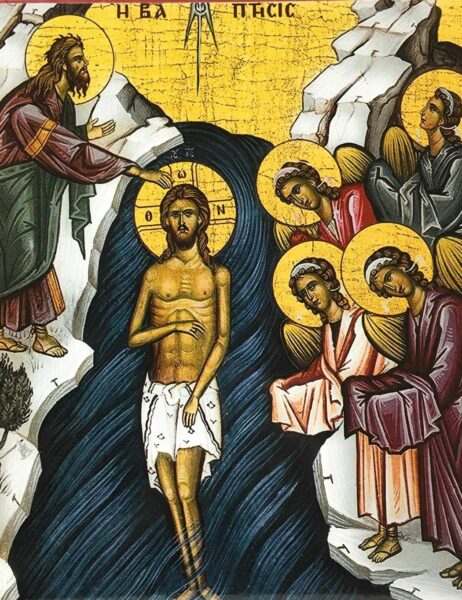
Domingo del Bautismo de Señor, en un rato tentemos los bautizos en la Capilla Sixtina, que es una pena que no se utilice mucho más y que su uso principal sea para el turismo. Hacer caja es importante, hay que comer, pero la que es una referencia ‘católica’ en todo el mundo no puede quedar reducida a una sala más de un museo, aunque sea la mejor sala de museo del mundo. Hoy, bautizos con el Papa y en su capilla, todo un derroche de belleza.
Audience with the young people of Rome.
Yesterday, two audiences, the first with the young people of Rome. Before meeting with the young people in the Paul VI Hall, the Pope greeted the young people gathered in St. Peter’s Square and then continued his journey, also greeting the Roman youth gathered in the Petriano. In his speech to the young people gathered in the Paul VI Hall, Pope Leo XIV thanked them for their presence: «I am very happy to be with you, to have this opportunity to share a little of this investigation, this desire to respond not only to the questions we just heard, but to so many things in life. I want to share with you that, just before coming here this evening, I received a message from my niece, also young, who told me: «Uncle, how do you deal with so many problems in the world, with so many worries?», and she asked me the same question: «Don’t you feel alone? How do you manage to get ahead?». And the answer, in large part, ¡is you! ¡Because we are not alone!».
The Pope responded to the young people’s questions about disappointment and loneliness, because life is not the same: «When this grayness clouds the colors of life, we see that we can be isolated even in the midst of so many people». «Don’t expect the world to receive you with open arms: advertising, whose goal is to sell something to consume, has a greater audience than testimony, which seeks to build sincere friendships. Therefore, act with joy and tenacity, knowing that to change society, we must first change ourselves. And you have already shown me that you are capable of changing yourselves and building these friendships. ¡This way we can change the world, this way we can build a world of peace!».
Audience with the Jubilee collaborators.
The second to those who have collaborated in the Jubilee with a very wide presence of Italian authorities. A very cordial handshake and even an exchange of smiles and a laugh from the president: this is how Pope Leo XIV greeted the Italian Prime Minister, Giorgia Meloni, at the end of the audience during which he thanked the authorities and volunteers who contributed to the success of the Jubilee. He began with an extensive thanks: «You have made a multifaceted contribution, often hidden, always demanding and full of responsibility, thanks to which more than thirty million pilgrims have been able to complete the Jubilee itinerary and participate in the celebrations and events, in a climate of joy and, at the same time, serenity, recollection, order and organization. Thanks to you, Rome has offered everyone its face as a welcoming home, an open, joyful community, but at the same time discreet and respectful, helping each person to live fruitfully this great moment of faith». Nor could he avoid mentioning the canonization of two saints very dear to young people: «I would like to mention, in particular, the presence in Rome, on the occasion of the Jubilee, of so many young people and adolescents from all nations. It was wonderful to experience firsthand their enthusiasm, to witness their joy, to see the intensity with which they prayed, meditated and celebrated, to observe them, so numerous and diverse, but united, orderly (¡also thanks to your service!), eager to get to know each other and to live together moments of grace, fraternity and peace. Let us reflect on what they have shown us». He presented a crucifix: «At the end of this meeting, I am pleased to give each one of you, as a small token of thanks, the Jubilee Crucifix: a miniature of the cross with the glorious Christ that accompanied the pilgrims. May it remain with you as a reminder of this experience of collaboration. For this reason, I bless you and wish you all the best for this new year».
Franciscan Holy Year.
In the Basilica of Santa Maria degli Angeli in the Porziuncola, the commemorative year of the death of St. Francis of Assisi was officially inaugurated. It is the place that houses the chapel where, in the autumn of 1226, his earthly pilgrimage culminated. Leo XIV has proclaimed a special Franciscan Jubilee Year, from January 10, 2026 to January 10, 2027. «¡How illusory it would be to think of building peace only with human efforts!». With this statement, Pope Leo XIV opens the core of the letter sent to the General Ministers of the Conference of the Franciscan Family, read this morning in the Porziuncola Basilica. Peace is born from a victory already achieved over what paralyzes man, above all the fear of death; therefore, it cannot be reduced to a formula or a diplomatic balance, but becomes a criterion of life, to be embraced and practiced «every day». It is a passage that, in a context of wars and social fractures «that seem endless», defines the crucial point: Francis continues to speak not offering «technical solutions», but pointing to a source.
The consistory ends on abuses.
The text of the Pope’s speech at the conclusion of the Consistory has been published, in which he invited the cardinals to write to him to «continue the dialogue». And «if they have economic difficulties» to attend the next meetings, «tell me», urging «mutual solidarity». There are 170 cardenals who have arrived in Rome from all over the world for the first extraordinary consistory of his pontificate, we will find out who the absences are and their reasons. The debate was intended to focus on the Synod and synodality and on evangelization. It was striking the decision of Pope Leo to mention the crisis caused by sexual abuses «even though it is not a topic of this meeting». «We cannot close our eyes, nor even our hearts». Especially when «the pain of the victims has often been greater because they have not been welcomed or heard». «The abuse itself causes a deep wound that may last a lifetime; but often the scandal in the Church is due to the fact that the door has been closed and the victims have not been welcomed, accompanied by the closeness of authentic pastors». «A victim, recently, told me that the most painful thing for her was precisely that no bishop wanted to listen to her. And there too: listening is profoundly important». The Pope pointed out the need for deep and concrete formation, which is not limited to documents or academic classrooms. «The formation of priests, bishops and laity in seminaries», he explained, «must be rooted in the daily life of the local Churches, in the parishes, in the places of encounter, especially of those who suffer».
Nothing remains of the Consistory, we greeted each other, we ate, and Rome well deserves a few days, little more. Of the four proposed and so expected topics, reduced to two and finally to nothing, perhaps that was what was sought. If we discard unity based on Truth, only the strategy of smoothing out controversial things and staying in a we’ll see remains. Pope Leo: «The debate will continue. I invite you again to present in writing your assessments on the four topics, on the Consistory as a whole and on the relationship of the cardinals with the Holy Father and the Roman Curia. I also reserve the right to read carefully the reports and personal messages and, subsequently, to give you my opinion, a response, and continue the dialogue». Ending with something not foreseen or proposed indicates that the topic of abuses touches Pope Leo closely. The Chiclayo case still weighs a lot, to the point of reaching an «Excusatio non petita, accusatio manifesta». It is already known that «if you have nothing to justify, don’t apologize» or «he who excuses himself, accuses himself». In fact, if someone hurries to justify their actions without being asked, it can be considered an indication that they have something to hide, even if they are truly innocent. Already St. Jerome in his Letters (Epistle IV) warned: «dum excusare credes, accusas» , ‘while you think you are apologizing, you accuse yourself’.
«Tell me what you boast about and I will tell you what you lack» applies to a person who attributes a virtue to themselves, but soon gives signs that contradict exactly what they preach. What reveals the existence of this mechanism of boasting precisely about what one lacks is the fact that there is “an extra” in such an attitude. It is emphasized too much and too often, it is taken as a flag, there is an exaggeration that becomes notorious. The person immersed in this mechanism is not aware of it, truly believes that promoting certain ideas or values, using themselves as a model for it, is a genuine crusade. Their intention is not so much to convince others, but to persuade themselves that this is true. It is not that the person lies or pretends deliberately, but that they are unable to recognize their own feelings due to a moral censorship that they impose on themselves and which can become a pattern of behavior that settles in the structure of the personality. In that case, there is a kind of “false personality” in which practically all the actions of an individual are directed to sustain the mask. This can lead to experiencing a large dose of anguish, enormous inner tension, between what pushes to be expressed and the enormous effort you must make to “keep it in check”. When our behavior is coherent with what we think, we will not need to boast about anything to attract attention.
Spain and immigrants.
Pope Leo XIV will soon travel to Spain and the Canary Islands, an important entry point for migrants to Europe and would also include stops in Madrid and Barcelona; dates have not yet been set. A central feature of the trip will be a visit to the Canary Islands, an Atlantic archipelago off the coast of Morocco that has become the destination of one of Europe’s deadliest migration routes. It is estimated that more than 1,900 people died trying to reach the Canary Islands from the African coasts in 2025. Pope Francis had previously expressed his desire to visit the Canary Islands as a sign of closeness to migrants, although the trip never materialized. Pope Francis did not want to visit Spain throughout his pontificate. Pope Benedict XVI traveled to Madrid for World Youth Day in 2011. In June 2026, the centenary of the death of Antoni Gaudí, architect of the basilica, which is currently on its way to being declared a saint, will also be celebrated.
The troubled Vatican of the Becciu case.
The Vatican Court of Cassation has taken a few more days to decide whether to challenge the Vatican promoter of justice, Alessandro Diddi, and exclude him from the Becciu process. A tangle of files tailored to «save» the true person responsible for the decisions, thanks to a series of (secret) rules modified on the fly in relation to telephone interceptions and the confidentiality of the investigation. This matter marked the end of Pope Francis’s pontificate and influenced the Conclave that elected Leo XIV. To the eyes of numerous observers who follow the case with interest, the Becciu process was anything but «fair». We already know that the Vatican judicial system cannot be compared by far to the so-called modern rule of law states. Pope Leo, unlike his predecessor, has already declared that he does not wish to interfere in the decision: «that is the task of the appellate judges and the defense lawyers». As the ‘supreme’ authority in the Vatican ‘he cannot not intervene’, even the declared decision not to intervene is a form of intervening. The shadows surrounding Pignatone, the judge in the first part of the process, accused of collaborating with the mafia, do not help either. We are still a long way from restoring the image of a transparent Vatican, which with this process has further undermined its credibility.
Parolin and Maduro.
Many news about the puzzle that led to the capture of Nicolás Maduro on January 3 thanks to the revelations of the Washington Post with the Holy See playing an unexpected role. In the previous days, according to the newspaper, Parolin had tried by all means to contact Senator Marco Rubio, a key figure in U.S. decisions on the Venezuelan file. This attempt was motivated by fear of an outbreak of violence. During his conversation with Ambassador Burch, the cardinal revealed that «Russia was willing to grant asylum to Maduro and asked the Americans for patience to convince the Venezuelan president to accept». Maduro was offered a fairly comfortable escape route: guaranteed asylum and the opportunity to «enjoy his money «, but the proposal did not materialize. The Venezuelan leader repeatedly underestimated the magnitude of the crisis . in November, in a phone call with Trump, he received an ultimatum , which he interpreted as a sign of conciliation.
What’s happening in Venezuela.
«Another concern is whether there will really be a transition from the current political model to another. For 26 years, Venezuela has been governed by Chavista socialism, influenced by Karl Marx, but also by Chávez’s own authoritarianism. Many people long for economic stabilization and access to a better and more dignified life, which they currently lack. At the same time, many Venezuelans hope for the release of political prisoners. And, of course, there are the seven or eight million Venezuelan refugees who now hope to return to their homeland with their families».
«Many Venezuelan priests have had to leave the country to work in other countries and support their families. Many religious communities have also had to leave due to lack of resources, as the economic situation has become increasingly difficult. Many members of religious orders from other parts of the world cannot enter the country due to difficulties with visas». «The damage caused in Venezuela is also psychological, because people’s trust has been deeply hurt. That is why I believe that the political and legal institutions of the State will take time to regain credibility. I think this will take quite a while».
An anti-Trump Pope?
The recent comments of Pope Leo XIII on the U.S. military operation in Venezuela were quickly labeled as leftist by some media outlets. Under the headline «The first American pope expresses his deep concern over Trump’s invasion», Laura Esposito, of The Daily Beast , framed Pope Leo’s response from a critical perspective, citing a long list of previous criticisms that the pontiff has directed at some of President Trump’s policies. Esposito’s essay in The Daily Beast framed Pope Leo’s warnings as a harsh rebuke of President Trump’s actions in Venezuela. This interpretation suggested that Pope Leo aligned himself with political leftism rather than applying long-standing Catholic moral principles and established principles of Vatican diplomacy. Other mainstream media echoed this tone, emphasizing conflict and ideology over Pope Leo’s language on sovereignty and peace.
Pope John Paul II called war a «defeat for humanity» and urged leaders to opt for diplomacy before resorting to force. Pope Benedict XVI stated that military action must be exclusively defensive and always focused on the protection of civilians. And Pope Francis has echoed the same ideas, calling for «the weapons to be silent» and warning any nation against using force to control another. Pope Leo’s comments on Venezuela follow the same pattern, as he spoke of sovereignty, peace and dialogue, not politics. Comparing each response, it is clear that Pope Leo does not break with tradition at all and follows the same path that the modern papacy has followed for decades.
Catholic media themselves are responsible for contributing to the confusing media narrative and the primacy of politics that has led others to believe that Pope Leo is hostile to President Trump. Even the United States Conference of Catholic Bishops published on January 5 :»Pope Leo expresses deep concern for Venezuela after Maduro’s capture», citing, without editorial comments or criticisms, the new interim leader of Venezuela, Delcy Rodríguez, who stated that «the United States has violated international law and that Maduro remains president». The words of Pope Leo are filtered from a partisan perspective.
The clear explanation of Bishop Robert Barron on these principles, described in his teaching on Catholicism and just war theory, offers a useful way to evaluate the measures taken to overthrow an unjust ruler, in a case like that of the cruel and tyrannical former President Maduro of Venezuela: «Sometimes, the only way to oppose a great evil is to use violence or force» and this is the essence of just war theory. The question is not whether the Pope is right-wing or left-wing, but whether the moral criteria that guide Catholic teachings are taken seriously by those who must interpret them.
The Iranian regime collapses.
Another very troubled point these days is the uprising in Iran that began as a protest by bazaars and merchants against the disastrous economic policies of the Islamic regime in Tehran. These protests have become something much more serious: an attempt to overthrow the Islamic Republic. They are not limited to demanding reforms; they are tearing down symbols of the Islamic Revolution: flags are being lowered, posters of Khomeini and Khamenei are being burned, statues are being toppled, including that of General Soleimani, whose assassination at the hands of the Americans the regime celebrates on its sixth anniversary. The Trump administration is no longer standing idly by. The rebellion against the Islamic Republic has spread like wildfire in two weeks across the country’s 31 provinces, excluding none, although insurgent activity is more intense in Tehran than elsewhere. The capital concentrates 20% of the demonstrations. Trump had raised the possibility of intervention if the regime, «as usual», murdered innocent demonstrators. Is he now willing to intervene? The United States is reinforcing its contingent in Iraq, but the Islamic regime remains in power and armed, with clear signs that the regime is afraid and preparing to kill.
Three years without Cardinal Pell
Cardinal Pell died three years ago, on January 10, 2023, we leave it here but around his death we could say so much. On Friday evening in Rome, at Domus Australia, a requiem Mass was celebrated for the one who was the first prefect of the Secretariat for the Economy and who had to face abuse charges in his native country, which he denied and from which he was finally acquitted. After his death at the age of 81, it was revealed that he was the man behind the pseudonym “Demos”, under which he had written a memorandum the previous year, condemning Pope Francis’s papacy as a “catastrophe”. The statement denounced issues such as the appointment of officials considered heretics, the “Pachamama” statue and the softened attitude toward homosexuals.
Pell died before the election of Pope Leo XIV, but it is interesting to see what the cardinal wrote about “The next conclave”. He pointed out that the cardinals met infrequently during Francis’s government and that many of them did not know each other, which added a new dimension of unpredictability to the next conclave. Many cardinals read the “Demos” document carefully, especially after it became known that Pell, who was not only a prominent figure in the “conservative” wing of the world Catholic Church but also one of them, had been its author.
Pell wrote: “After Vatican II, Catholic authorities often underestimated the hostile power of secularization, the world, the flesh and the devil, especially in the Western world, and overestimated the influence and strength of the Catholic Church”. “We are weaker than 50 years ago and many factors are out of our control, at least in the short term, such as the decrease in the number of believers, the frequency of Mass attendance, the disappearance or extinction of many religious orders”. The new Pope must understand that the secret of Christian and Catholic vitality lies in fidelity to the teachings of Christ and Catholic practices; it does not lie in adaptation to the world or in money.
According to ‘Demos’, the first tasks of the new Pope will be to restore normality, doctrinal clarity in faith and morals, due respect for the law and to ensure that the first criterion for the nomination of bishops is the acceptance of the apostolic tradition. Experience and theological knowledge are an advantage, not an impediment, for all bishops, and especially for archbishops. He also complained about the apparently endless synodal meetings around the world, saying that “they will consume a lot of time and money, probably distracting energy from evangelization and service instead of deepening these essential activities”.
Pell also complained about the German Synodal Way, which according to him promotes homosexuality, women priests and communion for the divorced. “If there is no Roman correction of such heresy, the Church would be reduced to a flexible federation of local churches, with different viewpoints, probably closer to an Anglican or Protestant model than to an Orthodox model”. The Demos document also pointed out that the younger clergy and seminarians are almost completely orthodox, and even sometimes quite conservative (and most data certainly confirm this), but said that the next Pope «will have to be aware of the substantial changes made in Church leadership since 2013, perhaps especially in South and Central America», and added that there is «a new impetus in the passing of Protestant liberals in the Catholic Church». Pell admitted that a schism in the left is unlikely, “which often does not take doctrinal issues into account”. “It is more likely that the schism will come from the right and it is always possible when liturgical tensions flare up and are not soothed».
Pell insisted that a lot of work is needed on financial reforms in the Vatican, “but this should not be the most important criterion in the selection of the next Pope”. “The Vatican has no substantial debts but the ongoing annual deficits will eventually lead to bankruptcy”. “The Vatican will have to demonstrate competence and integrity to attract substantial donations to help with this problem”. Although Cardinal Pell traded time for eternity three years ago, there are reasons to think that the Church – the Vatican, at least – may still be feeling his beneficial influence.
«This is my beloved Son, with whom I am well pleased».
Good reading.