Leo XIV and the ‘presence of God’, return ‘to the apartment’, being pope is not easy, music returns to the Vatican, the ‘lamentable’ document, «domus Dei et porta coeli», the eternal post-conciliar issues, the rights of God, ‘crushing the soul’.

Leo XIV and the ‘presence of God’, return ‘to the apartment’, being pope is not easy, music returns to the Vatican, the ‘lamentable’ document, «domus Dei et porta coeli», the eternal post-conciliar issues, the rights of God, ‘crushing the soul’.

We are facing a very intense day, with a lot of news and many background articles, always complicated to present.  Let's try it again and we start by thanking our readers for the inconvenience due to the format change of Infovaticana, which we think is greatly improved, and the richness of being able to offer all the page's content in the main languages.

During the flight to Rome, Leon XIV responded  to the questions from journalists who asked him for a book to  «understand who Prevost is». He pointed to a small volume on spirituality : «The Practice of the Presence of God», by Brother Lawrence«If you want to know something about me, about what my spirituality has been for so many years, read this book». Many of the journalists  do not pray, some do not believe and almost all see the Vatican through the categories of power and intrigue. By pointing to a book by a discalced Carmelite , he reminded everyone that the Pope is above all a man of God, and that his main task is not to manage files , but to speak of Jesus . To the young people of Bkerké, he said: «They asked me where to find the anchor to persevere in the commitment to peace. Dear friends, this anchor cannot be an idea, a contract, or a moral principle. The true principle of the new life is the hope that comes from on high: it is Christ! Jesus died and rose for the salvation of all. He, the Living One, is the foundation of our trust; He is the witness of the mercy that redeems the world from all evil. As Saint Augustine reminds us, echoing the Apostle Paul: «In Him is our peace, and from Him comes our peace».

«The Practice of the Presence of God» is a small book composed of a preface , four Conversations , and a series of Letters from Nicolas Herman , born in Lorraine, former soldier and waiter, who entered the Discalced Carmelites of Paris as a lay brother in the 17th century. The preface narrates his story almost modestly: his conversion took place around the age of eighteen, in the middle of winter, before a bare tree . Contemplating that bare trunk, Lawrence intuited that spring would cover it again with leaves, flowers, and fruits; from that simple scene, a «lofty vision of Providence and the Power of God» was born in him that would never leave him. God does not arrive through extraordinary experiences , but through a fragment of reality observed with seriousness. From that moment, Brother Lawrence decided to live as if he were «in the presence of God» : not to escape the world, but to be in it in a different way.

If one leafs through the Conversations, the underlying theme of the book emerges immediately: the radical decision to entrust everything to God , even the most banal things. Brother Lawrence insists that it is not about changing professions or seeking more «spiritual» places; it is about changing the way of living what one is already called to. Another recurring theme is trust . Lawrence confesses that he spent years convinced of his destiny to damnation. No theological argument could reassure him; and yet, he decided to continue loving God «come what may», certain of at least one thing: that he had tried to live for Him until death. This decision not to measure spiritual life by feeling, but by fidelity, becomes the door to great interior freedom : in the end, he understood that the problem was not guilt, but the lack of faith in mercy.

The countdown for the transfer of Pope Leon XIV «to the apartment»  has begun. We already have  images showing the maintenance work on the roof of the Apostolic Palace, which is being renovated these days. Everything points to the Pope's rooms being ready to be occupied in the first days of January. In a few days, it will be seven months since he was elected and Pope Leon is still in the apartment he occupied as a cardinal, in the Palace of the Holy Office. We are told that the renovation has been complicated since some rooms in the Apostolic Palace had not been used for 13 years, when Benedict XVI moved  after presenting his resignation. The Swiss Guard, which in recent months has moved from Santa Marta house to the Palace of the Holy Office, will return to its traditional guard and control posts.

We already have the fir tree raised in St. Peter's Square and it is always received with suspicion because it involves the felling of a large specimen.  The truth is that it comes from a territory where tens of thousands of trees are felled every year to actively manage the forest and produce wood and other services.  The 25-meter tall fir was extracted «with respect for the forest», as is emphatically highlighted in the Vatican communiqué. The bishop of the tree, Ivo Muser, of Bolzano-Bressanone: « The felling of the tree is not an disrespectful act, but the fruit of prudent forest management, where harvesting is part of an active approach that ensures the health of the forest and monitors its growth». «The tree will remain on display until the end of the Christmas season. Subsequently, essential oils will be extracted from its green branches, while the remaining wood will be donated to a charitable organization that will take care of its recovery». 

Msgr. Stefanetti was a very familiar figure in pontifical ceremonies; he has left us at the age of 73, he was the dean. Since the papal liturgy does not require full-time for pontifical ceremonies, with the exception of the Master of Ceremonies and his secretaries, most of the ceremonialists work in other dicasteries.  Due to his health problems, for some years he was not seen exercising his liturgical function, although he continued as dean.

The Prime Minister Giorgia Meloni made an unannounced visit to Awali, Bahrain, to the Cathedral of Our Lady of Arabia, seat of the Apostolic Vicariate of Northern Arabia, which covers Bahrain, Kuwait, Qatar, and Saudi Arabia. She was accompanied by the Apostolic Vicar for Northern Arabia, Msgr. Aldo Berardi.  It is the largest Catholic church in the Gulf, with capacity for 2300 faithful.

Being Pope is not easy. Leon XIV must have realized this on his first apostolic trip, and not only because of his tight schedule. While everything was going well  with the Orthodox patriarchs, the Catholic patriarchs with whom he met privately at the apostolic nunciature in Beirut raised some concerns.  For years, the Syro-Catholic Church has been living through a real internal earthquake, previously hidden from the public, but which we can reveal today. The Patriarch, eighty-one years old, no longer has the trust of the vast majority of his bishops. This tug-of-war has been going on since 2021 and worries Rome. Younan wanted one of his candidates to be elected bishop, but the Syro-Catholic Synod firmly opposed it. Through manipulation and pressure, this situation has come to the attention of the Dicastery for the Eastern Churches and the Pope himself. The Patriarch is nothing more than a primus inter pares who can do nothing against the majority of his brothers. Probably anticipating a confrontation with them, Younan postponed the convocation of the Synod twice until Francis himself intervened, urging him to reconvene it in Rome for July 2025. Despite the resistance, Leon XIV confirmed his predecessor's decision. The Synod proved fatal for the elderly patriarch: almost all the Synod Fathers requested his voluntary resignation. This solution was conceived as a sign of respect, to avoid the situation becoming public, but it did not obtain the patriarch's consent. This was followed by the painful decision to withdraw his trust, under the neutral gaze of Prefect Gugerotti.  Pope Leon rejected the request  to remain in office for one more year, granting him only a six-month mandate. The issue was dealt with behind closed doors at the nunciature, but it is unlikely that Leon XIV will change his mind, and it may not be surprising that he has devoted little time to this point on the agenda.
In Venice, the 60th anniversary of the lifting of the mutual excommunications between Catholics and Orthodox was celebrated, in the presence of Cardinal Zuppi, Metropolitan Policarpo of Italy and Exarch of Southern Europe, and Patriarch Moraglia of Venice. The remembrance of the 60th anniversary of 1965, when, at the Second Vatican Council, Pope Paul VI and the Patriarch of Constantinople, Athenagoras, agreed to lift the mutual excommunications between Catholics and Orthodox in 1054.
Practically prohibited under the papacy of Francis, the great Vatican concerts with Leon XIV are back. In just a few weeks, two major events have been scheduled in the Paul VI Hall. The first, with Maestro Riccardo Muti, will take place on December 12, coinciding with the awarding of the Ratzinger Prize to the artist, and on  Saturday, December 6, Michael Bublé will perform at the Christmas Concert for the Poor, a traditional charity event.  The evening will take place in the Paul VI Hall, and the artist will be accompanied by the Nova Opera Orchestra and the Choir of the Diocese of Rome, under the direction of  Frisina. The Vatican is reviving a tradition that began in 1966, when the RAI Symphony Orchestra offered an evening in honor of Paul VI.
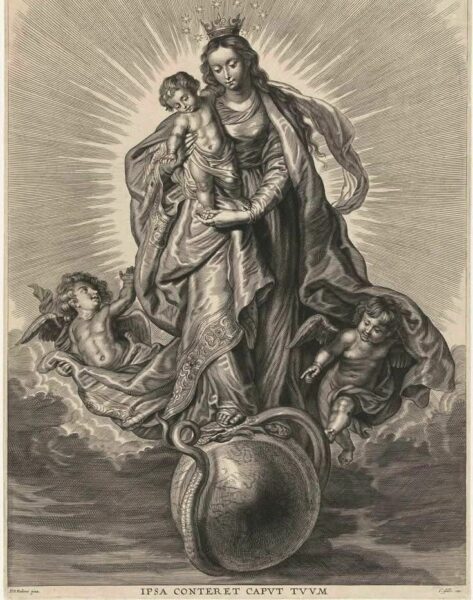
Bishop Bernard Fellay, of the Priestly Fraternity of St. Pius X, in an interview: «The path to Heaven is difficult. Our time has reached an intensity of evil greater than before. Temptations are greater than ever», He explained that there has been a terrible crisis in the Church since Vatican II, including a terrifying decline in vocations: «One wonders how far it can go».  «The influence of the Church in the world has been reduced to nothing». Bishop Fellay quoted the well-known prediction of Cardinal Ratzinger that the Church as we know it will disappear and be reduced to «small islands»: «I fear we are very close to that moment». «Many things in the Church have already been destroyed». Fellay called Tucho's Marian document «regrettable»: «It is an insult to God. God wants His creatures to collaborate and cooperate in His work». God wanted the Most Holy Virgin Mary to fulfill her unique function, and that many popes had used the title of «Mediatrix» and, at times, «Co-Redemptrix», or similar formulations. Fellay recalled that, before Vatican II, theologians were close to defining a Marian dogma of Mary as Mediatrix of all graces. He believes that the reason for Tucho's document is ecumenical reconciliation: «There is a Protestant spirit in the Church».
On October 21, Cardinal Blase Cupich published a reflection on the liturgy and its relationship with poverty. This letter generated debate, and Nicola Bux wrote an open letter, published on November 18.  According to Cupich, the liturgical reform inaugurated by the Second Vatican Council is in harmony with the growing sense of the need for a new image of the Church, simpler and more sober […] not defined by the elements of worldly power. For Cupich, the reformed Roman Missal would thus have recovered its ancient sobriety, lost over the centuries due to a worldly Church because of its own cultural hegemony. Bux questions the idea that the liturgical Tradition is a form of «spectacle», alien to the people of God, and argues that it is precisely the solemnity of worship that expresses the presence of Christ and converts the world. Today we have an interview with Bux: «The current trend is the effect of the anthropological turn of Karl Rahner, which has also penetrated into divine worship: instead of speaking of God, one speaks of man and the world –the profane– , a term that indicates the reality of the world before and around ( pro ) the temple ( fanum )». «The liturgy is the axis, the culmen et fons , of the life of the Church. In this, Christianity connects with the religious sense of the ancients and brings it to its fullness through the Incarnation of the Son. The term temple did not prevent, in the early Church, the place of worship of the assembly from being called domus ecclesiae , the «house of the Church» gathered from anywhere. He who gathers is God; He is the builder and, therefore, the first inhabitant of the domus , as the rite of dedication of a Church affirms: it is, therefore, the house of God, domus Dei et porta coeli , although He is the One whom the heavens cannot contain.
«After the Second Vatican Council, the Lord was often emphasized as the «wholly other», but then He ended up being reduced to one of us». «In reality, within the Church there is disagreement about the nature of the sacred liturgy: those who consider it a sacred worship due to God and those who, on the other hand, consider it human entertainment, perhaps with a religious veneer, as Ratzinger observed, and therefore a profane spectacle».  «The rights of God in the worship due to Him must be restored and preserved through a Codex liturgicus that regulates what the Constitution affirms, especially article 22c of Sacrosanctum Concilium : no one, not even a priest, can add, remove, or change anything in the sacred liturgy». 
The history of the Councils shows that the truth of the faith is affirmed only after hard battles, between crises, setbacks, and endless post-conciliar periods that still today demand to be overcome. A Council always constitutes a step forward in the self-awareness of the people of God, but to consolidate itself it must survive its post-council. From the beginning, with Nicaea  it happened this way, the end of Arianism took another four centuries.  When today we hear Jesus spoken of as a great man, a true sage, a powerful miracle-worker, a sincere revolutionary, a supreme wise man but, please, by no means God incarnate, well… Arianism is precisely this. Therefore, it seems we are witnessing a relapse. The battle continues and so does the darkness.

The Council of Nicaea was very lively, with the public slap from St. Nicholas (the one from Christmas) against the heretic Arius for his blasphemies about Jesus. Then came the painful kick in the testicles from an Arian to Hypatius, Bishop of Gangra, who suffered an inguinal hernia for the rest of his days. Today he is the protector of virility and the male urogenital system, enjoying great veneration in Salento and even in Russia.  After Nicaea, the post-conciliar conflict intensified. Let us cite only some of the many episodes: in 330, the Orthodox bishop Eustathius, the first patriarch of Antioch, was deposed by Constantine after a pro-Arian prostitute accused him of impregnating her, and was reinstated years later, thanks to the woman's repentance and confession. In Constantinople, in the year 343, General Hermogenes, sent by Emperor Constantius to install the Arian bishop Macedonius, was lynched by a frenzied mob; in the year 379, Bishop Eusebius of Samosata was murdered by a tile thrown by an Arian woman; the Bishop of Alexandria, St. Athanasius, was forced by the Arians to abandon his episcopal see five times.

The ecclesial climate was tense and heated, Gregory of Nissa described it thus, between ironic and afflicted: «If you ask for money, he gives you a dissertation on the begotten and the unbegotten; if you ask the price of bread, «the Father is greater», he replies, «and the Son is subject». Ask if the bath is ready, and he declares that the Son comes from nothing. I don't know what to call this evil: frenzy, madness, or some kind of epidemic that overwhelms the mind». St. Jerome, about fifty years after the almost unanimous orthodoxy of the 318 Fathers of Nicaea, wrote his famous phrase: Ingemuit totus orbis, et arianum se esse miratus est , «the whole world groaned and marveled to find itself Arian».  According to  Newman, in that fourth century, the truth of the faith was preserved thanks to the sensus fidei of the people , since almost all the bishops had succumbed to imperial power and heresy. From that furious post-conciliar period, we should conclude that the first ecumenical council in the history of the Church had failed; but in the long term —what Leon XIV defined as «the long period of trust in which God works»—, it was not so. Joseph Ratzinger's 1985 speech on Vatican II and the post-conciliar period should be reinterpreted in this light: «The results that followed the Council seem cruelly opposed to everyone's expectations… Christians are again a minority, more than at any other time since the end of antiquity». Who knows if we are at the end of this  endless post-conciliar period. 

We move on to civil matters with news that indicates the stubbornness of the friends of the United Nations and the new winds from the United States.  The United Nations continues on its way and  the WHO recently called for free and easy access to in vitro fertilization (IVF) that destroys embryos for everyone, including those in gender diverse relationships. The group's «first global guideline on infertility» mentions some areas of genuine concern, suggesting that a «healthy diet, physical activity, and quitting tobacco» can help with problems. It also focuses on identity politics and policies that do not focus on children, but on the mistaken idea that everyone has a right to have a child, no matter how many human embryos are destroyed in the process. The report states that human rights include conceiving a baby, presumably with generous subsidies from insurance companies or taxpayers:  single persons or those in same-sex or gender diverse relationships may need services to meet their fertility preferences.

In the United States, things are changing very quickly and for the better with a current of common sense.  The next human rights report in the world will include, among other violations of human dignity, the funding of abortion, laws against freedom of speech, and treatments for «gender transition». This marks a historic turning point for the State Department and also includes the reference to God. Starting in 2026, it will significantly change the way it prepares its annual human rights report worldwide.  Violations of human rights will be considered: hormonal treatments and surgeries aimed at children in gender transition; abortions funded by the government; laws that undermine freedom of speech; diversity, equity, and inclusion (DEI) hiring policies, i.e., preferential hiring practices based mainly on race and LGBT identity; and coercive euthanasia.

The change was communicated to all U.S. consulates and embassies. «This telegram contains precise instructions that inspire deep gratitude on the part of representatives of the pro-life movement worldwide».  Regarding the murder of unborn children, starting next year, U.S. diplomats must indicate not only whether governments subsidize abortion and abortifacients, but also the total estimated number of abortions performed each year in a given country. Elective abortion will be considered for what it is: a grave assault on life and human dignity.  Human rights violations will also include the facilitation of mass or illegal immigration «through the territory of a country to other countries». «The United States maintains its commitment to the recognition in the Declaration of Independence that all men are endowed by their Creator with certain inalienable rights», and added that rights «are given to us by God, our Creator, not by governments».

And we end with a must-read book. With the pontificate of Pope Francis, the number of young bishops has skyrocketed and, except for some naive ones, everyone has realized that many of these appointments are proving harmful. Why? Because there is a lack of maturity , lack of experience, and often those involved end up suffering a role that on the one hand they have spasmodically pursued , but on the other imprisons them: always under the gaze of the people and brothers, crushed by the weight of a diocese and all the problems it brings. We have a publication on the subject by Dom Dysmas de Lassus, Carthusian prior and author of «Crushing the soul: Risks and drifts of religious life «.  The bishops who govern the diocese as if suspended in a kind of prolonged adolescence. Churchmen who, instead of representing mature fatherhood, end up entering into dynamics of jealousy, gossip, and cliques,  that a mature bishop should know how to defuse, not feed.  They are bishops who demand total obedience and who react like wounded adolescents when a young priest is more sought after by the people than they are or dares to question their visions and requests.  Today  they fill their mouths with synodality but act like despots , and their decisions often bear the mark of resentment , grudge , and the desire to punish . What if you rebel? They send you to a psychologist, not to someone truly free and competent, but to the trusted professional in their circle, more functional to «brainwash» the priest. One of the most subtle forms of abuse is the use of appointments as a means of undeclared punishment. There are no decrees that mention sanctions or written disciplinary measures, but a simple glance at the diocesan map is enough to understand it : «problem» priests end up in the most remote parishes, priests with strong youth support are transferred to places where there are practically no young people, and those who dare to propose a more dynamic pastoral end up in remote places.  An isolated young priest runs the risk of suffering depression , withdrawal into himself, and loss of vocational enthusiasm. Unchosen solitude, imposed «by obedience», can become a breeding ground for all kinds of fragility: addictions, cynicism, and loss of faith in the Church. The bishop is no longer the father who discerns with the priest, but the leader who pretends to decide, instead of the priest , what God wants from him. «Obedience» thus becomes a mechanism that allows the superior to take the place of conscience.  Spiritual abuse is an abuse of authority aggravated by the use of divine authority : God is invoked to obtain what one wants, the will is sacralized to make it indisputable. «I am your bishop», «I tell you what God's will is», «If you disobey me, you disobey the Church», etc.

«…but it did not fall because it was founded on rock».

Good reading.


Ecumenism, in Venice the end of the 1054 excommunications was celebrated

The truth about CL. Politics, pain and scandals tested by faith

Vatican, The return of the great concerts that Francis did not like too much, Muti on December 12 and on the 6th Michael Bublé will sing

Young bishops? Eternal adolescents at the helm of dioceses

New rights = violations. US turning point in foreign policy

Top theologian warns Catholics must stop treating liturgy as ‘human entertainment’

WHO demands IVF for homosexuals, people in ‘gender-diverse relationships’

From Nicaea to Vatican II, the problem has never been the Council as much as the post-Council

«THE CUTTING OF THE TREE IS NOT A DISRESPECTFUL ACT». IF A BISHOP FEELS THE NEED TO TALK ABOUT SUSTAINABLE FOREST MANAGEMENT, IT PERHAPS MEANS THAT THE CONTROVERSIES ABOUT THE POPE’S CHRISTMAS FIR HAVE SERVED SOMETHING

«Read this book»: the spiritual code of Leo XIV

Religious freedom and respect between cultures. Meloni at the Cathedral of Our Lady of Arabia

Younan, the disavowed patriarch. And that vain attempt with Leo

«Hezbollah? Let them hand over the weapons». The first time of Leo XIV at high altitude

Bishop Fellay Says Tucho’s Marian Document is Pitiful and Insulting to God

Help Infovaticana continue informing