


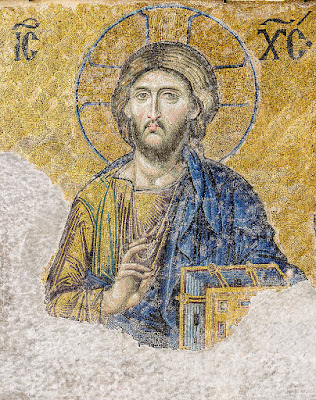
It’s Sunday, Christ the King, the jubilee is heading into its final stretch and the pontificate of Leo – we hope – seems like it can start to begin. Governing means making decisions and these won’t please everyone, that’s natural. The inheritances, especially if they are poisoned, are running out and we have ahead of us a time in which we will try to recount what this is yielding. We always say that the day’s news is ephemeral by its very nature, but it is the thermometer that indicates where we are and points us in a direction.
To govern, freedom is necessary; if the Pope does not enjoy the essential freedom, we run the risk, the certainty, that his decisions will not be the just ones, without them being mediated by dark interests. The issue of the abuses in Chiclayo at the time when Leo XIV was its bishop is in the Italian media; we continue to insist that it is necessary to clarify it as soon as possible and resolve it, it is essential for Leo XIV’s pontificate to enjoy the prestige and freedom it needs. We have a harsh statement from the alleged sexual abuse victim in Peru that questions the dispensation from the priesthood granted by the Pope to Father Lute, the accused priest. This prevents the truth from being clarified and justice from being done: a terrible decision. «On November 13, 2025, the Church communicated to us in writing that the Pope had granted the dispensation from the clerical state to the priest from Chiclayo, Eleuterio Vásquez González, who sexually abused us when we were girls.» It questions Pope Leo himself, not only for not conducting a serious investigation when the complaint was filed in 2022, but also for granting a dispensation to Father Lute (the nickname by which he was known), which prevents a trial to determine the true responsibilities of the now ex-priest and, therefore, denies justice to the alleged victims.Quispe announces «the initiation of legal actions before the competent canonical authorities against all ecclesiastical officials who participated or were responsible for said negligence,» referring to «the main responsible party in the case, Bishop Robert Prevost.»
This is an important turn in a case that arose a little over a year ago and that has never been clarified. The diocese has always defended itself by stating that everything was done in accordance with the norms and that, after sending a first report to Rome, a second one was sent on the reopening of the investigation requested by Prevost’s successor. The current delegate of the Diocese of Chiclayo for the trial of Father Lute, the Capuchin canonist Father Giampiero Gambaro, admitted in a meeting with the Quispe sisters on April 23 that the initial investigation was «gravely deficient, superficial, and plagued with procedural errors.» The canonical investigation, Gambaro stated, was limited to a formal procedure without substance, without questions to the victims or to the accused himself, who «did not respond»; therefore, «the victims’ anger is legitimate.»Ana María Quispe in the statement, claims that “in recent months we have witnessed how some media outlets and very influential journalists have manipulated our testimony to hide” the errors of the Diocese of Chiclayo. Regarding what was published in the biography and interviews book written by Elise Ann Allen, we find impeccable the study «The Anguish of Pope Prevost» by Giorgio Meletti and Federica Tourn, published in full in Spanish by Infovaticana. The only media outlet that is treating this case with courage and with all the documentation is Infovaticana. Today’s news is that the Italian media are starting to realize the significance that the case may have for the pontificate that is beginning. Chiclayo promises to become a source of grave shame for this pontificate, because Quispe, in addition to the mentioned complaint, intends to appeal to international associations of abuse victims and to the Vatican Commission for the Protection of Minors. The dispensation from the clerical state of Father Lute is a slap in the face to the abuse victims.
The Pope has accepted the resignation from the pastoral government of the Diocese of Cádiz and Ceuta presented by Monsignor Rafael Zornoza Boy, 76 years old amid accusations of sexual abuse. Zornoza is accused of alleged continued sexual abuses against a former seminarian between 1994 and 2000, when he was a priest in Getafe (Madrid) and director of the major seminary of the diocese. Leo XIV has dealt with the case, already opened by the Vatican tribunal, directly with the Spanish bishops last Monday. His president Argüello: «The opening of the investigation by the Holy See gives credibility to the accusations. The Church seeks the truth to alleviate the pain of all parties involved, both the possible victim and the bishop, who may have been unjustly accused.». The diocese issued a statement informing that Zornoza had «temporarily suspended his agenda to clarify the facts and undergo treatment for the aggressive cancer he suffers from.»
We continue in Spain and the Episcopal Conference has presented 101 cases of sexual abuses against minors and vulnerable persons within the Church, according to the annual report of the Advisory Commission of the Integral Reparation Plan for Victims (PRIVA), launched in 2023. Of them, 58 have been resolved, while for the rest, «the necessary information has been requested to determine the form of compensation.» “We have accepted the general framework proposed by the Ministry of Justice and we are negotiating how to address the cases of victims who do not wish to go to the Church.” Until now, the Spanish bishops had refused to cooperate with the compensation fund proposed by the government; now they seem open to a new phase of dialogue, although García Magán has not clarified whether the Church will accept a joint fund with the State to compensate the victims. According to the report of the Ombudsman, responsible for the Investigation Commission approved by Parliament, since 1940, more than 200,000 minors have been victims of sexual abuses by Catholic clergy in Spain. The Church, in its report, reduces this figure to 1,057 registered cases.
Asian Missionary Congress, titled «The Great Pilgrimage of Hope,» which will be held from November 27 to 30 in Penang, Malaysia, organized by the Office for Evangelization of the Federation of Asian Bishops’ Conferences (FABC) and the Pontifical Mission Societies. More than 900 delegates from all Catholic communities on the continent, including 10 cardinals, more than 100 bishops, 150 priests, 75 religious sisters, and more than 500 laity. «We will ask ourselves what the path forward is for the future of the Church in Asia.»
The threat by President Donald Trump to describe Nigeria as a «country of particular concern» due to the situation of Christians, stating that Christianity faces an existential threat and, consequently, threatening military action by the United States has set off all the alarms. The concerned bishops: “It seems there are people who are deliberately trying to sow chaos in this nation.” Due to the escalation of violence, Nigerian President Bola Tinubu canceled his visits to South Africa and Angola, where he was scheduled to attend the G20 Summit and the African Union and European Union Summit.
They announce a doctrinal note from the Dicastery for the Doctrine of the Faith “on the value of marriage as an exclusive union and reciprocal belonging,” presented as a «Praise of Monogamy.» It will be presented by Cardinal Víctor Manuel Fernández, Prefect of the Dicastery for the Doctrine of the Faith, Mons. Armando Matteo, Secretary of the Doctrinal Section of the Dicastery for the Doctrine of the Faith; Giuseppina De Simone, professor at the Pontifical Theological Faculty of Southern Italy – San Luigi Section, this Tuesday.
A Leica camera that belonged to Pope Francis was sold on Saturday at an auction in Vienna for 6.5 million euros (7.5 million dollars), a sum that will be donated to the personal charitable organization of the late Pope Francis. The camera sold on Saturday had been offered to Pope Francis by the famous brand from Wetzlar, Germany, in 2024. After receiving the camera, the Pope had decided to auction it for charitable purposes, but the sale was delayed due to his death.
And we end with an audience of Pope Leo that seems very important to us to know where the German schism might be heading. Yesterday he received in private audience Professor Katharina Westerhorstmann, professor of Theology and Ethics at the Gaming (Austria) campus of the Franciscan University of Steubenville (USA). The German theologian is one of the signatories of the letters to Pope Francis in which, along with other scholars, she expressed her concern about the direction of the German Synodal Way, particularly in the area of sexual morality and unity with Rome. Katharina Westerhorstmann embodies precisely the type of woman that a certain part of the Church, the one that talks about listening and synodality, actually does not want to listen to. Young, with an excellent education, eloquent and with multiple interests. She is an independent mind, fascinated by the search for truth that characterized her inspiration, Saint Edith Stein. She contributed to the Synodal Way with articles and speeches, always with solid and competent arguments, expressing herself clearly and without a polemical tone. Her presence has become, over time, an uncomfortable minority that accuses the lack of a true culture of dialogue. The Forum has become, in fact, the place where, under pressure in terms of time and content, the change in Catholic sexual morality decided from the beginning is pushed forward, and critical voices are treated as an insignificant quantity, to be tolerated or ignored.
In 2023, Westerhorstmann explained the context of the letter sent to the Pope along with theologian Marianne Schlosser, journalist Dorothea Schmidt, and religious philosopher Hanna-Barbara Gerl-Falkovitz. The intention of the signatories arose from a double observation: in Germany, the processes initiated by the Synodal Way not only continue, but tend to be structured by the Synodal Committee, and interventions and clarifications from Rome have arrived, which, however, from their point of view, are largely ignored. «We have seen that in Germany the processes initiated by the Synodal Way continue and, at the same time, we have also clearly perceived the intentions coming from Rome. For this reason, we wanted to express our concern directly to the Pope, who in his leadership role has, in a certain sense, the ultimate responsibility.» For Westerhorstmann, mentioning the conflicts does not mean feeding divisions: «Expressing concern starts from recognizing that conflicts exist in the spirit of unity,» not division: «We wanted to affirm that, despite the plurality of viewpoints, the Church must remain united under one roof.» Today’s meeting with Leo XIV takes on the value of true recognition. While Francis had limited himself to responding in writing to the second letter, Leo XIV chose to receive and listen personally to these people. He has already done so with several bishops who have frankly and forcefully criticized the German Synodal Way, and now opens the dialogue also to these lay voices, to discern more clearly the steps to take.
«Jesus, remember me when you come into your Kingdom».
Good reading.