


Audience with Spanish seminaries.
They are from Alcalá de Henares, Toledo, the Interdiocesan Seminary of Catalonia, and Cartagena. «Man is not made to live enclosed in himself, but to be in a living relationship with God.» «Maintain a supernatural gaze on reality,» was the recommendation in his speech in Spanish, based on Chesterton: «When this relationship darkens or weakens, life begins to become disoriented from within.» We must reject the tendency to «live without God in our daily life, marginalizing him from the criteria and decisions we use to address life.» «What can be more unnatural than a seminarian or a priest who speaks of God with familiarity, but lives interiorly as if his presence existed only on the plane of words and not in the depth of life?» «Nothing is more dangerous than approaching the things of God without living by Him.» «Having a supernatural vision does not mean escaping from reality, but learning to recognize God’s action in the concrete of each day.» «A vision that is not improvised or delegated, but learned and practiced in daily life.» The life of a seminarian or a priest, for the Pope, becomes sterile «when fruitfulness is confused with the intensity of activity or with mere external attention to formalities.»
Leo XIV and Cuba.
Everything points to this being serious, Maduro does not exist and in Iran we are facing changes that may be irreversible. Leo XIV received in audience at the Vatican the Cuban Foreign Minister, Bruno Rodríguez Parrilla, accredited as Special Envoy of the President of the Republic of Cuba by his government. The meeting is part of the Holy See’s efforts to promote a dialogue that can alleviate tensions between Havana and Washington and address the serious humanitarian needs of the Cuban people. Parrilla’s official title as «Special Envoy»—and not just as head of Cuban diplomacy—underscores the urgency of the mission entrusted to him by the island’s government, which faces the devastating effects of the blockade. Today’s visit comes just a few days after the meeting in Rome between Mike Hammer, head of the U.S. diplomatic mission in Cuba, and Bishop Silvano Herminio Pedroso Montalvo, Bishop of Guantánamo-Baracoa, which took place on the sidelines of an audience with Pope Leo XIV. The coincidence of their agendas fueled speculation about possible indirect contacts between Washington and Havana at the Vatican.
In recent days, as part of the special mission entrusted to him by Díaz-Canel, the Foreign Minister of Havana, Bruno Rodríguez Parrilla, met with the Russian president, Vladímir Putin, in Moscow to directly address the consequences of the deep energy crisis. The U.S. government has justified its actions as a tool to achieve political and economic changes in Cuba, while the Cuban government denounces a strategy of economic asphyxiation.
Statute of the Pontifical Academy for Life.
Its function is to study, from an interdisciplinary perspective, issues related to the promotion and defense of human life; to foster a culture of life—to the extent that it is proper to it—through appropriate initiatives and always in full respect of the Church’s Magisterium; to inform Church leaders, various biomedical science institutions and social and health organizations, the media, and the civil community in general, in a clear and timely manner, about the most significant results of its study and research activities.
The Academy also has a Central Office, located in the Vatican, divided into two sections: the Scientific Section and the Technical-Administrative Section, or Secretariat. Ordinary members can reach a maximum of seventy and are appointed for a five-year period by the Holy Father, after consultation with the Board of Directors, based on their academic qualifications, proven integrity and professional competence, and their loyal service in the defense and promotion of the right to life of every human person. The new Academics commit to promoting and defending the principles relating to the value of life and the dignity of the human person, interpreted in accordance with the Church’s Magisterium, and their qualification may be revoked, according to the procedure established in the Academy’s own Regulations, in case of public and deliberate action or statement manifestly contrary to these principles, or gravely offensive to the dignity and credibility of the Catholic Church and of the Academy itself. Institutional political positions, both in one’s own country and abroad, are not compatible with the appointment and exercise of the position of Member of the Pontifical Academy for Life: «If a member of the Academy assumes such a position, he is suspended from his academic functions and may not publicly hold the title of Member of the Academy until the end of that institutional political position.»
The Last Judgment.
Interview with the director of the Vatican Museums, Barbara Jatta. An imperceptible veil increasingly obscures the vivid colors painted by Michelangelo in the world’s most famous fresco, conceived to represent the apocalyptic and powerful scene of the Last Judgment, with the good ascending to heaven and the wicked entangled forever among fierce demons. «It’s like an invisible patina to the naked eye. A kind of cataract that we are now removing with an effective system.» Is the Sistine Chapel seriously ill? «Absolutely not, it is in excellent health, it is under constant monitoring and that’s why we noticed this patina capable of dulling the vividness of the colors. That’s why we proceeded with the cleaning: a fairly normal intervention despite the need to set up this huge scaffold.» How long will the work last? «At the rate at which the two teams of restorers are advancing, along with other specialized technicians, we assume that everything will be finished before Easter and people will be able to admire Michelangelo’s colors at Easter.» Is this a restoration? Technically, it does not fall into this category. It is a routine cleaning that consists of removing the film (invisible to the naked eye) with a solution of deionized water and sheets of Japanese paper. As soon as the wet brush is passed over the sheet, which adheres perfectly to the surface, the calcium lactate dissolves and is trapped. We proceed this way, piece by piece, with utmost care, until covering the entire surface of the Last Judgment. «It will be a demanding and long job, but the process is quite simple and is producing incredible results.»
How was the “cataract” formed in the Last Judgment? We are analyzing the causes; there are several factors we are considering. It is probably related to the internal temperature. How did you notice this problem? The history of the Vatican Museums has been oriented toward prevention, rather than treating diseases when they arise, thanks to a series of initiatives undertaken to protect the Vatican palaces over the centuries. Already in the 1920s, with the creation of the Painting Restoration Laboratory, the direction at that time wanted to give it a strong impetus. Subsequently, my predecessor, Antonio Paolucci, had the idea of establishing a Conservation Office that would be responsible for the general and routine maintenance of the entire Museum, starting, of course, with the Sistine Chapel. We have held numerous international conferences to share this important program of preventive and routine maintenance, which has become an international model. How many technicians are assigned to the Sistine Chapel? In total, there are about a hundred internal restorers; some works are done internally, others externally. For the Sistine Chapel, we have thirty-six internal restorers, and then we rely on an external company that handles other tasks. In any case, the Last Judgment had not been worked on in 30 years. Thanks to annual checks, we identified the calcium lactate. Have you found any other damage in the fresco? «Not at all. It enjoys excellent health.»
Saint Gregory of Narek.
Vespers according to the Armenian liturgy, celebrated in the Choir Chapel of the Vatican Basilica, on the liturgical feast of the great Armenian saint and Doctor of the Universal Church. Saint Gregory of Narek was a monk, poet, and mystic, one of the most illustrious figures in Eastern Christian spirituality. The celebration was organized by the Dicastery for Promoting the Unity of Christians and the Dicastery for the Eastern Churches, together with the representation of the Catholicosate of All Armenians of Echmiadzin to the Holy See. Some of those present at yesterday’s events were received in private audience by Pope Leo.
The Imam Father and his Catholic Priest Son.
In 1992, Adrien Sawadogo, the eldest son of the family, almost had an encounter with Christ, «in the manner of Saint Paul,» he says, «beyond human experience.» That encounter revolutionized his life: «Everything changed in my family. The fact of being my father’s eldest son and an example of a faithful eldest son who honored his father, in his faith and in everything, and suddenly becoming what could not be expected in a serious Muslim family, a firstborn converted to Christianity, was a shock.»
His father, Al-Hâdjdj Issa, and the Muslim community turned their backs on him. «God wanted to show me that I had done well by allowing him to continue his path; later, he also studied the Quran (Islamic studies). So he did what he wanted and also what I wanted him to do. Thus, God’s will was fulfilled. What God does not want, no one can achieve.» «Dad recognized that the Christian faith is a true and authentic faith. Today he says: ‘In truth, you Christians know God.'» «We often oppose each other in unfruitful discussions, but if we reflect carefully on what happens, it is we humans who are wrong; this never happens to God. It is more beneficial for us to forgive each other and work together rather than getting bogged down in useless disputes. If God wanted to lead us to misfortune, He would do so through our divisions and unfruitful discussions. But in reality, God does not command us to oppose each other.»
Iran.
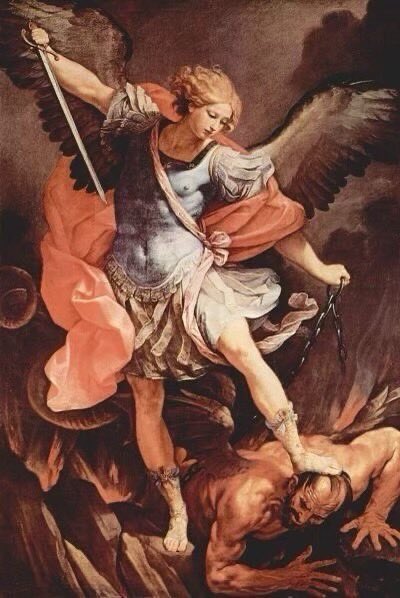
We have been days with the announcement of an imminent invasion, tonight it has happened. The names assigned to the operation are “Epic Fury” for the United States and “Roar of the Lion” for Israel. The reference to the lion is often read as a reference to the Bible, where a prophet compares Israel’s strength to that of a lion. The lion is also a symbol of the ancient Iranian flag before the 1979 Islamic revolution, which depicted a lion with a sword in front of a sun: an emblem today frequently used by the opposition to the regime in Iran. Leo XIV insisted on a peace «disarmed and disarming » and denouncing the drift by which language loses contact with reality and becomes a weapon «to deceive or strike,» while «rediscovering the meaning of words» becomes one of the urgent needs of our time. The point is not to absolve the regime of Ali Hoseyni Khamenei, who has already passed away in these hours, his conduct—internal repression, destabilization, violations of dignity—must be condemned and ended. How can the condemnation of a regime be reconciled with the right of every state not to be invaded , with the protection of sovereignty and with the framework of international law that, in the postwar period, ended the idea that borders are changed «for higher reasons»? Leo XIV spoke openly of the crisis of multilateralism and the replacement of dialogue with «diplomacy of force ,» recalling that respect for humanitarian law cannot depend on military or strategic interests. Trump posted on his profile, along with an image of Saint Michael, the prayer: Saint Michael the Archangel, defend us in battle. Be our defense against the wickedness and snares of the Devil. May God rebuke him, we humbly pray, and do thou, O Prince of the heavenly hosts, by the power of God, cast into hell Satan, and all the evil spirits, who prowl about the world seeking the ruin of souls. Amen.
The European Fund for Abortion.
The Commission’s paralysis represents a setback not only for the promises and commitments of Emmanuel Macron from January 2022 (the French president had expressed his desire to include the right to abortion in the EU Charter of Fundamental Rights), but also for those of the European liberals and socialists. It also puts an end to the absurd decisions of the European Parliament, which on April 11, 2024 demanded the inclusion of the right to abortion («Every person has the right to decide autonomously about their own body and to free access to safe and legal abortion») in Article 3 of the EU Charter of Fundamental Rights.
The Holy Lance.
«This is my Son, the Beloved, with whom I am well pleased: listen to him.»
Good reading.