


Pasada la Navidad entramos en su octava en la que se van cerrando las puertas jubilares, todo un símbolo de que un periodo a terminado, lamentable, y otro, imprevisible, se abre ante nuestra mirada. In Rome we have an uncharacteristic cold, it must be because of the warming, we don’t go below zero but almost, and with the usual humidity we have to dig into the back of the closet. The Italian president congratulates this Christmas encouraging to take advantage of them because what comes will be worse and tonight the first attacks by the United States on ISIS in Nigeria for their attacks on Christians have taken place, Trump tells us: «Tonight, under my direction as Commander in Chief, the United States launched a powerful and lethal attack against the terrorist scum of ISIS in northwest Nigeria, which has been attacking and brutally murdering, mainly, innocent Christians, at levels never seen in many years, ¡even centuries! Previously I warned these terrorists that if they did not stop the massacre of Christians, hell would be unleashed, and tonight it was. The War Department executed numerous perfect attacks, as only the United States is capable of doing. Under my leadership, our country will not allow radical Islamic terrorism to prosper. May God bless our Armed Forces and I wish a MERRY CHRISTMAS to everyone, including the dead terrorists, who will be many more if they continue their massacre of Christians».
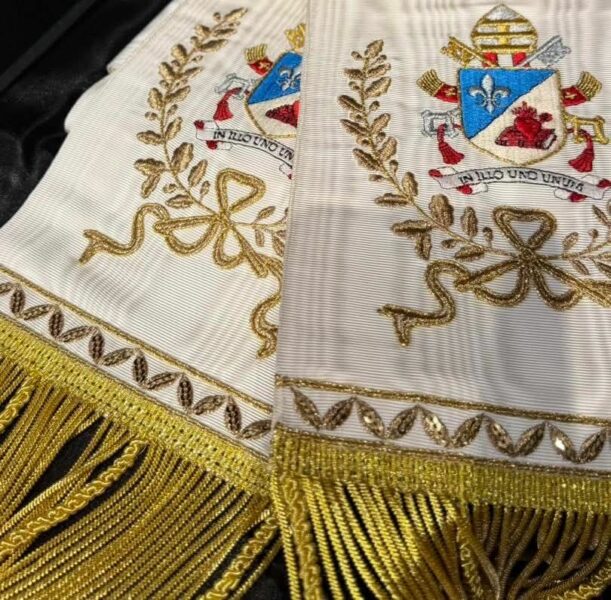
Yesterday the rite of closing the Holy Door of the Basilica of St. Mary Major was carried out, in which Pope Francis is buried, presided over by Cardinal Archpriest Rolandas Makrickas. The first Holy Door to be closed was the special one, at the personal wish of Pope Francis, in Rebibbia prison. It will be followed by those of St. John Lateran, St. Paul Outside the Walls and, finally, St. Peter’s, when Pope Leo presides over the rite on January 6, Epiphany Day. In the Vatican everything is measured and weighed, the details are not casual, Pope Leo has started to use, he already had it, his shield on the white cassock, ¿Has the pontificate begun?
Pope Leo presided over the Midnight Mass, something usual in recent pontificates, it is not so much his presence at the Christmas Day Mass. This celebration had not been celebrated by any Pope since John Paul II. The last time was in 1994. Since the pontificate of Paul VI, Popes generally entrusted this celebration to a cardinal, reserving the Urbi et Orbi blessing at noon. In the Urbi et Orbi the central message was that Ukraine and Russia must dialogue: «Let us pray in a special way for the tormented Ukrainian people: may the roar of weapons cease and may the parties involved, supported by the commitment of the international community, find the courage to engage in sincere, direct and respectful dialogue». We can and must each do our part to reject hatred, violence and opposition, and practice dialogue, peace and reconciliation». “Let us not be overcome by indifference toward those who suffer, because God is not indifferent to our miseries”. ¿How not to think of the tents in Gaza , exposed for weeks to rain, wind and cold, and those of so many other refugees and displaced people on all continents, or the improvised shelters of thousands of homeless people in our cities?
We rarely talk about them, and when we do it is usually because of problems. An article today recalls the role of the Vatican’s security forces. During the Pope’s public appearances, especially during major celebrations in St. Peter’s Square or during apostolic journeys, the attention of the faithful is usually captured by a group of men dressed in black who walk in front of the popemobile , with earphones, alert gaze and quick movements. They do not wear the historic uniforms of the Swiss Guard or the Vatican Police. However, they represent the main and most direct shield of security for the Pope. Their dark civilian clothing is no coincidence. It complies with specific international security protocols: it guarantees freedom of movement, immediate operational recognition among workers and greater ability to blend in with the crowd. Alongside them operates the Pontifical Swiss Guard , which maintains the protection of papal residences, the Apostolic Palaces and internal institutional environments. The Pontifical Swiss Guard is the oldest active military corps in the world, founded in 1506. The Swiss Guard does not perform judicial police functions, but rather represents the first line of physical protection for the Pope in private spaces and during the most solemn moments of Church life. The Vatican Gendarmerie is the police force of Vatican City State . Its responsibilities cover the entire spectrum of security functions: from crime prevention to judicial investigations, from territorial control to the fight against terrorism, and even the management of public order in large celebrations.
A volume edited by Leo Guardado –professor at Fordham University in New York and disciple of the founder of Liberation Theology– collects various essays by Gutiérrez, completing and editing them in an updated form with references and bibliographic notes. The work opens with a preface by Pope Francis (pp. 5-10), a Note from the Peruvian editors (pp. 11-12), a Note from the Editor (pp. 13-14), a Note from the Italian editor (pp. 15-16) and a Prologue that traces Gutiérrez’s theological journey and summarizes the theme of living and thinking about the God of the Poor (pp. 17-35). The third part of the volume is titled “The triple dimension of the option for the poor” (pp. 211-280). Gutiérrez illustrates extensively the hermeneutics of hope that sustained his life and theological work. The fourth part of Gutiérrez’s volume is titled “The great challenges to the proposal of the good news” (pp. 281-346).
Not all bad news from Canada, the Education Minister of the Canadian province of Alberta has put Christ back in Christmas. Hesent a letter to all parents before the holidays reminding them that Christmas is about celebrating the “birth of Jesus Christ”. “This is a special time to celebrate the birth of Jesus Christ, the event that serves as the cornerstone of faith and brings to the world a message of hope, peace and love. It is a moment to reflect on this profound gift and look with faith and optimism to the year ahead”. Nicolaides told parents that his dedication to “nurturing the next generation reflects the spirit of service and charity that Christ’s Incarnation inspires in all of us”. Many comments, generally positive, indicating that “the left is collapsing”. Even Canada’s national postal service launched this year new postage stamps depicting the Holy Family.
Immediate and very positive response from Secretary of War, Pete Hegseth who has promised to address the “weakening” of the military chaplains corps: “We are going to make the Chaplain Corps great again”, but for now, the Pentagon has canceled the support contracts for Army chapels, including those for Catholic religious educators, administrators and musicians, “placing an insurmountable restriction on the free exercise of religion”. In a video message optimistic Hegseth denounced the current “degraded” role of the military chaplains corps. “In an environment of political correctness and secular humanism, chaplains have been minimized, seen by many as therapists rather than ministers. Faith and virtue have been traded for self-help and self-care”. “As a first step toward creating a supportive environment for our warriors and their souls, we are going to restore the esteemed position of chaplains as moral anchors for our fighting force”. “The chaplain is the shepherd and pastor of the souls entrusted to his care”, noted Hegseth, quoting the 1956 Army Chaplain’s Manual. “This is a high and sacred ministry”, he said. “But this only works if our pastors have the freedom to guide and care for their flock with courage”.
The Office of the Secretary of War is aware of the letter from October 17 written by Archbishop Broglio. “Congress recognized in the 1850s that the lack of adequate provision for military chaplaincy would deprive troops of their right to freely exercise their rights. This obligation has also been recognized by federal courts, including the Supreme Court , most recently”. “This is not the first time the Pentagon has made a mistake. In 2020, the Navy announced its intention to cancel vital contracts to ensure Catholic sailors’ access to the sacraments, but the Navy quickly changed its stance”. “The Army should do the same now”.
Taking advantage of this news, we recall how important the mission of a chaplain among soldiers is. In the far north of Times Square in New York City, right in front of the red steps that also serve as a roof for the TKTS discount booth for theater, stands the statue of a Catholic priest. It represents Father Francis P. Duffy (1871-1932), the most decorated clergyman in U.S. Army history, standing on a pedestal with a huge Celtic cross on his back. The triangular section of Times Square is better known as Father Duffy Square. His story was immortalized in the 1940 film The Fighting 69th (in Spain Heroic Regiment), starring James Cagney and with Pat O’Brien portraying the chaplain. Father Duffy is remembered for his bravery on the battlefield, administering the last sacraments, attending to the wounded and caring for the dead. Far exceeding his chaplain duties, Father Duffy acted as a leader for his men, boosting their morale as they prepared to enter battle and consoling the wounded. In his own book Father Duffy’s Story, Father Duffy would later recount the story of the Fighting 69th.
He thus described the celebration of an Easter Mass at the gates of a church in a French village: “I have a congregation of the old faith of about three thousand souls. They are usually scattered among five or six French villages when on rest, and even more scattered among trenches and abandoned locations when on the front”. Before a battle, Father Duffy used to walk through the trenches giving absolution to the soldiers. At the end of the fighting, he described the “heartbreaking task” of burying the dead. “I knew these men very well and loved them as if they were my younger brothers. It has been the saddest day of my life. Well, it is the last act of love I can do for them and for their parents at home”. He was awarded the Distinguished Service Cross, the Distinguished Service Medal, the Conspicuous Service Cross (from New York), the Legion of Honor (from France) and the Croix de Guerre (from France)
After the war, Father Duffy served as pastor of Holy Cross Church, located one block from Times Square, where his statue stands today. There he established a Sunday and holy day Mass at 2:15 a.m. to accommodate the erratic schedules of the theater district community. Father Duffy died on June 26, 1932. A solemn military Mass was celebrated in St. Patrick’s Cathedral with thousands in attendance. A procession of soldiers, veterans, police and firefighters formed a funeral cortege from Holy Cross Church to St. Patrick.
«…you will be brought before governors and kings because of me, so that you may bear witness to them and to the Gentiles».
Good reading.