


The Secularization of Christmas
When Advent begins, the advertising of certain products related to the upcoming Christmas also starts. Although this name is not even pronounced. Those who do not know that this title means Nativity; that is, it refers to the Birth of Our Lord Jesus Christ, would be surprised. The objects that appear are a little tree, balloons and other decorations that enhance it; a fat and bearded character, dressed in red and white. The characterization of the period leading up to December 25th is typical of the Northern Hemisphere and the Protestant sphere.
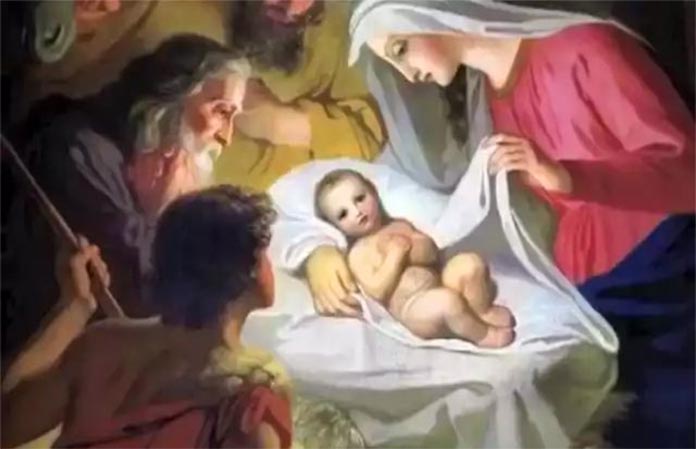
A few years ago, walking through the center of Naples, I observed that for these weeks prior to Christmas, all the businesses offered the manger, of different sizes and qualities. Manger is the name of the Catholic representation of the appearance of Jesus in the world: the grotto, or a little house, the Virgin Mary, Saint Joseph and the Child, without missing the cow and the donkey. We must not forget the Magi, of whom the Gospel of Matthew speaks: mágoi were astronomers and wise men, who represent all of humanity, awaiting the Savior. Popular opinion, based on the Apocrypha, has made them kings and attributed a name to each one. In the manger representation, they arrive up to January 6th. The Catholic tradition has been secularized. Likewise, the angels with their song have disappeared; which is preserved, however, in the Gloria and the Sanctus of the Mass. Something of those origins resonates in the carols, which have managed to pierce the wall of secularization. The memory of Naples alludes to popular faith, which has currently weakened, and in many countries, seems to have disappeared.
The Church should proclaim during Advent the mystery of the Incarnation of the Son of God. Faith in that mystery must take root in families; therefore, the exhortation to «set up the manger» is appropriate. Even if religious practice has diminished, even disappeared, looking at the manger evokes the feeling of a faith instilled in the family or in the catechesis of the First (and in many cases, only) Communion.
How to celebrate Christmas if there is no longer faith? It is, then, a secularization of the Christian feast, which is usually joined to the New Year; thus, it is spoken of as «the holidays» -as a period that repeats annually-, and then it is said, as an augury, «Happy holidays», or even the more generalized «happy holidays». Christmas in that cultural context has disappeared. Commercial advertising takes advantage of the memory of a time when the people retained something of the preaching of the origins. The Church must recreate those origins by announcing Jesus Christ as Redeemer; every Advent is a new opportunity for the announcement entrusted to the Apostles. It is, therefore, about reversing the secularization of Christmas. And for that, an Church truly «outgoing» is essential; in search of those who have drifted away, and those who were never there.
With this purpose, I wish everyone a very holy and, therefore, very happy Christmas. May no one take the Child God away from us!
+ Héctor Aguer
Emeritus Archbishop of La Plata
Buenos Aires, Monday, December 22, 2025.