


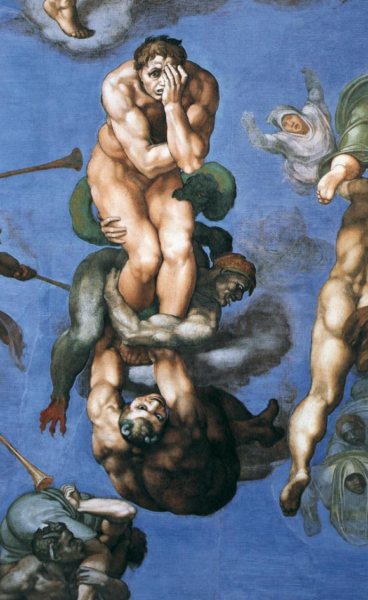
Vamos terminando semana, ayer fue un día de caos en Rome, y la peor parte de la llevó la zona del aeropuerto de Fiumicino. Rome amaneció bajo un cielo furioso, con granizo que transformó las calles de Ostia en un inesperado paisaje invernal. Granizo del tamaño de monedas cubrió las aceras y las playas de la costa, mientras que un estruendo ensordecedor de truenos y relámpagos resonaba en el cielo sobre el centro histórico. Los romanos, acostumbrados al caos de la capital, se encontraron de repente ante un enemigo impredecible. «Fue como un apocalipsis repentino». Otro rayo, como el famoso del día de la renuncia de Benedicto XVI atacó la Tumba de Pedro. Los romanos son de natural supersticioso y hoy es muy comentado lo sucedido con una y mil interpretaciones.
Second Lenten Meditation.
In the Paul VI Hall , in the presence of the Pope and a group of the Roman Curia. Roberto Pasolini dedicated his second Lenten sermon to fraternity , presented not as a generic feeling, but as a concrete place of conversion. The Preacher of the Pontifical Household put Saint Francis as a model of a communion received as a gift, but immediately put to the test by real life. Recalling Cain and Abel, Pasolini showed how fraternity is undermined when rivalry, isolation, and rejection of others prevail. For Pasolini, the Christian response lies in mercy , forgiveness , and the ability to face conflicts without fleeing. The test of faith, in fact, is measured in love for our brothers and sisters: it is there that Easter begins and the path to eternal life opens. We remain in the setting of the Paul VI Hall chosen in times of plague, it’s about time to return to the Redemptoris Mater, or to the Pauline, because of Rupnik.
Audience with the «Chair of Welcome».
Participants in the IV «Chair of Welcome», promoted by the Fraterna Domus of Sacrofano. «In a time marked by profound cultural and social transformations, young people, who are naturally the future of society and the Church, actually constitute its living and generative present». «Their questions and concerns invite us to renew the style of our relationships». «Moving from the security of our convictions to the responsibility of encounter, learning to see and welcome the presence of God, who is always beyond».
Krajewski leaves Rome.
Fue la noticia de ayer y sigue siendo la de hoy. During years, he was the most visible symbol of charity during the pontificate of the late Pope Francis. In the Vatican, changes rarely come accompanied by dramatic gestures.Much more frequently, they take the form of apparently technical appointments that, when placed in series, convey a precise direction.This is what is happening with the first decisions of Pope Leo, who with a formal act displaced one of the most recognizable figures of the previous pontificate. A return home that also marks the end of a Roman season that lasted more than a decade. In his place, the Pontiff chose Monsignor Luis Marín de San Martín, until then undersecretary of the General Secretariat of the Synod, who was simultaneously elevated to the personal dignity of archbishop. Se trata de una señal política que muchos interpretan como uno de los primeros pasos en un reequilibrio progresivo de la Curia tras los años del pontificado del Papa Francisco.
Krajewski has long been a very peculiar figure within the Vatican structure. Over the years, Krajewski has forged a reputation almost unique in the ecclesiastical landscape, not the typical office cardinal.He was a man who went out into the streets, who visited the homeless, who brought aid to the suburbs and who often intervened personally in social emergencies. Krajewski’s public notoriety skyrocketed in 2019 with an episode that went around the world. In the Spin Time building, occupied in central Rome, hundreds of people, including families and migrants, were left without electricity and the cardinal decided to intervene personally. Armed with a simple screwdriver, he reactivated the building’s meter to restore electricity to the occupants.The gesture sparked a huge public debate: for some it was a concrete testimony of Christian charity, for others an illegitimate and politically questionable act. Episodes like this have made him a very popular figure among those who see the Church as an institution called to support the less fortunate, but also a controversial figure among those who prefer a more cautious and institutional approach.
With his appointment in Łódź, a long stage of his service in Rome thus ends.For Krajewski, this Polish city is not just any place: it is his native diocese, the place where he entered the seminary in 1982 and where he took his first steps in his priestly ministry. El Dicasterio para el Servicio de la Caridad, nacido como una evolución del tradicional Oficio de Caridades Apostólicas, seguirá siendo uno de los puntos sensibles de la acción pastoral del Vaticano. La era de Francisco no está siendo rechazada, sino que está dando paso gradualmente a una nueva fase en la vida de la Iglesia.
The new almoner.
With the appointment of Mons. Luis Marín de San Martín, OSA as Almoner of His Holiness and Prefect of the Dicastery for the Service of Charity , Leo XIV entrusts the position that most directly embodies the Pope’s charity within the Curia to a religious from his order. In recent years, he has worked as Undersecretary of the General Secretariat of the Synod . The promotion is accompanied by the granting of the dignity of archbishop and already points to the prospect of the cardinalate , which will most likely arrive in the first consistory that comes along.
The relationship of friendship, esteem, and closeness between the Augustinian companions Marín de San Martín and Prevost is well known in Vatican circles. It was precisely this closeness that immediately fueled resentment within the General Secretariat of the Synod , especially in the area associated with Cardinal Mario Grech .
In Malta , where he is well known, he has experienced very marked changes in the last twenty years, and Grech has been nicknamed the “Kamaleont” , chameleon. Under Benedict XVI he appeared as a bishop close to the most traditional positions; during the pontificate of Pope Francis he became one of the most recognizable faces of synodality and one of the main interpreters of the new phase of the Church. Today his influence seems to have diminished significantly and he is one of the many who have “disappeared from the scene”, as he himself confesses in intimate circles. Even the study group documents , presented for months as steps capable of deeply affecting the life of the Church, are now described in much more cautious terms, as simple material for reflection and working tools.
The new almoner, born in Madrid on August 21, 1961 entered the Order of Saint Augustine in 1982 , made his solemn vows in 1985 and was ordained a priest on June 4, 1988. After his ordination, he obtained a doctorate in Sacred Theology at the Pontifical University of Comillas in Madrid. He was a formator in the major seminary of Tagaste in Los Negrales , provincial counselor of the Order, prior of the monastery of Santa María de La Vid and, later, professor of theology in the Augustinian centers of Los Negrales , San Lorenzo de El Escorial and Valladolid . From 2004 he was also a visiting professor at the Faculty of Theology of Northern Spain in Burgos . Within the order: general archivist, general assistant of the Augustinians and president of the Institute of Augustinian Spirituality. In 2021 he was appointed by Pope Francis titular bishop of Suliana and undersecretary of the Bishops’ Synod . On April 11 of that same year he received episcopal ordination in the Almudena Cathedral of Madrid. Once he arrived at Via della Conciliazione , his appointment immediately caused discontent in the religious Nathalie Becquart , who began to complain that Bishop Luis Marín de San Martín had a higher position than hers, suggesting that she felt disadvantaged for being a woman and not a bishop.
In just 143 days as Pope, Francis chose the Master of Ceremonies Konrad Krajewski as Almoner , with the evident aim of dismissing Guido Pozzo and relegating him, without any real red hat, to the direction of the Pontifical Commission Ecclesia Dei , an organism that he had already decided to dissolve. He managed to suppress said commission on January 17, 2019 . A decision that Leo XIV will probably have to reconsider, also in light of what is happening with the Priestly Fraternity of Saint Pius X , since that Commission had been established precisely by the will of Saint John Paul II , with the specific intention of fostering dialogue and safeguarding ecclesial communion. Prevost has taken 308 days to choose a man close to him, a religious from his own Order with whom he shared many moments at the Augustinianum.
The Orlandi case.
In Italy it is a daily topic, we only refer to it when we see some relevant fact. Letter addressed to the prefect of Rome, Lamberto Giannini, about the ongoing excavations at the Casa del Jazz . The letter was written after receiving the unanimous approval of the Prefecture by Andrea De Priamo, president of the Parliamentary Commission of Inquiry on the disappearances of Orlandi and Gregori. «We consider it appropriate to express our interest and offer our full availability to Dr. Lamberto Giannini, requesting that we be informed if any matter of interest arises in relation to the disappearance of the two young women. The commission remains available for institutional collaboration». «We are working on the landslide». This is a property that was confiscated from a criminal organization and now belongs to the Municipality, and I think we should go check that there is nothing unusual». «There is a lot of earth, and we are proceeding with patience. As for the inspections of three recent walls, which were used to prevent landslides, I think it will take some time because many of the walls have collapsed».
The Casa del Jazz stands on what was formerly the villa of Enrico Nicoletti , treasurer of the Magliana gang , property that was subsequently confiscated. The basement of the Casa del Jazz could contain clues to solve three of Rome’s oldest unsolved cases. The disappearance of Judge Paolo Adinolfi, who mysteriously disappeared in the summer of 1994 and was never found. But also the mysterious disappearances of Mirella Gregori and Emanuela Orlandi. These two 15-year-old Roman girls mysteriously disappeared between May and June 1983.
The demons are on the loose.
Satan, Asmodeus, Mammon and the many demons, great and small, of the miserable army of darkness (which men enlarge with their continuous sins) are here among us, the whole legion of the eternally lost and losers against whom all the saints fought, guided by the great heavenly general, Saint Michael the Archangel, have now emerged from hell and are roaming the world organizing their evils, seeking the help of men and women who are almost no longer human. Every «event» is a tempting opportunity for their horrible displays. The Olympic Games —winter, summer, Roman, French and English— have always been marked by infernal celebrations, with hidden or explicit symbols. In England, Moloch even arrived while the dancers were dressed as doctors and nurses. The demons are in a hurry, a great hurry, they want to corrupt souls and take them with them to Gehenna, but they have little time, and they know it. Today we have some examples.
The mafia funerals.
In Catania, there will be no religious funeral for Benedetto «Nitto» Santapaola, the historic leader of the Etna mafia, who died on March 2 at the age of 87. The decision was confirmed by the Metropolitan Archbishop of Catania, Luigi Renna, joining the provisions of the public security authorities. The police chief of Catania has prohibited any type of funeral, both public and private, for reasons of public order and security. The body of the mafia boss, confined under the 41-bis regime in the Milan Opera prison, was cremated in Milan, and the ashes will be returned to Catania under the strictest secrecy.
The decision, as explained in the diocese’s statement, was taken «taking into account the indications and assessments of the competent authorities», with the aim of preventing a possible religious moment from being exploited or transformed into an occasion for events that do not fit the true meaning of the Christian liturgy. The transfer of the urn containing the ashes will be carried out without a procession of vehicles and by the shortest possible route, under strict police surveillance, precisely to avoid any public manifestation or form of exaltation related to the mafia.
El obispo offers a spiritual and civic reflection, recalling above all the pain caused by mafia violence and the numerous victims of the Cosa Nostra. «The death of a man like Mr. Santapaola should make us reflect on the legacy of negative values and suffering that this life leaves behind. Now he stands before God in the truth of what he was». The Christian community remains committed to rebuilding a history capable of «drying the tears of those who weep deaths at the hands of the Mafia», reaffirming its commitment to legality and the dignity of innocent victims. «The suffering of so many victims is already a judgment in which the God in whom we believe, the crucified Christ, has become a participant, and asks us not to compromise with those who have used and continue to use violence».
Benedetto «Nitto» Santapaola was for decades one of the most powerful and feared bosses of the Cosa Nostra. Born in Catania in 1938, he was considered the leader of the homonymous clan and a key figure in relations between the Sicilian mafia and other criminal organizations. Sentenced to 18 life sentences, he was held responsible for numerous murders and some of the most serious mafia crimes in recent Sicilian history, including the Capaci and Via D’Amelio massacres, as well as the murders of journalist Giuseppe Fava and State Police Chief Inspector Giovanni Lizzio. He himself expressed in life his desire not to have any type of funeral ceremony, neither public nor private, and asked to be cremated.
The relationship between the Church and the Mafia is at the center of an ecclesiastical debate that has experienced various developments in recent years. We all remember the announcement of a document on the possible excommunication of mafiosi, which seems to have been blocked by the Holy See for considering it ‘not a priority’. We all remember the powerful appeal launched by John Paul II in the Valley of the Temples in Agrigento in 1993 —the famous «Convert!» addressed to the Mafia— and the path that led to the beatification of Judge Rosario Livatino and the establishment of a Holy See study group on the topic of Mafia excommunication. Pope Francis, during a pastoral visit to Calabria, declared that members of the ‘Ndrangheta «are excommunicated». But years later, the debate continues on what has really changed in ecclesiastical practice and in the relationship between the Church, society, and organized crime.
Public exorcism in Mexico.
No es para menos, abundan las brujas. The Catholic community of San Luis Potosí remains dismayed after the damage recorded in the Temple of the Company of Jesus, one of the most emblematic historic buildings in the Historic Center, during the march for International Women’s Day on Sunday, March 8. The local Archdiocese considers the attack to represent a demonic manifestation, and therefore, a ritual of exorcism and purification was performed both outside and inside the premises. “Because Satan and the world hate the cross (…) when a heart is full of hatred, Satan possesses that heart and a heart poisoned by hatred is capable of everything, so definitely evil works through our emotions as well” The archbishop Jorge Alberto Cavazos Arizpe led the ceremony; he sprinkled holy water mixed with salt, spread incense and led prayers, culminating in a minute of silence. “That before the pain of offending the holy name of God and of provoking violence, we all cry out for that presence of God. Let us offer Jesus this moment of silence in exchange for that deafening noise that was of hatred, that was of resentment, that was of blasphemy, let us offer him our silence as a way to repair that and tell them to touch our heart”
After the incidents, outdoor masses have been held in front of the parish as an act of reparation. Parishioners expressed their indignation at what they consider a profanation. “This, well, is already very sad, not even respecting God anymore, imagine the house of God, little saints, all that, what pain, what sadness, look how they left it, the doors, look, look how they left it burned, how they left the cross”.
Beyond the religious offense, the damage affects the cultural and historical heritage of the city: “I understand the fact that you want to express that concern, annoyance, whatever you want, but this beautiful architecture does nothing to us and we should protect it, not damage it”. The National Institute of Anthropology and History (INAH) is currently conducting the damage census in the Temple of the Company and other affected buildings that in Mexico after the Masonic expropriations, are state property. Once the assessment is concluded, the corresponding criminal complaint will be filed against the responsible persons; the economic amount of the repairs is still unknown.
The crisis of the world order.
Y vamos terminado, el mundo está muy revuelto y un artículo de hoy nos recuerda algunas reflexiones lúcidas escritas inmediatamente después del fin de la Segunda Guerra Mundial por Father Julio Meinvielle (1905-1973). Almost eighty years later, it remains a very valuable read. It reads as if it had been written today. «The war in Europe ended with the crushing triumph of the so-called democracies. The famous assertion of Napoleon that gold wins wars has not been disproved this time either. From a certain perspective, and with an excessively providential view of history, it could be thought that the defeat of what was so fanatically called Nazism-Fascism is not deplorable. For, while it is true that it was driven by a powerful dynamic destined to unmask the deceptive humanitarian myths under which the forces of money could exercise their oppressive imperialism with impunity, it is no less true that it contained a tremendously pagan and expansionist force, difficult to purify.
The truth is that, at this moment, the destiny of the world is at the mercy of the totalitarian dominance of the same forces —those of Money and Resentment— that have been destroying Europe for three hundred years. These two forces, in fact, have torn the very essence of Europe with religious, economic, and political divisions. And it has been the anti-European powers, essentially divisive, like England, the United States, and Russia, that, since the Peace of Westphalia, after the Congress of Vienna and the Treaty of Versailles, have used money to finance intrigues and fuel resentment. Nations that sow war can hardly impose peace.
An analysis of the historical process of Europe over the last three hundred years cannot but fill us with anguish when we think of the dark days that, under the deceptive guise of Freedom and Democracy, loom over once free and great peoples. The world cannot be subject to two masters. Sooner or later, either because one plays its diplomatic and financial cards better, or because both come to a direct confrontation with a winner and a loser, the truth is that the world seems to march inexorably toward the dominance of a universal master.
Until 1929, the world lived under the dominance of international trade, which, in exchange for control of world affairs, granted people a certain degree of mental, political, and economic freedom. But the terrible crises that led to the ruin of that world demonstrated that, without regulation, security is compromised. Now we are entering the era of security: security in business. Slavery will be perfect. But it will be freely accepted and permitted. And the masses will move in this viscous and regulated environment without violence, because they will have everything necessary not to think; because there no one will feel the need to know the Truth and love it. Everyone will have everything necessary to remain eternally in the condition of inferior beings. Toward this humanity is heading, under the guise of Freedom and Democracy: universal slavery under a single master. Nations will have security, but they will not have peace.
«You are not far from the Kingdom of God».
Good reading.