


The phenomenon of war.
The history of humanity records how, through the centuries, the fact of war has been verified as an unavoidable reality; in more or less local conflicts and even encompassing vast regions, involving many countries. In the animal kingdom, confrontation and struggle are natural. The proverb holds: “the big fish eats the little one.” But in humanity, reason acts, and the will chooses its interest. Peoples have been constituted as groupings of families of the same ethnicity and language. It is not necessary for them to meet; the divine design is that they live in peace, that is, in the tranquility of order.
War implies hatred and violence, which may be limited to some countries or involve several. The 20th century has known two world wars, and the possibility of a third is always looming. The First World War developed in Europe, and left millions of victims, dead and wounded; pain and weeping that affect, especially, women. The second was unleashed with the participation of the United States, with a lethal power: the atomic bomb.
There are conflicts that repeat in a limited number of peoples: the prototypical case is the Middle East. When the State of Israel was created in 1948, the installation of Jews in the ancestral land determined the confrontation with the displaced Palestinian peoples. Israel has been at war since then, or preparing for it. Currently, the old conflict is intensifying, now against Iran, the ancient Persian empire. The United States has succeeded Great Britain as a world power, with direct or indirect colonies, in which the law of money rules.
The capital problem is that of the common good, in relation to the metaphysical concept of nature. These concepts explain the inhumanity of war. The Magisterium of the Church has repeatedly pointed out the ideal of peace, and invites us to ask God for that good. It is enough to recall the Encyclical of Benedict XV “Pacem Dei munus”, on the occasion of the end of the First World War. Pius XII, upon assuming office, on the eve of the Second, expounds it in the Encyclical “Summi Pontificatus”. John XXIII, in “Pacem in terris”, held that peace among all peoples must be founded on truth, justice, love, and freedom. Paul VI in “Populorum progressio” has linked peace to the reality of development, and John Paul II became a champion of peace in his numerous trips. Just as there exists the phenomenon of war, one can also speak of a phenomenon of peace.
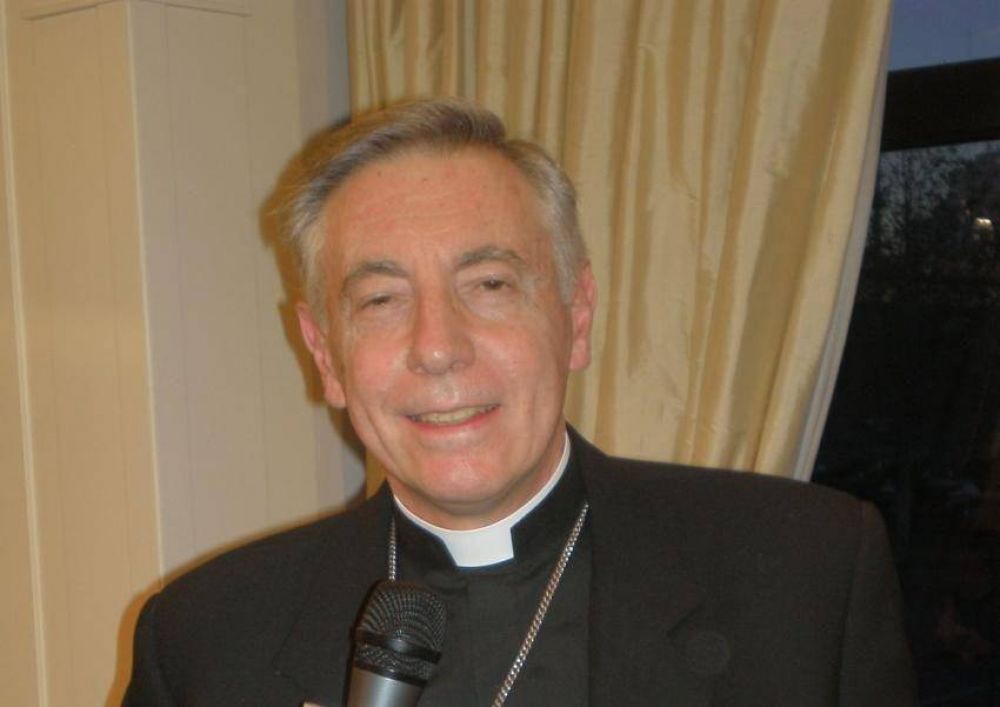
+ Héctor Aguer
Emeritus Archbishop of La Plata.
Buenos Aires, March 8, 2026.
Third Sunday of Lent. –