


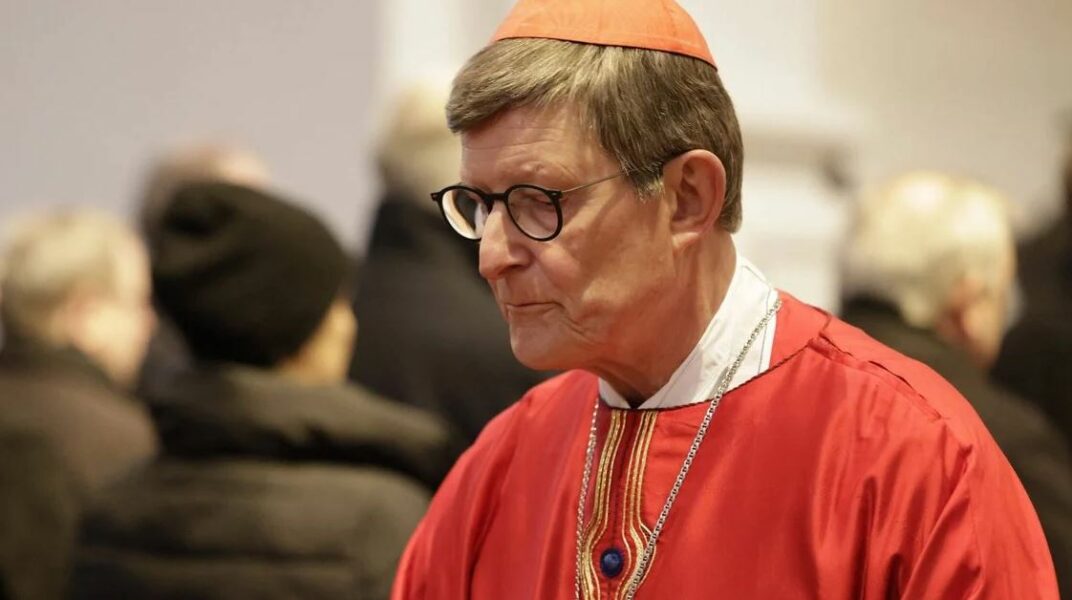
Cardinal Rainer Maria Woelki defended this Sunday in Cologne Cathedral a Christianity “aware of its identity” and called on the faithful not to lose confidence in the action of the Holy Spirit, at a time when the Catholic Church in Germany continues to suffer a historic hemorrhage of departures and secularization. According to Katholisch.de, the Archbishop of Cologne took advantage of the solemnity of Pentecost to call for a “new ecclesial impulse” in the face of the pessimism that has taken hold in a large part of German Catholicism.
“At Pentecost it is about what is essential”
During his homily, Woelki stated that the feast of Pentecost reminds Christians “who they really are” and lamented that many have lost faith in the possibility of an authentic renewal within the Church. “At Pentecost it is about what is essential,” the German prelate noted, emphasizing that the Holy Spirit continues to act today “just as then,” although he warned that it is necessary to truly believe in it.
The archbishop recalled that the Acts of the Apostles recounts how hundreds and thousands of people embraced the Christian faith in a single day, moved by the action of the Holy Spirit. “However, the Spirit expects us also to believe and trust in it,” Woelki affirmed.
The contrast between the German crisis and some signs of growth
The cardinal’s words come at an especially delicate moment for the Church in Germany, marked for years by record numbers of formal departures of the faithful, a collapse in religious practice, and a growing loss of social influence. Despite this, Woelki insisted that there are still signs of vitality and movement within the Church.
As an example, he mentioned the increase in adult baptisms in France and assured that the Archdiocese of Cologne currently registers the highest number of adult baptisms in all of Germany. He also highlighted various new evangelization projects promoted in his archdiocese, inspired by experiences of the Anglican Church in London.
New evangelization projects in Cologne
According to the cardinal, some of these projects seek to reproduce pastoral initiatives developed in London, where —he stated— a certain religious revival has been observed for years, with new conversions and the creation of Christian communities.