


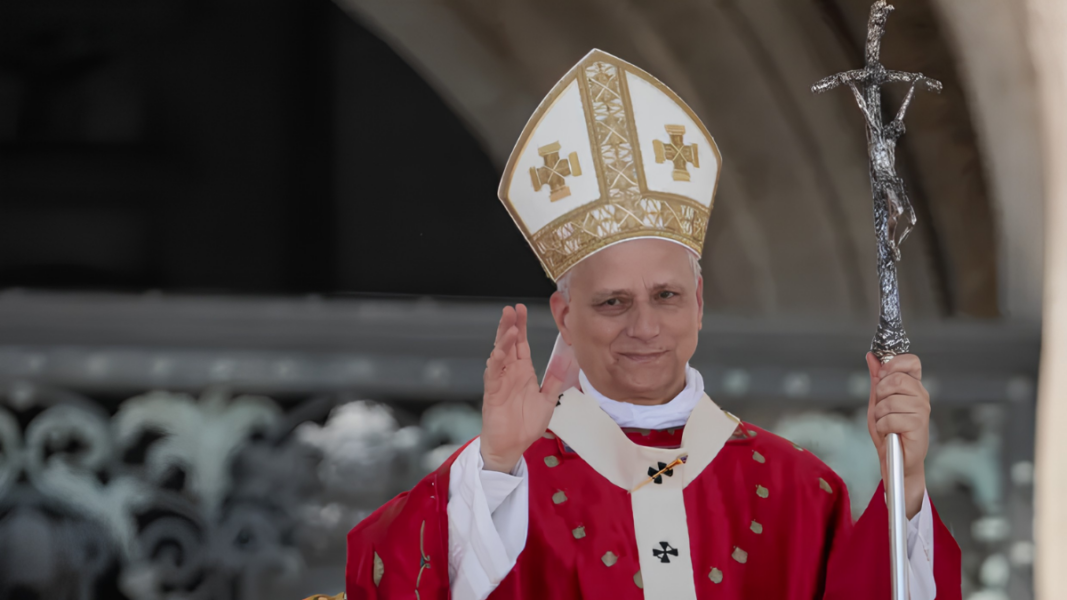
In his Pentecost homily delivered this Sunday at St. Peter’s Basilica, Leo XIV issued a strong call for the unity of the Church founded on truth, warning against the “factions,” “hypocrisies,” and “trends” that, he said, obscure the light of the Gospel. Before the faithful gathered in the Vatican, the Pope linked the action of the Holy Spirit to the Church’s evangelizing mission and affirmed that true Christian renewal does not arise from ideological or cultural shifts, but from fidelity to Christ and to revealed truth.
The Pontiff also insisted that the Church cannot be reduced to a purely human or sociological reality, but lives from the ongoing action of the Holy Spirit in the sacraments, the mission, and ecclesial communion. In one of the most significant passages of the homily, Leo XIV warned against those changes that “do not renew the world, but age it amid errors and violence,” contrasting them with the work of the Spirit, who transforms history from within and leads to salvation. He also asked for prayers that humanity be freed “from the evil of war” and from the spiritual misery caused by sin.
Below is the complete homily of Leo XIV:
Dear brothers and sisters:
The Easter season reaches its culmination today in the solemnity of Pentecost. To highlight the unity of this saving event, the Gospel takes us back once more to the “first day of the week” (cf. Jn 20:19), that is, to the new day on which the risen Jesus appears to his disciples, showing them “his hands and his side” (v. 20). The Lord reveals his glorified body—precisely his wounds, the marks of the crucifixion. These signs of the passion, more eloquent than any speech, have been transfigured: He who was dead lives forever.
Seeing the Lord, the disciples too come back to life: they had buried themselves in the upper room, filled with fear, but Jesus enters despite the closed doors and fills them with joy. He passes through death, flings the tomb wide open where, for us, there seemed to be no way out. To this gesture Christ joins the word: “Peace be with you!” (v. 19); and immediately afterward he breathes on the disciples, giving them the Holy Spirit. The Risen One is full of life; after showing the life of the body, as true man, he gives the life of God, as the beloved Son of the Father, become for us brother and Redeemer. In the same upper room where he instituted the new and eternal covenant, Jesus pours out the Spirit; the place of the supper and the betrayal is transformed and, from a tomb for the apostles, becomes for the whole Church a source of resurrection. That is why Pentecost is a paschal feast and a feast of the Body of Christ, which by grace we are.
Celebrating this mystery, I would like to dwell on three aspects.
First, the Spirit of the Risen One is the Spirit of peace. In his Passover, Christ reconciles God and humanity, and the Holy Spirit infuses peace into hearts and spreads it throughout the world. This peace comes from forgiveness and leads us to forgiveness; it begins with the forgiveness that Jesus himself grants, though we betrayed, condemned, and crucified him. Surprising us with his love, it is he, the risen Lord, who says: “If you forgive anyone’s sins, their sins are forgiven” (Jn 20:23). With these words Jesus entrusts us with a divine work, for only God can forgive sins (cf. Mk 2:7). This authority is given under the sign of a universal reconciliation: the Lord pours out the Spirit of peace from the beginning to the end of history, because he who has redeemed all from death excludes no one. The Holy Spirit, indeed, is Lord and giver of life from the very beginning of creation, when he hovered over the waters (cf. Gn 1:2), and now, in redeeming us, he changes the history of the world; truly Pentecost is celebrated as the feast of the new Covenant, that is, the covenant between God and all the peoples of the earth. While the roar from heaven, the wind, and the tongues of fire in the upper room recall the ancient signs of Sinai (cf. Acts 2:2-3; Ex 19:16-19), the holy law of God is inscribed in our hearts, engraved by the Spirit with characters of love in the flesh of Christ and in his body, which is the Church.
This law is the code of peace; it is the twofold commandment of love, which the Spirit reminds us of in every heartbeat. With our hearts, therefore, we can invoke: “Veni Sancte Spiritus,” for he has already been given to us. We can desire him, because he has already been promised to us. We can welcome him, because he himself is the sweet guest of the soul.
A second aspect: the Spirit of the Risen One is the Spirit of mission: “As the Father has sent me,” says the Lord, “I also send you” (Jn 20:21). Thus we share in the mission of Jesus, of him who comes from God and returns to God with the power of the Spirit, who proceeds from the Father and the Son, and with them is adored and glorified, the one God. The Holy Spirit is the living charity of Christ that overflows in us, impels us, and sustains us in the mission (cf. 2 Cor 5:14). The same Spirit, while giving the apostles the power to speak in a variety of tongues (cf. Acts 2:4), teaches humanity the word of salvation. Now that the apostles have received the breath of the Risen One within them, this proclamation comes from their mouths; it has the voice of Peter and of those who are with him. Precisely on the day of Pentecost the apostles begin to proclaim Jesus, crucified and risen; the “wonders of God” (Acts 2:11) are all summed up in the redemption that begins with faith. In fact, the first work of the Holy Spirit in us is the faith by which we profess: “Jesus is Lord” (1 Cor 12:3). This faith lives and is expressed in every good deed, in every act of mercy and virtue. The work of God, therefore, is ourselves, who have come here today from every part of the world, invited to the Lord’s table, gathered to listen to his word and sent to bear witness to it everywhere.
Dear brothers and sisters, we are truly sharers in the Gospel; the whole Church is a protagonist, not merely a guardian. With the strength of the Spirit, our proclamation is filled with joy and hope, because we ourselves are the newness of the world, the light and the salt of the earth (cf. Mt 5:13-14). Certainly not by our own merits or privilege, but by the word of the Lord, who sanctifies the sinner, heals the leper, and turns one who has denied him into an apostle. On the one hand—as we see clearly—there are changes that do not renew the world but age it amid errors and violence. On the other hand, the Holy Spirit enlightens minds and stirs new energies of life in hearts. Thus he transfigures history, opening it to salvation, that is, to the gift that the one Lord shares with all. The Church’s mission confirms that sharing, transforming the world’s confusion into communion with God and among ourselves.
This mission begins by affirming the truth of God and of man, because the Spirit of the Risen One is the “Spirit of truth” (Jn 14:17). The Lord himself has promised him to us, asking unity for his Church, a unity founded on the love of God, the source of our love. The Spirit, who spoke through the prophets, always promotes unity in truth, because he awakens in us understanding, harmony, and coherence of life. As Saint Augustine teaches, the gift of tongues understood in the one faith was meant by the Holy Spirit “to be a proof of his presence” (Sermon 269,1). The Paraclete therefore defends us from all that hinders this understanding: from prejudices, hypocrisies, and trends that extinguish the light of the Gospel. The truth God gives us thus remains a liberating word for all peoples, a message that transforms every culture from within.
The Spirit of the Risen One is not poured out once and for all, but continually. As the Eucharist is the living presence of Christ who always nourishes us, so the Holy Spirit imprints his character in us in Baptism, which makes us Christians; in Confirmation, which makes us witnesses; in Holy Orders, which constitutes ministers and shepherds for the people of God. In every sacrament he is dator munerum, the source of holiness that multiplies gifts and charisms in prayer, in works of mercy, and in the study of the Word of God. As the Apostle teaches: “To each one the manifestation of the Spirit is given for the common good” (1 Cor 12:7). Precisely because we are the Church, the one body that lives from God and serves the world. Thanks to the Spirit we can bring to all true peace, the truth that saves, that is, Christ the Lord himself.
Dear brothers and sisters, with ardent hearts let us ask today that the Spirit of the Risen One save us from the evil of war, which is overcome not by any superpower, but by the omnipotence of love. Let us pray that he free humanity from misery, which is redeemed not by incalculable wealth, but by an inexhaustible gift. Let us ask him to heal us from the scourge of sin, for the redemption proclaimed to all peoples in the name of Jesus. This is the grace that filled the apostles with courage; may it fill us as well, today and always, through the intercession of Mary, Mother of the Church.