


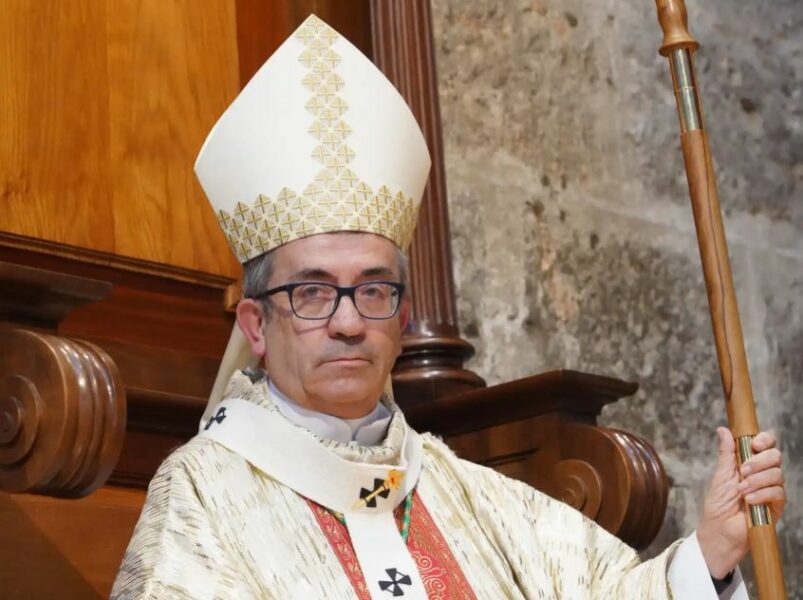
The president of the Spanish Episcopal Conference and archbishop of Valladolid, Luis Argüello, believes that the upcoming visit of Leo XIV to Spain could set the pastoral guidelines for the Spanish Church in the coming years. In an interview with the magazine Ecclesia, Argüello stated that he hopes the Pontiff’s words will “complete” the pastoral document recently approved by the Spanish bishops.
“The very history of the pastoral plans of the Episcopal Conference began with the echo of a visit, that of John Paul II in 1982,” the prelate recalled. “We hope to fill the blank pages of the document with the underlines that the Pope may make.”
The Pope’s visit to Spain will mark the first papal trip to the country since World Youth Day in Madrid in 2011, then presided over by Benedict XVI.
A visit with impact in Latin America
Argüello interpreted the choice of Spain as one of Leo XIV’s first international destinations in geopolitical and evangelizing terms. The president of the Episcopal Conference especially highlighted Spain’s role as a bridge between Europe and Latin America.
“This Pope is American, from the north and the south. And in relations with Latin America, Spain is of great importance,” he stated. He also pointed to Spain’s role regarding Africa and migration challenges.
The archbishop further described Spain as one of the European countries with a Catholic tradition most affected by secularization, a reality Leo XIV would know well due to the historical presence of the Augustinians in Spanish territory and his previous experience as prior of the order.
Concern over secularization and vocations
During the interview, Argüello portrayed a Spanish Church marked by the tension between preserving the Catholic heritage it has received and facing a new missionary scenario.
“The Spanish Church is currently experiencing the tension between how to administer the extraordinary heritage received from Catholic tradition and how to evangelize many people who have minimal knowledge of what the Gospel means,” he explained.
The president of the Episcopal Conference also mentioned concern over the vocational crisis and the need to articulate what he defined as a “missionary communion” in a country with strong demographic imbalances and growing secularization.
Argüello likewise highlighted the incorporation of numerous Catholics from Latin America into Spanish communities and warned of the risk that some may end up joining evangelical or Pentecostal communities.
“Faith is not a private matter”
Argüello defended that faith should not be confined to the private sphere; “it should be at the bar counter, in everyday relationships,” he added, while clarifying that this does not mean “nagging all day,” but rather offering a Christian perspective on public affairs.
The archbishop insisted on the need to recover shared ethical and cultural references amid what he described as a “crisis of Western democracies.”
“It is good for Spanish society and Spanish politicians to reflect on their humus,” he stated, reclaiming the historical role of Christianity in shaping the West.
Madrid, Barcelona and the Canary Islands
The president of the Episcopal Conference also highlighted the symbolism of the cities included in the apostolic journey: Madrid, Barcelona and the Canary Islands.
Regarding Barcelona, he emphasized the evangelizing value of the Sagrada Família and the figure of Antoni Gaudí as an example of lay holiness. As for the Canary Islands, he noted that the trip will focus on the issue of migration and care for the most vulnerable.
Argüello also described Leo XIV as a Pope centered on communion, peace and the Church’s mission.
“He is a person who prioritizes listening and has clear emphases, such as communion and peace,” he stated.
The president of the Spanish bishops believes the visit could become a call to strengthen ecclesial unity and reinforce the public presence of Catholicism in an increasingly secularized society.