


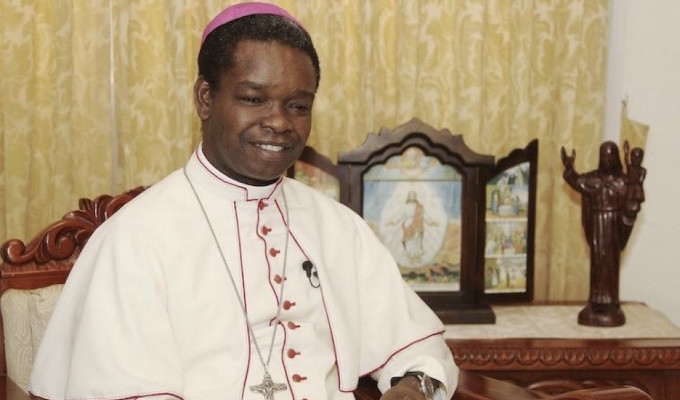
Pope Leo XIV’s trip to Africa, scheduled from April 13 to 23, has sparked criticism for including countries noted for their political situation. However, Archbishop Fortunatus Nwachukwu, a high-ranking official in the Dicastery for Evangelization, responds straightforwardly: precisely those contexts are what make the Pontiff’s presence necessary.
In an interview granted to The Pillar, the Nigerian prelate rejects the idea of canceling visits due to the type of government. “If the Pope had to cancel trips because of the political situation, he would not visit any country in the world,” he states.
“The Pope does not come to the righteous, but to sinners”
Nwachukwu places the issue on a plane different from the political one. In his view, the criterion cannot be the perfection of systems, but the very mission of the Pope.
“If he canceled trips for political sins, he would also have to stop going to countries with immoral laws,” he warns. And he adds a direct reference to the Gospel: “I have not come to the righteous, but to sinners.”
From this perspective, the visit to countries with difficulties is not an anomaly, but a logical consequence of the Pontiff’s role as universal pastor.
A message that excludes no one
The archbishop insists that the Pope does not travel to endorse political systems, but to proclaim a message that, by definition, excludes no one: human dignity, peace, common good.
“No one should be left out of this message,” he maintains.
For that reason, far from avoiding complex contexts, he considers them the ones that most need that proclamation. “Countries with problematic regimes are the ones that most need the Pope’s visit,” he states, convinced that his presence can open spaces that would otherwise remain closed.
A visit that seeks to open space
According to Nwachukwu, recent history shows that papal trips are not merely symbolic. In certain contexts, they have contributed to improving the situation of the Church and even to generating changes in society.
In that line, he expresses his hope that Leo XIV’s visit can “open a small breather,” an image that points to a presence that does not resolve conflicts, but does introduce a margin of hope.
Africa: mission in unequal contexts
The Pope’s itinerary includes Algeria, Equatorial Guinea, Angola, and Cameroon, countries that reflect very different ecclesial realities.
From small communities, like the Algerian one—where the Church lives as a minority and without the possibility of proselytism—to countries with strong Catholic growth like Angola or Cameroon.
In all cases, the criterion is the same: not the comfort of the context, but the need of the mission.
A logic that does not avoid conflict
For Msgr. Nwachukwu, the Pope’s action does not adapt to ideal conditions, but enters into imperfect situations. It is not a matter of ignoring problems, but of facing them from another logic. That of the Christian proclamation, which does not wait for favorable scenarios to make itself present.