


The Christian community in southern Lebanon has raised its voice again following the Israeli attack that, right in the middle of Easter, left several civilians dead, in a context marked by vulnerability, pressure from militias, and the absence of real peace in the region.
According to ACI MENA, the Arabic service of EWTN News, among the deceased is Pierre Maouad, linked to the Lebanese Forces, along with his wife and a neighbor. The impact has been immediate in Christian areas, where the conviction grows that they are paying for a war that does not belong to them.
“We don’t want war”: the cry of a people on the border
This situation is compounded by direct testimony from the ground. Father Toni Elías, a Maronite priest in Rmeich—one of the last Christian strongholds on the border with Israel—expresses it without mincing words: “We no longer want war.”
The priest describes a population that not only suffers the consequences of the conflict but also sees hopes of stability fading away. “We want a Lebanon that lives in peace, in serenity; we want jobs for our young people; we want families not to have to abandon their land,” he states.
The shadow of Hezbollah and distrust toward the State
The attack has reignited suspicions about Hezbollah’s role in these areas. More and more voices within the Christian community denounce that the militias operate from civilian areas, exposing the population to direct reprisals.
The contradictory versions about the attack’s target have increased indignation. The Lebanese Army’s explanation does not convince. Distrust grows, and institutional discredit intensifies.
Rmeich resists: faith, roots, and constant pressure
Rmeich is not just any town. It is literally on the front line. “We are not near the border; we are on the border,” explains Father Toni. And he adds a key fact: it is one of the few Christian enclaves that remain in the Bint Jbeil area.
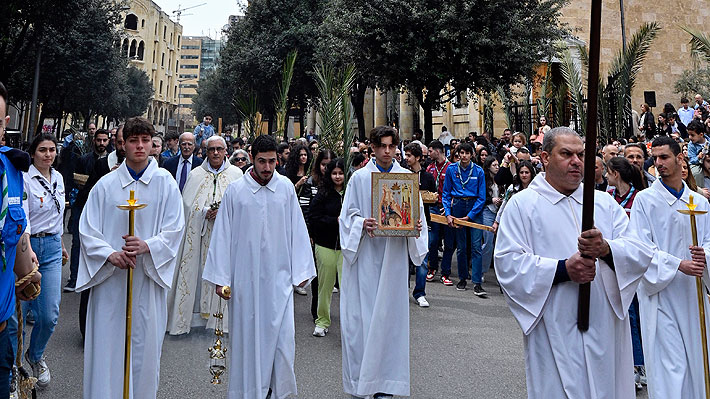
In this context, resistance is not military, but spiritual and communal. Despite the war, the community managed to celebrate Holy Week with high participation, although it had to forgo the Easter Vigil.
“Faith and trust in the Lord are what keep us steadfast,” affirms the priest.
Shortage of medicines and urgent call for humanitarian aid
Alongside the drama of war, another urgency emerges: the lack of basic resources. Father Toni warns of the shortage of medicines, especially for seriously ill patients.
There are cancer patients or those requiring complex treatments who depend on drugs that are hard to obtain or too expensive. In this situation, the parish is compiling a list of needs to channel aid through the Order of Malta and Caritas.
The priest acknowledges the closeness of the Church, including support from Pope Leo XIV and the apostolic nuncio, but insists that the situation demands a broader and sustained humanitarian response.
A community that resists… but does not want to continue alone
The case of Rmeich summarizes the drama of many Christians in Lebanon: roots, faith, and resistance, but also weariness and a sense of abandonment.
“We remain committed to our peaceful resistance,” concludes Father Toni. A resistance that does not ask for privileges, but for something more basic: to live in peace on their own land.