


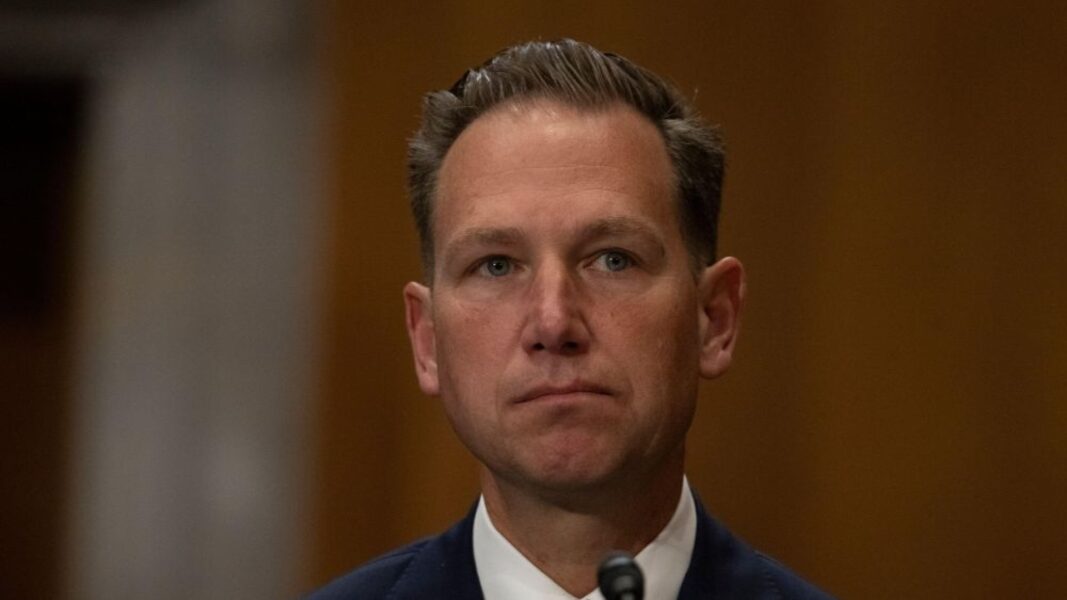
The United States Ambassador to the Holy See, Brian Burch, has categorically denied that the Pentagon threatened the Vatican during a meeting with Cardinal Christophe Pierre, amid the controversy generated by various reports about that encounter.
According to statements disseminated by Catholic Vote, Burch stated that he spoke directly with the Apostolic Nuncio in the United States, who described as “fabrications” the versions that portrayed tensions or pressures from Washington. The cardinal, according to that testimony, was clear: there were no threats and the meeting was “frank and cordial.”
The denial: “no threats”
According to the U.S. ambassador, Cardinal Pierre flatly rejected the information disseminated in some media about the content of the meeting with the Under Secretary of Defense for Policy, Elbridge Colby.
“He confirmed that those characterizations were ‘invented’ and that there were no threats of any kind,” Burch stated. Even the references to the so-called “Avignon Papacy,” which some interpreted as a warning, were dismissed: “None.”
The meeting, he added, took place approximately two months ago and developed within the usual channels of institutional dialogue.
A confirmed meeting with conflicting versions
Beyond the denial, various reports agree that the meeting did take place at the Pentagon, a fact that has also been indirectly acknowledged by U.S. spokespersons.
However, the content of the meeting remains subject to divergent interpretations. While the official version insists on its normal nature, other sources have described a harsher tone in the conversations.
Previous reports pointed to tensions
Some reports, originating from a The Free Press, piece, claimed that the meeting was marked by disagreements on international policy matters, especially after Pope Leo XIV’s criticisms of diplomacy based on the use of force.
According to those versions, during the meeting, reference would have been made to the historical precedent of the Avignon Papacy, which was interpreted by some as a gesture of symbolic pressure.
However, these elements have been denied by the version conveyed by the U.S. ambassador after his conversation with Cardinal Pierre.
White House reaction
In the same vein, a White House spokesperson described the meeting as “respectful and reasonable,” while Vice President JD Vance avoided commenting on the reports, stating that he had not seen those reports and preferred to verify the facts.
A context of international disagreements
The controversy arises at a time marked by underlying differences between the Holy See and U.S. foreign policy, particularly in relation to the conflict with Iran.
In recent weeks, Pope Leo XIV has warned about the risk of a “spiral of violence” and has criticized the resort to force in international relations, insisting on the need for diplomacy based on dialogue.