


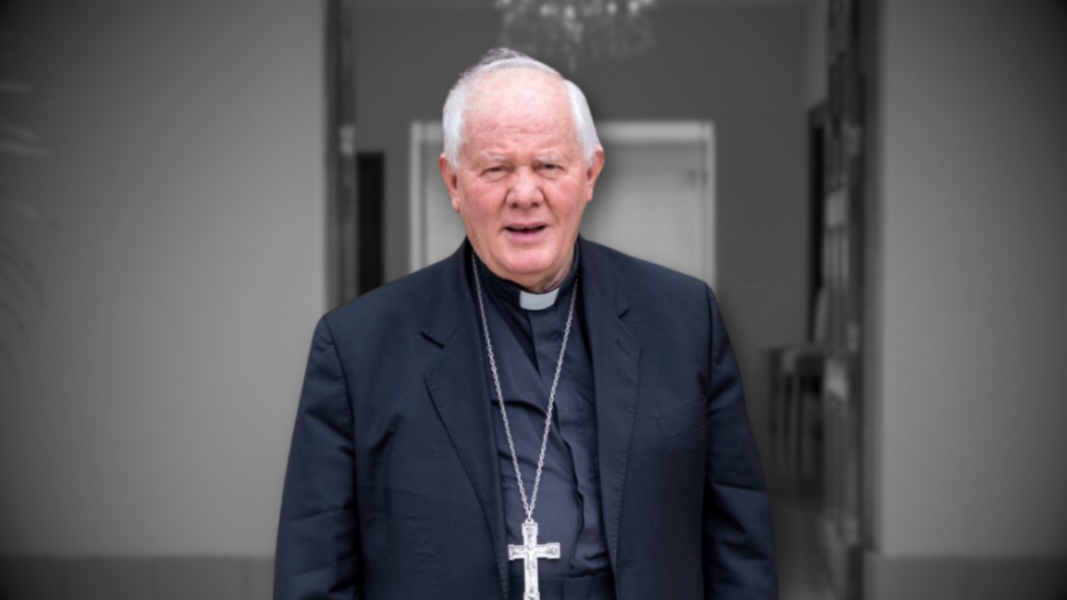
Antonio Santarsiero Rosa was born on June 13, 1951, in Italy. He arrived in Peru in 1973 as an oblate of San José, was ordained a priest in 1980, and in 2001 John Paul II appointed him prelate bishop of Huari. In 2004, he was transferred to Huacho, a diocese he has governed since then. Today, he is also the general secretary of the Peruvian Episcopal Conference, a position he assumed in January 2025 for a term extending until 2028.
His profile is that of a long-standing administrator. He is not a media figure nor does he lead doctrinal debates. His weight within the Peruvian Church is explained by three accumulated factors: more than twenty years in the same diocese, a sustained presence in the economic management of the episcopate, and, since the end of 2024, control of the general secretariat, which is the operational center of the Episcopal Conference.
In the economic area, he has been involved for more than five years. He was elected president of the Economic Council in January 2020 and reelected in January 2022. During that second term, Robert Prevost held the second vice presidency. The diocese of Huacho, which he administers in parallel, operates within the framework of the agreement between the Holy See and Peru, which recognizes the bishoprics as public legal entities with full patrimonial capacity and a limited external control regime, which guarantees economic power without transparency requirements comparable to those of a commercial company.
His rise to the general secretariat occurred in November 2024, when the Permanent Council appointed him interim. In the plenary assembly of January 2025, he was ratified for the period 2025-2028. From that position, he manages coordination between bodies, the internal flow of information, and the daily execution of the decisions of the Peruvian episcopate.
His consolidation at the top coincides with a sensitive institutional context. In 2024, the Peruvian Episcopal Conference was the object of criticism for public actions interpreted as a form of pressure on a priest lawyer who was intervening in sexual abuse cases, whom they disqualified without process through a strange press release, in an unusual episode due to its anti-juridical nature and its impact on ongoing procedures. Santarsiero was then part of the directing core.
To date, his situation adds an evident element of risk for the institution. There are reports of sexual abuses of special gravity that present a relevant degree of verisimilitude. Among the described facts is the testimony of a victim who was a minor at the time of the events and who reported what happened immediately and spontaneously to third parties, which constitutes a solid indication of credibility in legal terms. The concurrence of corroborating elements, the coherence of the account, and the context in which the reports occur configure a case that, from a technical analysis, cannot be dismissed without exhaustive investigation and immediate measures. The absence of a clear response from the Holy See, which has been receiving reports at least since 2024, increases the risk that the situation will escalate into a problem of greater institutional scope if urgent measures are not adopted.