


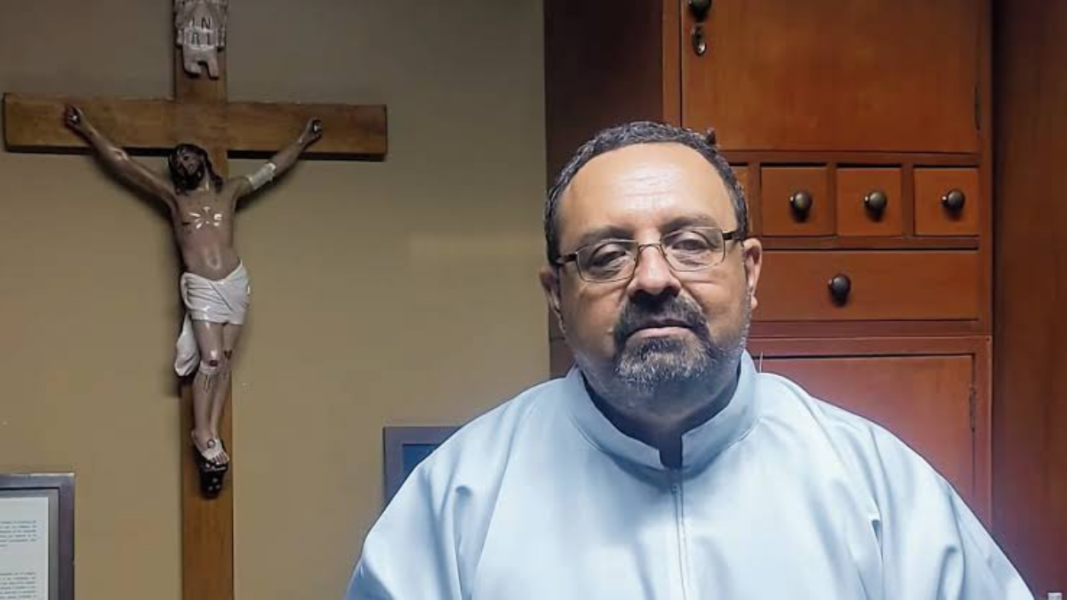
A group of victims has publicly denounced the lack of attention and response from the Archdiocese of Lima in the case of priest Marco Antonio Agüero Vidal, investigated for alleged sexual offenses, according to information published by the Peruvian newspaper Perú21 and a statement disseminated by the complainants themselves.
Complaints from the victims and questions about ecclesiastical authority
In a statement disseminated on April 7, the complainants—five women, including three minors—expressed their “profound indignation, pain, and concern” about the development of the case and the actions of the ecclesiastical authority.
The victims point out that, despite having filed their complaints in December 2025, they have not been personally received by the Archbishop of Lima, Cardinal Carlos Castillo, which has generated “a profound sense of abandonment.”
They also question the fact that the legal defense of the investigated priest would have been provided by the Archdiocese itself, which has caused bewilderment among the complainants, considering that institutional support has not been directed equally toward the victims.
Judicial process and request for preventive detention
The case is currently in the judicial sphere. The appeal hearing was held on April 6, following the initial decision of the 21st Preparatory Investigation Court to grant restricted appearance to the priest.
The Public Prosecutor’s Office has requested the revocation of this measure and has asked for nine months of preventive detention, arguing the lack of job ties of the investigated party and the risk of obstructing the process.
Part of the evidentiary support includes testimonies collected in the Gesell Chamber, in which alleged acts of sexual connotation committed in contexts linked to religious activities are described.
Contradictions in the Archdiocese’s version
One of the most controversial aspects of the case are the discrepancies in the communications from the Archdiocese of Lima. While it publicly acknowledged having received a formal complaint in December 2025, an official response sent to the Police on March 9 indicated that the priest had no prior complaints or disciplinary processes recorded.
This statement was later contradicted by the priest himself, who acknowledged before the authorities that he had knowledge of the complaints months earlier.
Additionally, the Archdiocese stated in its response that it could not provide further information by invoking the “pontifical secret,” a justification questioned in the context of the reforms introduced in 2019, which exclude this type of offense from said reserve.
Pastoral activity and lack of visible measures
According to the available information, the priest continued to carry out pastoral activities until March 1, the date on which the facts became public, despite already having knowledge of the complaints against him.
For her part, the victims’ lawyer has pointed out that to date there has been no direct contact from the Archdiocese with the complainants.
Call to ecclesiastical authorities
In their statement, the victims have requested the direct intervention of various Church authorities, including Cardinal Carlos Castillo, the Peruvian Episcopal Conference, the apostolic nuncio in the country, and Pope Leo XIV himself, whom they ask to take note of the situation.
The complainants emphasize that their goal is for “the truth to come to light” and for the Church to guarantee the protection of the most vulnerable people.
Awaiting a judicial decision
The Penal Chamber must issue a definitive resolution in the coming days on the situation of the investigated priest, which will determine whether the process continues with him at liberty or if his entry into preventive detention is ordered.
In the meantime, the case continues to generate concern both in the judicial and ecclesiastical spheres, due to the implications it raises in terms of institutional responsibility and attention to victims.