


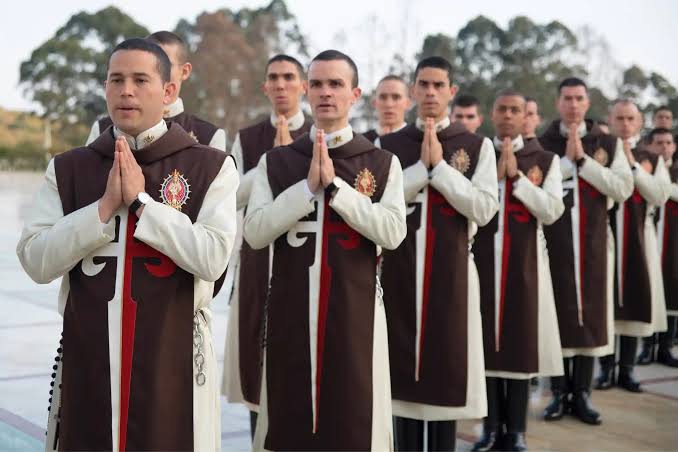
After years of uncertainty, blockade, and institutional silence, the Heralds of the Gospel announce the resumption of their ordinations, in a move that marks a significant shift in one of the most controversial processes of recent years within the Church.
The Pontifical Clerical Society of Apostolic Life Virgo Flos Carmeli has confirmed that, during the Octave of Easter, the diaconal and priestly ordinations of dozens of its members will take place, effectively putting an end—at least in practice—to a paralysis that has persisted since 2019.
The Announcement: Ordinations During the Octave of Easter
According to the information disseminated by the Heralds of the Gospel themselves, on April 11, 31 new deacons will be ordained, while on April 12, Divine Mercy Sunday, 26 deacons will receive priestly ordination.
The diaconal ordination will be conferred by Mons. Fernando José Monteiro Guimarães, emeritus archbishop of the Military Ordinariate of Brazil, while the priestly ordination will be presided over by Cardinal Raymundo Damasceno Assis, emeritus archbishop of Aparecida and current pontifical commissioner.
The announcement is framed in a markedly spiritual tone, characteristic of the Easter season, emphasizing the ecclesial and vocational dimension of the event, and entrusting these ordinations to the intercession of the Virgin Mary.
A Breakthrough After Years of Intervention
Since the Vatican intervention initiated in 2017 and subsequently reinforced with the appointment of a pontifical commissioner in 2019, ordinations in the Heralds had been suspended, directly affecting dozens of vocations that remained in limbo without a clear public explanation.
During this time, the situation was described as a prolonged, opaque, and suffocating process, in which no formal accusations were specified nor was a clear horizon for normalization established.
Pending Clarifications
The resumption of ordinations undoubtedly represents a change of scenario. But it does not close the case.
Fundamental questions remain open regarding the management of the process, its duration, its reasons, and its consequences. The role of the Dicastery for Consecrated Life under the responsibility of Sister Simona Brambilla—as well as, at the time, that of Cardinal João Braz de Aviz—is decisive in the prolongation of an intervention that has extended for years without a convincing public explanation.
What is now beginning to be unblocked in practice—including the resumption of ordinations—remains pending a clear and complete explanation from those who have directed this process from Rome.
Nevertheless, the planned ordinations are a reason for hope. After years of waiting, dozens of vocations will finally be realized in service to the Church, reminding us that, even amid complex processes and controversial decisions, grace continues to open paths and bear fruit in those who have persevered in their calling.