


By Robert Royal
The days immediately following Easter are usually a period of inner peace for believers, but also of mystery. It is the glow of the Resurrection, of course, but also a persistent question, especially this year when wars and civil unrest trouble the entire world. «The strife is o’er,» as the hymn beautifully set to music by Palestrina says. Jesus has conquered sin and death. But why, then, does so much «strife»—and sin and death—continue?
It is a good question, but God’s answer is clearly different from what we expect. Even in Jesus’ time, some followers «went away» because He did not restore Israel’s earthly kingdom. In fact, within a few decades, the Romans wiped Jerusalem and Israel off the map—literally, not like in current presidential rhetoric.
The God of the Bible acts in time and through people, as we see both in the Old Testament and in the history of the Church. Despite its contemplative dimension, Christianity is not Hinduism, nor Buddhism, nor a postmodern «spirituality» that can exist anywhere, in any way. Christianity also deals with the Spirit, and preeminently so. But also with the flesh, the «world,» and everyday life, which it shapes, slowly or not, over generations.
God could, like a tyrant, impose peace on the world. But to do so, He would have to abolish free will, the very possibility of sin and, therefore, also of love. And that, we know, He chose not to do.
Instead, the Gospel must be preached and make its way into the hearts of fallen human beings. Against all human odds, over time, a Word carried by a few fishermen, tax collectors, and seemingly random disciples, here and there, converted the greatest existing empire and much of the rest of the world.
The great era of missionaries—the sixteenth century—was also the hard century of the Protestant Reformation and the Wars of Religion. As in many human things, agitation and conflict can also produce boldness and determination. The Jesuits of that time were, simultaneously, the greatest Catholic educators in Europe and the evangelizers of the whole world.
It hardly needs saying that today we need something similar. Desperately. Most of what is said about the New Evangelization and synodality revolves around the mission to formerly Christian peoples. That could be a good thing, if managed properly.
But it cannot be managed if the evangelizers do not believe in the urgency of God’s message for all peoples. A sentimental kindness toward the «Other» is not enough. Even Jesus grew impatient with the process: «I have come to bring fire to the earth, and how I wish it were already kindled!» (Luke 12:49).
Our Western civilization has convinced itself to the point of idiocy. It lost its soul in the materialistic pursuit of knowledge and power. And now it realizes its spiritual poverty and hopes to save itself through machinery and AI.
What, then, must we do? Two things: understand what has happened and pursue—with intelligence and energy—the reversal of what must be reversed.
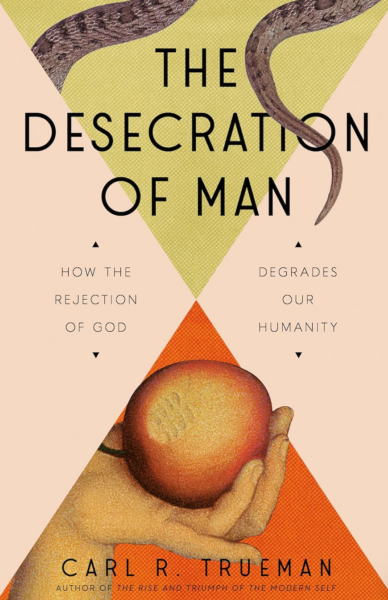
The work of Carl Trueman, The Desecration of Man (The Desecration of Man), which appears officially tomorrow, is a sparkling guide for both things. Its title evokes The Abolition of Man, the incisive little study by C.S. Lewis on how, already in the 1940s, we were—through false logic and psychologizing tendencies—ending many of the things that make us human. But in Trueman’s reading, we are now doing something much worse.
Lewis was responding to errors. Trueman claims that we have moved on to the desecration of the good and the sacred, and of our own humanity. We constantly hear these days that the transgression of established norms and practices is something good and bold. But the whole process has gone so far that transgression itself has become a kind of established system, to the point that there is almost nothing left to oppose.
According to Trueman’s account, it was Nietzsche’s «Madman» who first saw what had happened. Westerners thought they could dispense with God and still maintain the «good» Christian values, a «humanism» based on nothing. That began to seep into our notions about the world and ourselves through various channels, creating what several thinkers have identified as a «social imaginary» in which we can no longer even see what we are, except as a jumble of desires, impulses, and «complexes.»
It is no wonder that our secular states and cultural institutions have become toxic. Even some Christian churches have joined in the human desecration today. (For me, it affected me personally when I heard a pastor in a religious service intone: «Oh, God of pronouns…»).
Trueman proposes three responses to this crisis: Creed, Worship, and Code. His arguments deserve to be read in full for their wisdom and practicality, but briefly:
By Creed, he refers to the historical creeds, with their propositions about God the Father and Creator, the Son and the Holy Spirit, the Incarnation, Crucifixion, Resurrection, and final judgment. The articles of the Creed reveal truths about God, but also about us. We are created, in His image, and therefore free to love, but not to radically recreate ourselves (the trans movement being the current most extreme instance of that deviation).
All those articles also need to be embodied in Worship, which means informing what we do in Masses, weddings, funerals, and other devotions as a «praying community.» That may seem quite obvious, but Trueman points out that when you find yourself in a world that has «lost its story,» as the Protestant theologian Robert Jenson once memorably said, the Church has to become a world in which that story, the story of God and man, can be told again.
Finally, there is the Code, which is similar to the renewal of public space, the «cultural Christianity» that even non-believers like the radical atheist Richard Dawkins recognize as urgent. Trueman shows that it must be much more than that, starting with explicit, individual, and gradual Christian acts, which seems minimalist. But: «We must remember that a man with only twelve friends to help him focused on the local two thousand years ago and his movement ended up reshaping the entire world.»
In a word, we need a Re-consecration: the return of God and, therefore, of ourselves.
About the author
Robert Royal is editor-in-chief of The Catholic Thing and president of the Faith & Reason Institute in Washington, D.C. His most recent books are The Martyrs of the New Millennium: The Global Persecution of Christians in the Twenty-First Century, Columbus and the Crisis of the West y A Deeper Vision: The Catholic Intellectual Tradition in the Twentieth Century.