


By Msgr. Charles Fink
During the first half of the 20th century, an extraordinary constellation of English Catholic writers emerged, many of them converts, who possessed the great gift of being able to explain the Catholic faith at a popular level without distorting it. Names like Chesterton, Knox, Sheed (originally from Australia), and Houselander come to mind.
Among them was a Jesuit priest named C.C. Martindale, who, after spending five years interned under the Nazis, was asked by the BBC to give six radio talks during Holy Week of 1946. Father Martindale concluded his first talk with these words:
whether it be the problems posed by long history or by the present hour, whether the problems posed by our own soul and our inner experience, whether the Sufferings and Death of Christ, the Christian has but one starting point, that is, God, His Love and His will that we live. This truth never changes, no matter how much we change. God does not desire even the death of the sinner, but that he live. I cannot say it too often, nor with too much emphasis… that at the origin of all things, during all things and at the end of all things are God, Love and Life.
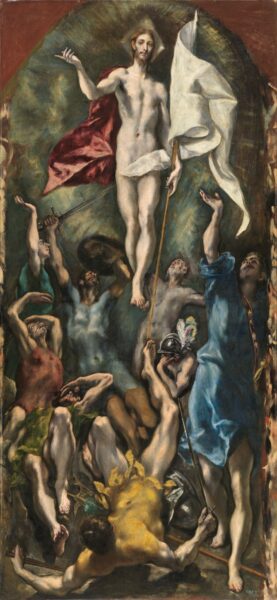
Father Martindale was able to say those words, even after enduring the horrors of war and imprisonment, because he had assimilated and made his own the brilliant and radiant message of Easter. It was this message that helped transform the cowering apostle Peter into the bold and forceful preacher we find in the Acts of the Apostles. It was this message that impelled Paul to write to the Colossians: «If then you have been raised with Christ, seek the things that are above,» and «you have died, and your life is hidden with Christ in God.»
Paul understood that Christ had not risen from the dead only for Himself, but for us; so that, united to Him, we could already begin to rise with Him. Our feet may be mired in the mud of the earth, but our heads and hearts are with Christ in Heaven. What did Peter or Paul have to fear on earth when they already shared in the risen life of Christ?
When Mary Magdalene, Peter, and John found the empty tomb on Easter morning, with Jesus’ burial cloths still there, the Gospel tells us that John believed, but also that «they had not yet understood the Scripture, that he must rise from the dead.»
John believed that Jesus had risen, but he did not yet fully comprehend all that the monumental fact of the resurrection implied. However, understanding would come, and the only apostle to escape violent martyrdom would spend sixty more years on earth preaching the God who is love and who wants us to have life in abundance, not only now, but forever.
The message of Easter is not that there will be no more crosses, but that all our crosses, even death, can lead to new and eternal life; an eternal life begun here and now by our union with the risen Lord. We are like the divers in those old movies who are lowered into the sea from a ship, «strangers in a strange land,» surrounded by darkness, but receiving life at every moment from above, our participation in the risen life of Christ.
Easter must be for us what it was for Peter, Paul, Mary Magdalene, and all the saints: not just something we believe happened once and that will benefit us someday. It is that, but much more. It is a present reality, something we participate in here and now. Let the world do its worst. It can never do anything worse than killing the Son of God, and we already know how that ended. And we share in His life.
We all know the expression «Arise and shine.» It can be, of course, just an annoying cliché or the interruption of a good night’s sleep. But for Christians, it can be a reminder that, by participating in the life of Christ, we have already begun to rise and must manifest it by radiating the light, life, and love of Christ in everything we do.
Remember the words of Father Martindale: «at the origin of all things, during all things, at the end of all things, are God, Love and Life.» Easter calls us, by our way of living, to make it easier for others to believe and experience that. In a world so full of darkness and despair, conflict and confusion, with so many, especially young people, hungry and thirsty for meaning and hope, it is our moral imperative to be Easter people at all times. Simply, we cannot afford to hide our light, the light of Christ, under a bushel.
About the author
Msgr. Charles Fink has been a priest for 47 years in the Diocese of Rockville Centre. He is a former pastor and seminary spiritual director, and lives retired from administrative duties in the parish of Notre Dame in New Hyde Park, New York.