


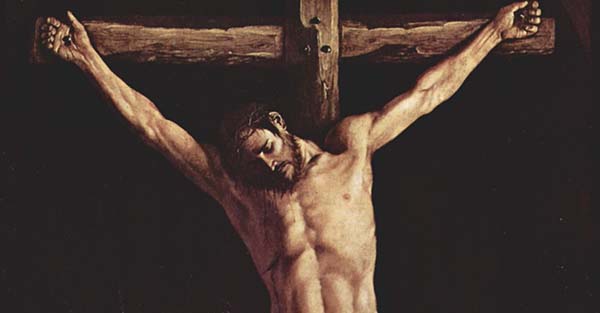
A study disseminated by EWTN News, based on the work of Catholic apologist Jimmy Akin, has once again brought to the table an issue that periodically arouses interest among us Christians: the possible exact date of Jesus Christ’s death. The research, which combines biblical data, historical sources, and astronomical calculations, points to the most probable hypothesis as Friday, April 3, year 33, around three in the afternoon.
A Well-Delimited Historical Framework
Far from being mere speculation, the study relies on concrete references present in the Gospels and historical documents. Among them stands out the figure of the high priest Caiaphas, who presided over the religious trial against Jesus and whose tenure is situated between the years 18 and 36 AD.
To this is added the government of Pontius Pilate, Roman prefect of Judea between the years 26 and 36, under whose authority the crucifixion was carried out. These data allow narrowing down with considerable precision the period in which Christ’s death took place.
Another key element comes from the Gospel of Saint Luke, which places the beginning of John the Baptist’s preaching in the fifteenth year of Emperor Tiberius, that is, around the year 29. Since Jesus begins his ministry after John, the chronology points to the immediately following years.
A Death on Friday and During Passover
The Gospel accounts agree in indicating that Jesus died on the “day of preparation,” that is, the eve of the Jewish Sabbath. This implies that the crucifixion took place on a Friday.
In addition, the Passion is situated in the context of the Jewish Passover. From these data, scholars have resorted to astronomical calculations to reconstruct the lunar calendar of the time. The result is that, within the possible historical margin, only two dates meet the conditions: April 7, year 30, and April 3, year 33.
The Argument from the Gospel of Saint John
The Gospel of Saint John provides a relevant detail by mentioning at least three Passover celebrations during Jesus’ public ministry. This detail suggests a duration close to three years.
If the beginning of the preaching is situated around the year 29, as various sources indicate, the date of the year 33 is more consistent with that duration. For this reason, numerous researchers consider April 3, year 33, to be the most solid hypothesis.
To this is added the agreement in the Gospels about the moment of death: the “ninth hour,” which corresponds approximately to three in the afternoon.
A Faith Anchored in History
This type of research does not seek to reduce the mystery of the Passion to a simple chronological calculation. Rather, it highlights an essential feature of our faith: its rooting in history.
Christ is not a symbolic figure or a myth. He died in Jerusalem, under concrete authorities and at a specific moment in time. This historical dimension is one of the pillars that sustain the credibility of Christianity.
What the Church Does Not Define
Despite the consistency of the arguments, the Church has never defined an exact date for Christ’s death. Studies like that of Jimmy Akin offer well-founded hypotheses, but they do not form part of the deposit of faith.
There are still open debates about the ancient Jewish calendar and the precise chronology of the events. Therefore, although the year 33 has broad support, it cannot be affirmed with absolute certainty.
Beyond the Date: The Meaning of Good Friday
The possible coincidence between the liturgical calendar and these historical hypotheses can awaken a legitimate emotion among us. However, the Church reminds us that the value of Christ’s sacrifice does not depend on a specific date.
What is essential is not the exact day, but the event itself: Christ’s surrender for the salvation of the world.
Every Good Friday, beyond calculations and historical reconstructions, we contemplate the central mystery of our faith: God’s love manifested on the Cross, which transcends time and remains as perennial truth for all generations.