


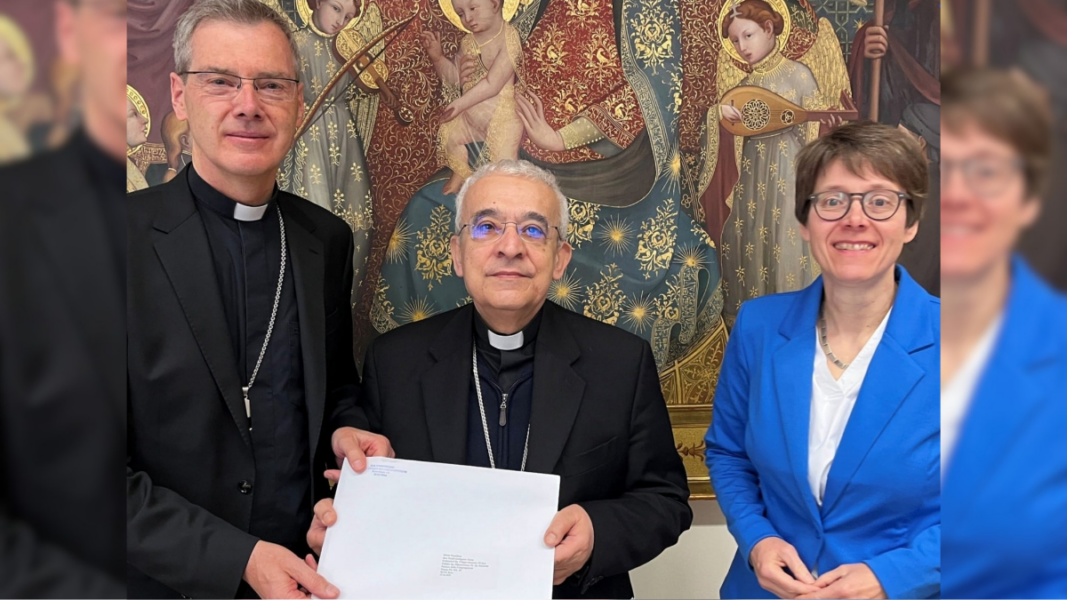
Bishop Heiner Wilmer, president of the German Episcopal Conference, has personally presented to the Vatican the statutes of the future Synodal Conference, the body called upon to provide structural continuity to the controversial Synodal Way.
According to journalist Michael Haynes, the delivery took place this Monday in Rome, coinciding with Wilmer’s audience with Pope Leo XIV in his capacity as president of the German episcopate.
A Decisive Step in the German Synodal Project
The submission of the statutes to the Holy See represents a key moment for the project promoted by the German bishops, who seek to institutionalize the Synodal Way through a permanent body.
This future Synodal Conference is conceived as an instance in which bishops and laity jointly participate in the deliberation and strategic orientation of the Church in Germany, an approach that has raised strong reservations in Rome.
Internal Division and Controversial Proposals
The delivery is made even after repeated warnings from the Holy See about the risks of creating structures that may affect episcopal authority or introduce divergent dynamics with respect to the universal Church.
Let us recall that the approval of the statutes in the plenary assembly of the German episcopate was not without tensions. The project reflects limited consensus and evidences the existing divisions among the bishops.
Among the most controversial points are proposals that expand the role of the laity in ecclesial life, including their participation in areas traditionally reserved for the ordained ministry.
Rome Will Have to Decide
The statutes have been submitted for their formal recognition (recognitio), an indispensable requirement for their canonical validity.
The decision that the Holy See adopts will be decisive. Not only is the approval of this new body at stake, but also the scope that national initiatives can have in the structure of the Church.