


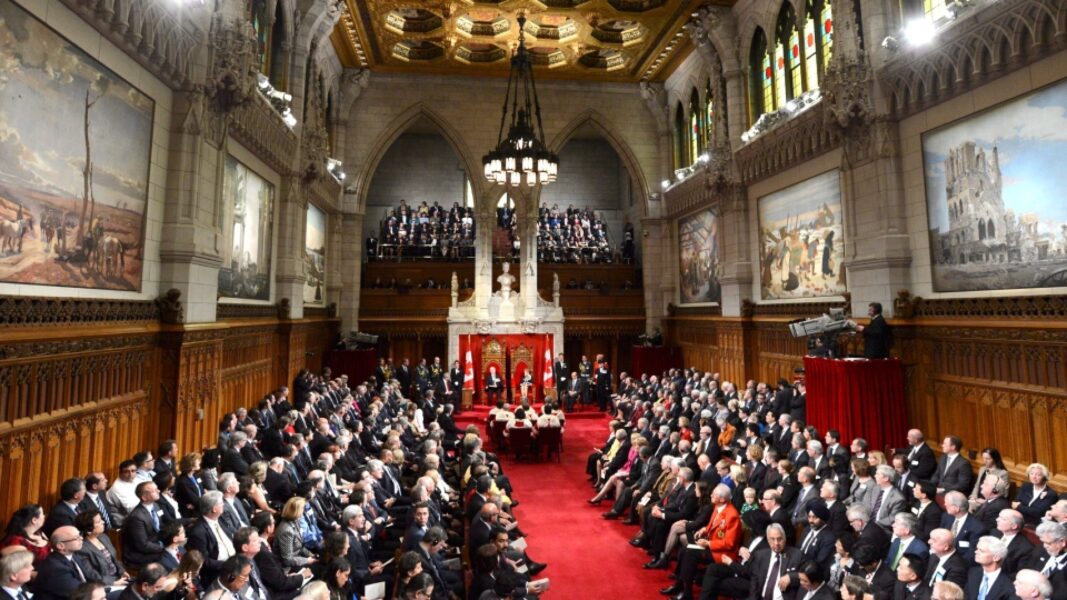
The Canadian Parliament has approved new legislation against “hate speech” that has generated strong concern among Christian leaders and defenders of religious freedom, due to the risk that it could be used to limit the expression of beliefs based on biblical teaching.
On March 25, the House of Commons gave the green light to Bill C-9 —officially titled Combatting Hate Act— with 186 votes in favor and 137 against, after an accelerated legislative process that reduced the debate time
A penal reform with broad scope
The initiative, presented by the Canadian government in September 2025, seeks to strengthen the criminal response to hate crimes. Among other measures, it introduces new offenses in the Criminal Code and expands legal tools to sanction conduct such as intimidation or blocking access to places of worship, schools, or community centers.
The text also more specifically criminalizes the deliberate promotion of hatred against identifiable groups, including the public display of symbols considered terrorist or hateful. Additionally, it eliminates the need for prior consent from the Attorney General to initiate proceedings for hate propaganda, with the aim of expediting judicial actions.
According to the Canadian government, the law responds to the increase in phenomena such as antisemitism, Islamophobia, homophobia, and transphobia.
The critical point: the elimination of the religious exemption
However, the aspect that has sparked the most controversy is the suppression of the religious exemption currently provided for in Canadian legislation. Until now, the Criminal Code stipulated that expressing, in good faith, opinions based on religious texts or beliefs did not constitute an offense.
The new wording eliminates that safeguard, which, according to critics of the law, could open the door to certain religious expressions being subject to complaints if interpreted as hate speech.
This change was key to gaining the support of the Bloc Québécois, allowing the Liberal government to gather the necessary majority to approve the text in the House of Commons.
Religious concern
Various religious leaders and pro-life organizations have expressed similar reservations. Among them, Pastor David Cooke warned that the law could create a climate of greater hostility toward believers by facilitating legal actions against those who express traditional teachings on life, family, or morality.
The Catholic bishops of Canada have also voiced their concern, describing the measure as a possible violation of religious freedom.
For his part, Justice Minister Sean Fraser defended the bill and assured that the law will not prevent religious leaders from reading or quoting their sacred texts, emphasizing that the reform includes safeguards to protect freedom of expression in non-criminal contexts.
A broader definition and margin for interpretation
Another relevant element of the text is the introduction of a legal definition of “hate,” intended to clarify when a conduct may constitute an offense. However, some critics consider that this definition could be interpreted broadly, especially in sensitive issues where religious convictions and contemporary social debates intersect.
Although the law states that peaceful demonstrations and the communication of information will not be affected, the elimination of the religious exemption raises doubts about the real scope of these guarantees in practice.
The Senate, the final stage of the process
The bill must now be examined by the Senate, where modifications could still be introduced before its final approval. However, the composition of the Upper House —with numerous members appointed during Prime Minister Justin Trudeau’s term— makes a complex scenario foreseeable for those seeking to halt or nuance the reform.
The outcome in this final body will be decisive in assessing to what extent this reform redefines the limits of freedom of expression and religion in Canada.