


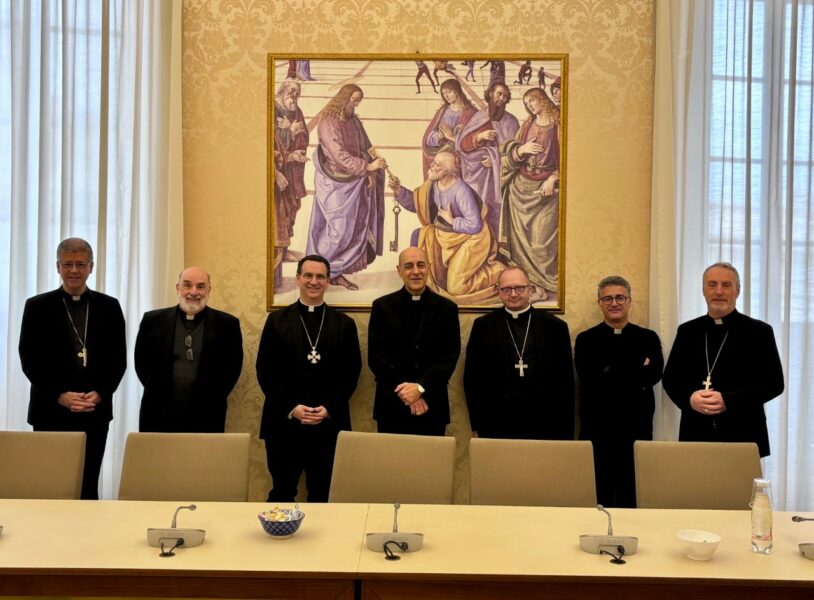
Cardinal Víctor Fernández, prefector of the Dicastery for the Doctrine of the Faith, has published a document on the personal ordinariates of Anglican origin after asking their leaders to detail how these structures function in practice.
The text, titled «Characteristics of the Anglican Heritage as Lived in the Ordinariates Established Under the Apostolic Constitution Anglicanorum Coetibus«, gathers “the fruits of those conversations” at the beginning of March in Rome, where the prefect invited the bishops to share their concrete experience of the spiritual and pastoral heritage of the ordinariates.
A model that preserves identity within communion
The document insists that the ordinariates—created from the apostolic constitution Anglicanorum Coetibus of Benedict XVI—allow for full communion with Rome without requiring the renunciation of a proper spiritual heritage. As emphasized, that heritage is not an accessory element, but “a precious gift” that enriches the universal Church.
The bishops highlight that, despite the geographical dispersion of these communities, there is a common identity based on the integration of elements from the Anglican tradition within the Catholic faith. That identity is articulated around the liturgy, community life, and a spirituality marked by continuity with the received tradition.
At this point, the text presents the ordinariates as a concrete expression of inculturation: a way of living the Catholic faith that does not erase the prior history of those who join, but rather assumes it and orders it within ecclesial communion.
Beauty, liturgy, and community life
Among the traits that the document identifies as characteristic of these ordinariates, the central role of beauty in liturgical life stands out, understood not as a secondary aesthetic element, but as an instrument of evangelization. Sacred music, art, and the care of worship appear as privileged means to lead the faithful toward God.
This is complemented by a strong community life, with active participation from both the clergy and the laity, and a spiritual rhythm marked by common prayer, especially the recitation of the Divine Office. The document also underscores the importance of solid preaching, spiritual accompaniment, and the sacrament of penance as pillars of pastoral life.
Another highlighted element is the role of the family as the “domestic Church” and the transmission of faith in the family setting, along with concrete attention to the poor that connects liturgical life with social reality.
A model applicable to other ecclesial realities?
The document from the Dicastery for the Doctrine of the Faith takes on a significance that goes beyond its descriptive content. By emphasizing the value of a particular tradition integrated into the Church’s communion, it indirectly reinforces a model that some consider applicable to other ecclesial situations.
The text limits itself to presenting the experience of the ordinariates as a positive example of integrating a proper heritage within Catholic unity.
Meanwhile, the question remains open: can this model, which has been validated for communities of Anglican origin, be extended to other areas where the tension between tradition and reform continues to be one of the main points of friction within the Church?