


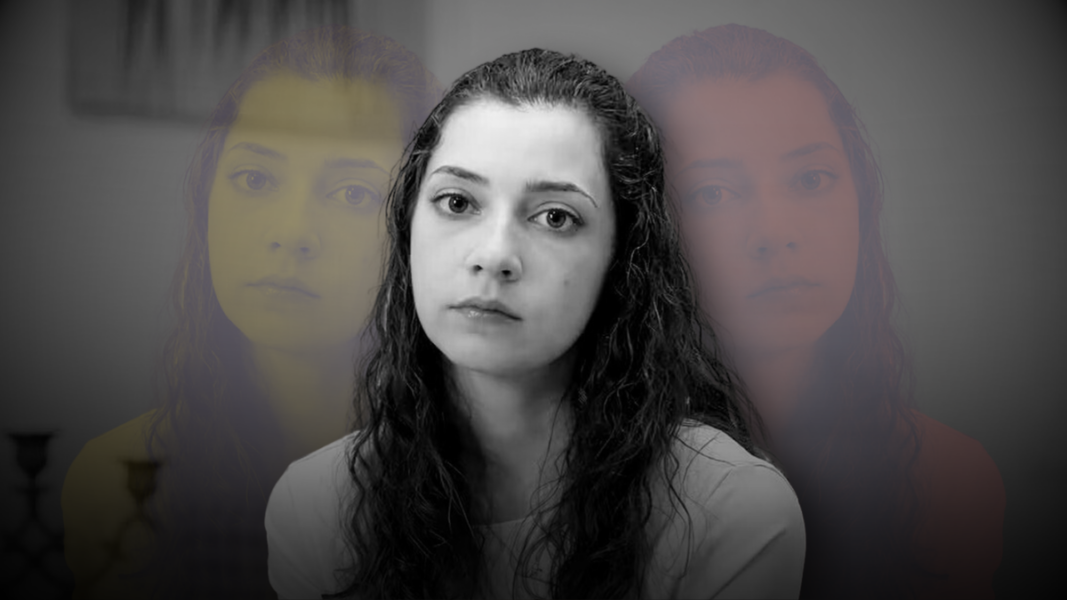
Noelia has died. Did she commit suicide, or was she killed? The 25-year-old woman received euthanasia yesterday in a residence in Barcelona, after months in which her father fought in the courts to prevent her death. Outside, people protesting. Social media, ablaze with comments in favor of “freedom” and against murder. Now only silence remains.
A human life has been taken away. The media report that she died alone, in her room, without family or friends: she asked for it that way. Her decision, “free and conscious”—as those who present the case as a victory for civil rights describe it—was to die to suffer no more.
Euthanasia is not just a personal decision or a medical procedure, nor is it a supposed right of free men, but the symptom of a culture that has lost the sense of suffering, of death, and, ultimately, of God.
Suffering turned into something intolerable
St. John Paul II already warned in 1995 that the dominant mentality in developed societies had begun to measure the value of life based on well-being. When life offers pleasure and autonomy, it is considered valuable; when suffering arrives, it begins to be perceived as a burden from which one must be freed.
In that framework, death ceases to be a limit that challenges man and becomes an option. If it interrupts an “interesting” life, it is considered absurd; if it comes in the midst of pain, it begins to present itself as an escape. Thus, almost without realizing it, the idea takes hold that there are lives that no longer deserve to be lived.
When man believes himself the owner of his life
Behind this change lies something deeper. Man stops recognizing himself as a creature and begins to consider himself the absolute owner of his existence. Life is no longer received as a gift, but as a reality available, subject to one’s own will.
From there, the question stops being how to live with meaning and becomes when it is worth continuing to live. And when the answer depends solely on well-being, the end seems justified as a personal decision, even as a right.
But that apparent autonomy is deceptive. When the value of life depends on external conditions, it ceases to be a firm value and becomes exposed to any calculation.
Compassion that abandons
Not all compassion is true. What is presented as a gesture of humanity can become, in reality, a form of abandonment.
Eliminating those who suffer is not alleviating pain, but renouncing to accompany it. True compassion does not suppress, it remains. It does not eliminate, it sustains. It does not end life, but takes charge of it even when it becomes fragile.
When a society begins to accept that there are lives that are better to end, what is failing is not only medicine, but the gaze upon man.
Provoking death is not a neutral option
The moral judgment, at this point, leaves no room for ambiguities. Provoking death to eliminate suffering is not a form of care, but a radical break with the value of human life.
It is not solely a private decision. It is an act that affects the relationship with others, with society, and with God. Life ceases to be a good that is protected and becomes something that is administered.
However, an essential distinction must be introduced here, which is often lost in the debate: provoking death is not the same as accepting its arrival.
Accepting death is not the same as causing it
Not every refusal of treatments is equivalent to euthanasia. There are situations in which prolonging life through disproportionate interventions only prolongs suffering without offering true hope.
Renouncing those means is not abandoning life, but accepting its limits. Similarly, alleviating pain, even if it may indirectly shorten life, is not equivalent to wanting death, but to caring for the sick in a proportionate way.
These distinctions show that it is not about prolonging life at any cost, but respecting it until the end.
The drama of a wounded freedom
But there is still another level that cannot be ignored. Those who come to desire death rarely do so from full freedom. Physical suffering, psychological pain, loneliness, or despair can cloud consciousness.
The decision then appears as free, but it is deeply conditioned. The person does not simply choose between living or dying: they react to a situation perceived as unbearable.
For that reason, although the act itself is objectively grave, personal responsibility may be attenuated. Where consciousness is wounded, a space for mercy can also open.
The truly human response
In the face of this logic, there is a different path. In the face of suffering, what the human being needs is not death, but presence.
The deepest desire is not to cease to exist, but not to be alone. To be accompanied, sustained, recognized even in weakness. To know that one’s own life still has value, even when it loses autonomy or well-being.
There the true humanity of a society is at stake. Not in its capacity to eliminate pain at any cost, but in its capacity to remain beside those who suffer.