


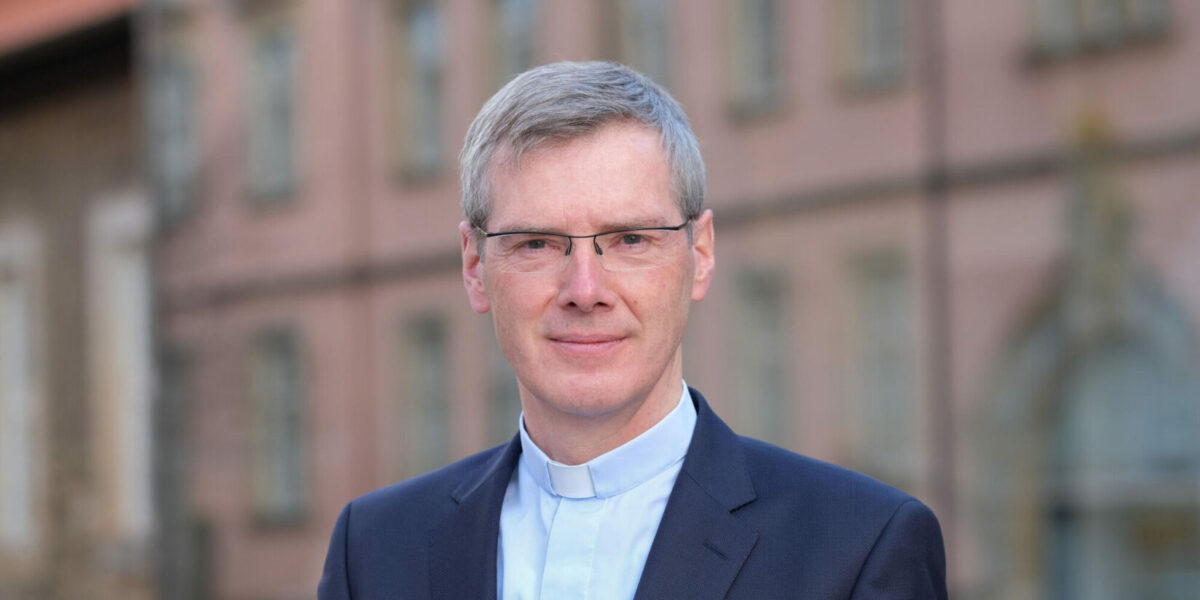
The Pope has appointed Monsignor Heiner Wilmer, currently the president of the German Episcopal Conference, as the new bishop of Münster (Germany), transferring him from the diocese of Hildesheim.
The diocese of Münster, one of the most important in Germany, is thus led by one of the central figures of the German episcopate at a time marked by doctrinal tensions and the development of the so-called Synodal Way.
A leadership profile in the German episcopate
Born in 1961 in Schapen (diocese of Osnabrück), Heiner Wilmer belongs to the Congregation of the Priests of the Sacred Heart of Jesus (Dehonians) and was ordained a priest in 1987.
He has a solid academic background in Philosophy and Theology, with studies in Fribourg, Paris, and the Gregorian University of Rome, in addition to a doctorate in Theology. Throughout his career, he has held educational and governance roles, including that of superior general of his congregation from 2015 to 2018.
He was appointed bishop of Hildesheim in 2018 and, since 2026, presides over the German Episcopal Conference, positioning himself at the core of the Church’s leadership in the country.
Controversial positions on moral and pastoral matters
Over the past years, Wilmer has adopted positions that have generated debate within the Church. Among them, his support for initiatives driven by homosexual church employees in Germany and his backing of Synodal Way texts that proposed changes in Catholic sexual morality, including a different valuation of relationships between people of the same sex.
He has maintained that the debate on women’s access to ordained ministry should not be considered closed, advocating for continued reflection in this area.
He has also positively valued recent documents related to the pastoral blessing of people in irregular situations, interpreting them as an opportunity for ecclesial accompaniment.
During his time in Hildesheim, he also promoted specific pastoral structures to attend to people with diverse «sexual identities,» including initiatives aimed at accompanying same-sex couples and «non-conventional» family situations.
Issues on the Magisterium and references to Luther
Some of his statements have aroused special attention in the doctrinal sphere. In public interventions, Wilmer has raised questions about determining what properly constitutes Catholic identity, within the framework of a Church that, in his view, must expand its spaces for listening.
He has also made positive assessments of Martin Luther’s figure in the context of ecumenical dialogue, highlighting elements such as the centrality of Scripture and personal conscience.
Wilmer’s transfer to Münster thus reinforces the presence of figures linked to the current leadership of the German episcopate in dioceses of special relevance.