


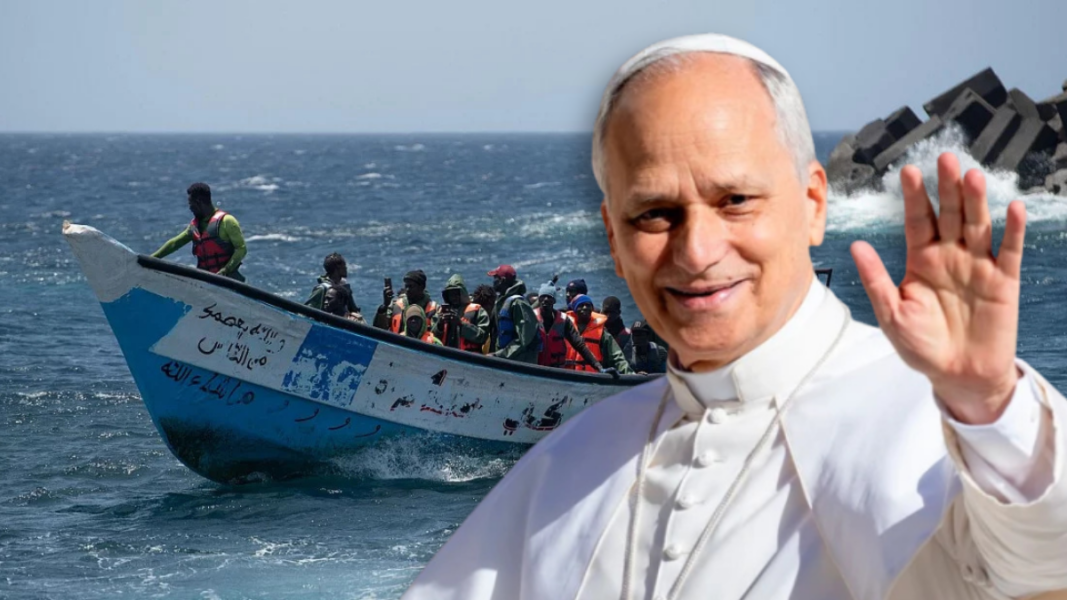
Pope Leo XIV will hold a meeting on June 11 with migrants who arrived by patera in the port of Arguineguín (Gran Canaria), as part of his trip to Spain. As explained by the Bishop of the Canary Islands, José Mazuelos, in statements to Europa Press, the Pontiff will listen to testimonies from both newly arrived people and migrants already integrated thanks to the Church’s work, in a gesture intended to offer a message of “hope” and to make this reality visible.
A pastoral gesture in a setting loaded with symbolism
The choice of Arguineguín is not casual. The Canary Islands have consolidated in recent years as one of the main entry points for irregular immigration to Europe, within the framework of a particularly dangerous route marked by thousands of deaths.
Mazuelos emphasized that the Church insists on the need to “stop the Atlantic route with so many deaths,” acting in the countries of origin, without renouncing the commitment to reception and integration.
These symbolic gestures—although well-intentioned—are inscribed in a broader debate about their real effects on the migratory dynamics that have been hitting European borders for years. Frequently, the emphasis is placed on the arrival while the horror of the journey fades.
In this context, the Canary bishop hopes that the Pope’s visit, far from feeding any form of romanticization, will serve as a wake-up call that insists on the search for the common good.
Cáritas informs about the regularization of immigrants
In parallel to this scenario, Cáritas Mallorca has launched several informative talks during the month of March aimed at immigrants in an irregular situation to explain the possible extraordinary regularization process in Spain.
According to the entity itself, these sessions aim to guide on the necessary documentation—valid passport, proof of stay in the country, or criminal records—and to prepare those interested for an eventual administrative process.
Cáritas maintains that this measure responds to a consolidated situation: around 550,000 people could be in an irregular administrative situation in Spain, and more than 56% of the people attended by the organization in 2024 lacked regular documentation.
Denial of the “pull effect”
The organization insists that regularization will not provoke new arrivals. According to its approach, the measure would be limited to people already present in Spain and would not represent an “open door” to new migratory flows.
Read also: The “pull effect” and the romanticization of migration routes
It also emphasizes that people with criminal records would be excluded and that the process does not imply political rights such as voting.
However, the problem is not reduced to the intention of the measures or gestures, but to their practical consequences: certain messages or initiatives can contribute to reinforcing the perception that Europe remains open, fueling migration routes that are already extremely dangerous and dominated by human trafficking networks.
Between charity and responsibility
The Pope’s visit to the Canary Islands and the initiatives promoted by Cáritas once again place a fundamental issue at the forefront: how to combine attention to migrant people with a realistic evaluation of the consequences of policies and public messages.
While Leo XIV will put a face to the human drama of those who risk their lives at sea, the debate on regularization remains open, especially in territories like the Canary Islands, where migratory pressure is not an abstraction, but an everyday reality.