


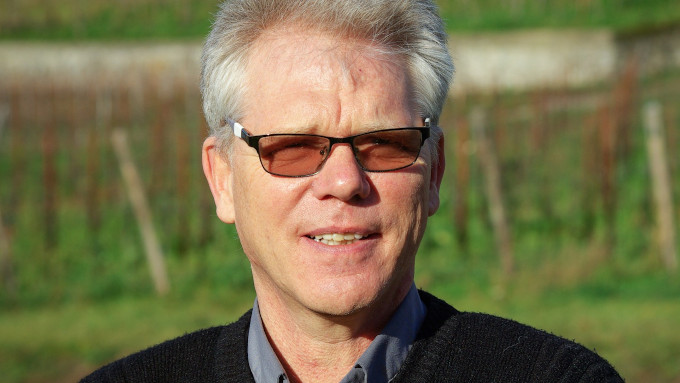
Reinaldo Nann was bishop of Caravelí, Peru, from 2017 until 2024, when he hung up his habits to marry a woman. For years, he held responsibilities in ecclesiastical spheres and coincided with Robert Prevost when the latter was bishop of Chiclayo. At that time, Nann was directing Cáritas in the country, while Prevost was a member of the same organization.
Nann has published in Religión Digital an explanation of the images from the Pachamama rite in which Robert Prevost participated in 1995 and which was revealed by LifeSite. Amid the thunderous media silence of the most clerical Catholicism, this analysis emerges, which, beyond the disqualifications against Infovaticana, is worth examining.
The starting point of Nann’s article is clear and stated without ambiguity: “the young missionary Robert Prevost…”, although at the time he was forty years old, “did indeed participate in this congress on ecology and theology in 1995 and, in the context of a ceremony to Mother Earth, knelt down.” Nann does not dispute the existence of the photographs nor the context in which they were taken. He acknowledges the participation, acknowledges the gesture, and acknowledges the ritual nature of the act. From there, he introduces his interpretation, which consists of asserting that “I cannot see any worship of Pachamama as a goddess either from Prevost or from any of the attendees.”
Nann himself describes the content of the rite precisely by pointing out that “we see an interreligious act, where a representative of Andean culture makes a payment to the earth, an offering and a dialogue with the earth.” He adds that, in that worldview, “Andean culture maintains certain pagan beliefs, such as the fact that the earth has a soul like a person (just like water, a hill, a tree),” and he maintains that today “it is seen rather as a creature of God with a certain personality.” On that basis, he builds the core of his argument, which he formulates explicitly: “Respecting the earth as a ‘being with a soul,’ it remains a creature of God. Pachamama is the earth or, better said, this soul of the earth. Therefore, we can speak to her, as we speak to the saints. We can kneel before her as before the saints, as long as we see her as a creature and not as a goddess.”
Nann insists that the decisive element is the intention of the subject and asserts that “intention is what matters. The gesture of prayer is not automatically worship, nor is the gesture of kneeling.” In that same sense, he rejects that the rite implies idolatry and maintains that it is a legitimate form of inculturation, going so far as to assert that “this is not syncretism, it is inculturation,” insofar as “different philosophies or cultures can be evangelized without rejecting their cultural and philosophical language.”
The result of his intervention is an explanation that does not deny the facts, but reinterprets them from a specific theological key. The images are accepted as real, the rite is defined as such in its own terms, and Prevost’s participation is taken as certain. The defense is articulated exclusively on the basis of subjective intention and on a direct analogy between the relationship with Pachamama and the relationship with the saints, expressed in literal phrases such as “we can speak to her, as we speak to the saints” and “we can kneel before her as before the saints.”
But Nann should know that when a faithful Catholic addresses a saint, he does not attribute inherent power to him nor ask him directly for a result. He asks him to intercede insofar as, by his virtues, he is a soul who enjoys the vision of God. The saint is not the origin of grace; he is a subordinate mediator. Therefore, prayer, although it passes through the saint, always ends in God as the only real recipient. That is the basic doctrinal point that structures all devotion.
In the Pachamama rite, the subject changes completely. The petition is not raised to God through another, but is directed directly to the earth understood as an entity capable of giving. When food is buried, drink is poured, or goods are offered “to the earth” expecting prosperity, protection, or fertility, a direct relationship is established between man and that to which it is offered. The earth does not appear as a sign, nor as a reminder, nor as a creature that refers to God—how could Pachamama attain the beatific vision?—, but as the immediate recipient of the action.
That scheme—offering something to receive something—is precisely what Catholic theology identifies as undue worship when directed to a creature or idol. It does not need to be explicitly formulated as “goddess” to function as such in practice. The decisive element is that it acts as a subject to whom something is asked and from whom a response is expected. At that point, the difference with the intercession of the saints is not one of degree, but of nature. One refers to God; the other stops at matter or the creature. Therefore, they are not comparable. Therefore, in Catholic terms, it is not a simple cultural expression: it is an act that, in its own structure, configures itself as worship.
It must be acknowledged that Nann, unlike those who opt for silence, faces the facts and does not try to deny or ignore them. But from there, the analysis is erroneous and moreover introduces a fundamental confusion. He himself admits that in those rites there are cases—although he minimizes them—in which “animals or people would have been offered.” When speaking of human sacrifices, saying that they are “very few” resolves nothing. How many are few in a matter like this? The issue is not quantitative; it is moral.
The equivalence he posits between Pachamama and the saints is not defensible. It is not a debatable nuance; it is a basic error. In one case, there is intercession ordered to God; in the other, there is a direct relationship with a created reality to which something is offered and prosperity is requested. That structure is not Christian.
That said, the Pope himself has introduced clear corrections in recent documents addressed to the episcopate, making it explicit that nature is not worshiped and that everything must be centered on Christ. The reasonable thing is to interpret what happened in 1995 as an error conditioned by the confused theological context of those years. Does that mean it should be ignored as if it had not happened? No.
Here no one is in a position to set themselves up as judge. Surely we drag more errors in life than Prevost. But precisely for that reason, it is advisable not to add more confusion. If there is something to clarify, let it be clarified. And in the meantime, let Catholics stay away from those Pachamama rituals and their payments to the earth.