


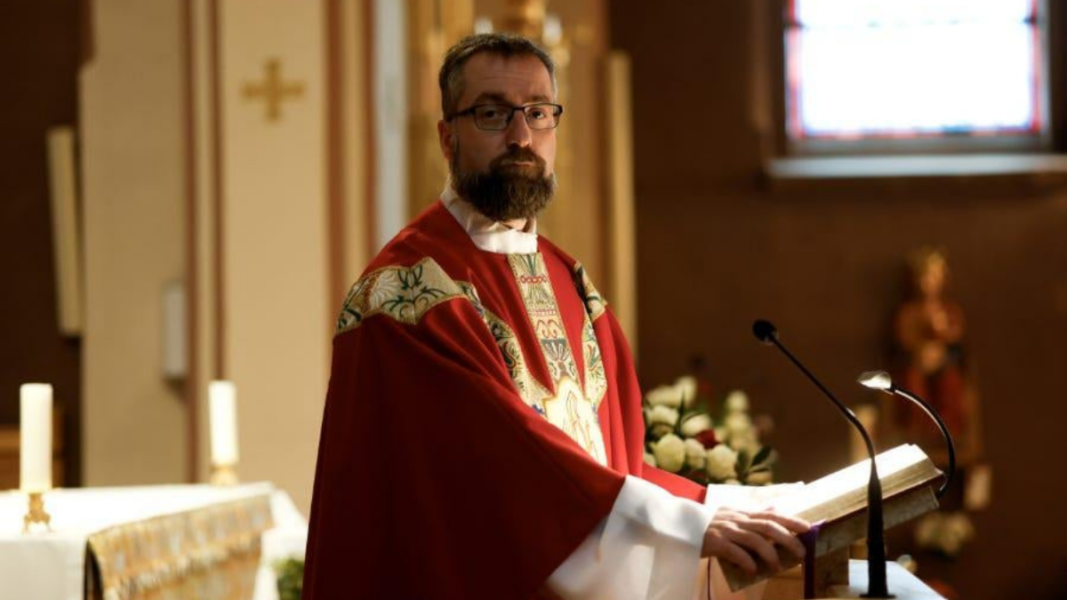
The Bishop of Oslo (Norway), Fredrik Hansen, has published a pastoral letter in which he calls on the faithful to rediscover the value of the sacrament of penance and to recover its habitual practice, even proposing a specific frequency throughout the year.
In the document, dated on the fifth Sunday of Lent, the prelate exhorts the Catholics of the diocese to go to confession at least three times a year: during Lent, in summer before the feast of St. Olav, and during Advent.
Confession, at the center of Christian life
The bishop emphasizes that the sacraments are essential in the life of the Church, recalling that «the sacraments are part of the liturgical life of the Church and are ordered to the sanctification of men».
In particular, he highlights the value of the sacrament of penance, in which «we receive forgiveness for the offense, that is, the sin, that we have committed», underscoring that it is a concrete means of grace and salvation.
Sin and God’s mercy
Msgr. Hansen explains the reality of sin with clarity, pointing out that «every sin wounds our relationship and our bond with God, with the Church, and with our fellow men».
He also warns of its gravity, recalling that «the wages of sin is death», but at the same time emphasizes that the last word does not belong to sin, but to divine mercy.
Thus, he insists that confession is an encounter with that mercy: «we do not go to confession to worry about our falls, but to meet the inscrutable mercy of God».
Call for a regular practice of confession
The prelate invites the faithful to acquire a stable habit of confession, recalling that «the path to the confessional must be short and free of obstacles».
In this context, he proposes a concrete practice: «I take the liberty of exhorting all the faithful to confess at least three times a year», at key moments in the liturgical calendar.
He also recalls the Church’s discipline regarding the Eucharist: «whoever is conscious of being in grave sin must abstain from receiving Holy Communion».
Preparation and personal responsibility
The letter insists on the need for adequate preparation for the sacrament, which includes examination of conscience, sincere repentance, and purpose of amendment.
The bishop recommends «withdrawing in silence and prayer to make a deep examination of our life», aided by the Ten Commandments and Sacred Scripture.
Overcoming fear and rediscovering the sacrament
The bishop acknowledges that many faithful find difficulties in confessing, whether due to insecurity or having gone a long time since their last confession.
In the face of this reality, he invites them to take the step, recalling that the sacrament is not a cause for fear, but an encounter with God’s mercy.
He also addresses priests, whom he exhorts to facilitate access to confession, so that it becomes «more accessible, easier to request» and turns into «a living encounter with the infinite mercy of God».
A path toward Easter
The letter concludes in a deeply Lenten key, recalling that Christ’s victory over sin is made present in the believer’s life through the sacrament of penance.
The bishop thus invites us to live this time as a true opportunity for conversion, in which confession holds a central place on the path to Easter.