


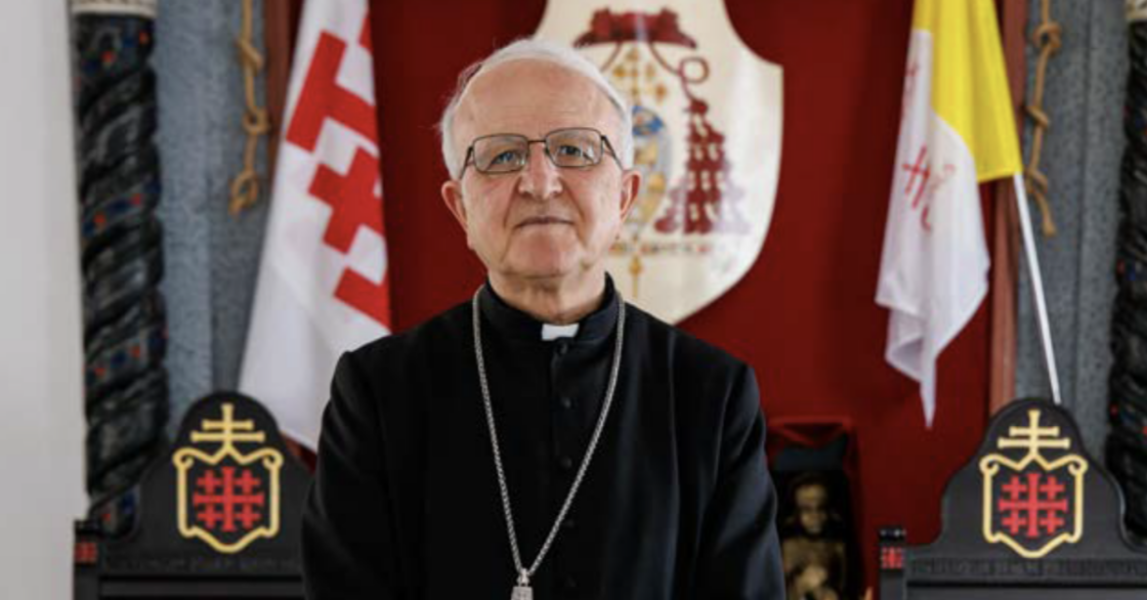
Israeli settler attacks against Christian communities in the West Bank are increasing in a worrying manner, according to Auxiliary Bishop of Jerusalem, Mons. William Shomali, who warns of a growing climate of intimidation and violence against the faithful in the Holy Land.
According to information published by ACI Prensa, the prelate warns that the aggressions are not isolated incidents, but part of an upward trend that directly affects the daily life of Christians in the region, especially in localities like Taybeh, the only completely Christian town in the West Bank.
An increasingly visible climate of hostility
The bishop emphasizes that the settlers are intensifying their actions, which include attacks on properties, threats, and acts of intimidation against the local population. This situation is generating fear among Christians, many of whom fear for their safety and the future of their communities.
Various reports and testimonies agree in pointing out that these episodes are repeating more frequently and that, in many cases, they go without legal consequences. Christian leaders have denounced that these attacks are part of a broader dynamic that seeks to pressure local communities and weaken their historical presence in the area.
Taybeh, symbol of a community under pressure
One of the most sensitive hotspots is Taybeh, considered the last entirely Christian locality in the West Bank. There, arson attacks, threatening graffiti, and attacks on homes have been recorded, leading religious leaders to speak openly of an intimidation campaign.
Read also: Taybeh, last Christian town in Palestine, under Israeli attack
According to ecclesiastical sources, these acts not only affect material goods, but directly strike at the roots of Christians in the land where Christianity was born. In the face of this scenario, ecclesiastical authorities insist on the need to protect Christian communities and ensure their permanence in the Holy Land, warning that their disappearance would mean an irreparable loss for the Christian presence in the region.