


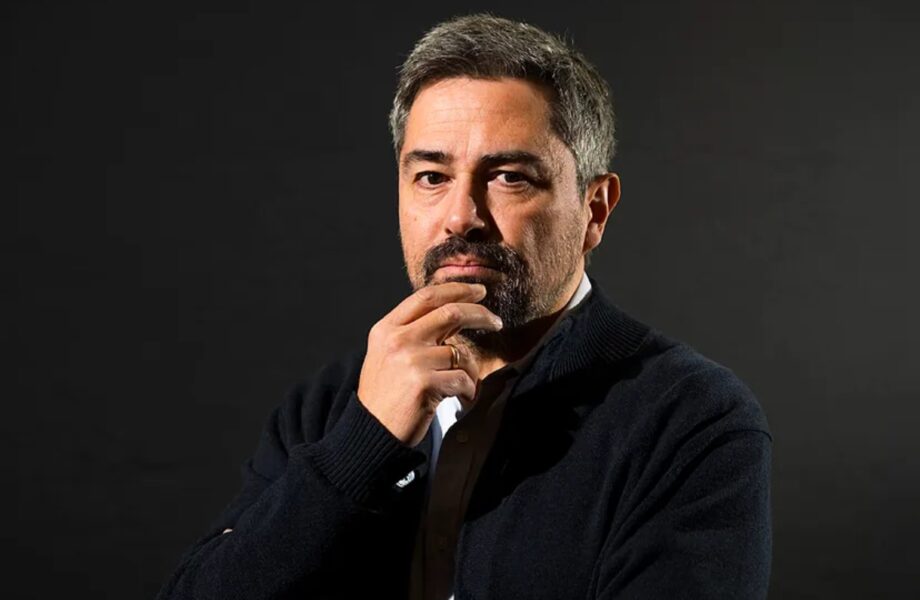
The interview published in El Debate on March 22 with Miguel Ángel Quintanilla Navarro, a deputy of the Partido Popular and author of Contra la ruptura, cannot be read as an isolated intervention or as a spontaneous doctrinal reflection. In recent weeks, the PP has been projecting this second-level profile in the media with a discourse of apparent religiousness that pursues a very specific political objective: to distance Vox from the Catholic vote. What is striking, however, is not only the intention, but the poverty of the theoretical framework with which it is attempted to sustain it: a doctrinally weak construction, conceptually confused, and, in not a few points, simply absurd.
Quintanilla is parading through the media claiming that Vox incurs in “anticatolicismo” and bases it on very specific assertions. He says that “what cannot be done when you are Catholic is to play at anticlericalism,” adds that “what ontologically differentiates the Catholic from the Protestant is the ecclesial structure,” and concludes by affirming that certain criticisms of bishops or the institutional Church are “absolutely outside of what forms part of the Catholic.” He even qualifies as a “perverse game” the attempt to distance oneself from the clergy while preserving a Christian cultural identity.
The thesis is clear. For Quintanilla, the Catholic is defined in practice by the relationship with the hierarchy. And from there follows an inevitable consequence: criticizing bishops or priests would amount, in some way, to placing oneself outside the Catholic perimeter. It is worth stating it clearly: that thesis is not Catholic.
The Church has never taught that its essence consists in the “ecclesial structure” taken in itself. The hierarchy is part of the constitution of the Church, yes, but it is not its ultimate criterion. The ultimate criterion is the revealed truth, guarded by the Church and transmitted in the faith, the sacraments, and the Magisterium. Authority exists to serve that truth, not to replace it. When that order is inverted and the structure takes center stage, what appears is no longer Catholic doctrine, but clericalism and bishop-worship.
The classical theological tradition is unequivocal on this point. Saint Thomas Aquinas, when treating obedience, explains that it is a virtue insofar as it orders man’s will to fulfill the legitimate command of a superior, but never in an absolute or blind manner. Obedience has as its limit God and the moral law. No one is obliged to obey an unjust command or one contrary to the higher order. Moreover: obeying in that case would be disordered. Christian obedience, therefore, is not servility toward the superior, but rational and morally ordered submission to a legitimate authority within its proper limits.
Saint Robert Bellarmine, for his part, formulates it even more forcefully when addressing resistance to ecclesiastical authority. He teaches that, just as it is lawful to resist a pontiff who attacks the body, it is also lawful to resist one who attacks souls or disturbs the order of the Church. That resistance does not consist in setting oneself up as a parallel authority, but in not obeying an unjust command and in publicly opposing a harmful action. It is a classical doctrine, clear and perfectly integrated into the Catholic tradition. Therefore, there is no foundation for presenting criticism of the pastors as something alien, in principle, to Catholicity.
That is exactly what Quintanilla erases. His approach suppresses the essential distinctions between Church and concrete hierarchy, between authority and truth, between obedience and submission, between respect and silence. And by erasing those distinctions, it ends up turning the attitude toward the clergy into a practical criterion of orthodoxy. That is not a defense of the Church, but a clerical and sectarian deformation of the Church.
The internal incoherence of the discourse also appears in the interview itself. Quintanilla acknowledges that “the PP is wrong in accepting the current abortion legislation.” That is, he expressly admits that his own party assumes a position contrary to a central point of the Catholic moral Magisterium. We are not talking about a prudential nuance or a secondary dispute, but about a very serious matter relating to innocent human life. However, that objective contradiction with the doctrine does not occupy the center of his denunciation. It is not there that he places the great problem of “anticatolicismo.”
He places the focus elsewhere: on those who question the bishops. There the inversion of priorities is revealed. The break with a central content of moral doctrine is tolerated, but criticism of the hierarchy is presented as intolerable. Truth is downgraded and loyalty is absolutized. Killing innocents is debatable; criticizing Cobo, no. First submission to the manager; then, if at all, fidelity to the content. That scheme is not only intellectually poor. It is radically alien to Catholicism and deeply dangerous.
Because in the Catholic faith, authority is not an autonomous source of sentimental legitimacy nor a shield against criticism. It is a ministry in service of a received deposit. When it fulfills that function, it deserves obedience. When it deforms it, it deserves correction. And when legitimate criticism is sought to be converted into a sign of heterodoxy, what is being defended is not the Church, but an ecclesiastical caste clothed in practical immunity.
That is why it is appropriate to call things by their name. What Quintanilla formulates is not a defense of Catholic identity, but a form of ideological clericalism and bishop-worship. And in his central thesis, moreover, he incurs a basic error: identifying the Catholic with adherence to the hierarchical structure instead of with adherence to the revealed truth guarded by the Church. That confusion is not a mere unfortunate nuance. It is a thesis incompatible with the Catholic doctrinal tradition.
The final result of this operation is revealing. Under the appearance of a defense of Catholicism, what is offered is an instrumental use of basic religious categories to intervene in a concrete political struggle and try to separate Vox from the Catholic voter. But the instrument chosen is too crude: a poor theory, distant from doctrine, incapable of distinguishing between communion and servility, between obedience and silence, between respect for the hierarchy and uncritical subordination to any concrete bishop. What comes out of it is not a rigorous defense of the faith, but a caricature useful for the moment.
The final result of that error is always the same. A Church is produced that is harsh on those who denounce deviations, but soft on those who accept objective deviations. A Church that suspects the discerning faithful, but coexists without excessive conflict with the politician who assumes criminal laws contrary to the Magisterium. A Church in which dissenting from a bishop seems more serious than contradicting moral doctrine. And that does not strengthen communion.
Catholicism does not demand idolatry of the clergy, nor papal worship, nor bishop-worship. It demands faith, sound doctrine, sacraments, ecclesial communion, and due obedience in its just terms. Everything that turns the concrete hierarchy into the supreme criterion of Catholicity ceases to be a defense of the Church to become a caricature of it. That is, in the end, what this interview reveals. And that is what needs to be dismantled.