


I
Like an unsettling déjà vu, the sword of Damocles of a new break with our dear Lefebvrist brothers hangs over Christendom. And again on account of upcoming episcopal consecrations, although the underlying problem was and remains, apart from the liturgical reform, the interpretation of some doctrines stemming from the Second Vatican Council, such as the «catholicity of the States» or the «religious freedom». Nihil novum sub sole.
It is well known that the formulation made of the latter in the «Dignitatis humanae» of December 7, 1965, represented—and no one disputes this today—a novelty in relation to what the Church had preached up to that point. If, as Josef Ratzinger said with troubling sincerity: «Nostra Aetate was an Antisyllabus», we could add that, correspondingly, the «Dignitatis humanae was an Anti-Quanta Cura».
That there was a doctrinal change is evident. A synoptic reading of the texts suffices, and if we want to ratify this conviction, we would have plenty of examples from the revolutionary—and in many cases outrageous—subsequent praxis. But the crux of the matter lay in the theological-doctrinal judgment of it: for some it meant «rupture» (FSSPX); according to others «homogeneous development of doctrine» (Benedict XVI). In the second case, the variation could be legitimate (novel pastoral approach); in the first, openly heretical for attacking the constant tradition of the Church (doctrinal alteration). For this reason, this controversy has generated—and continues to generate—rivers and rivers of theological literature (and has given rise to hundreds of dialectical contortions), to gauge its doctrinal value and what that text, as historical as it is ambiguous, really meant to tell us.
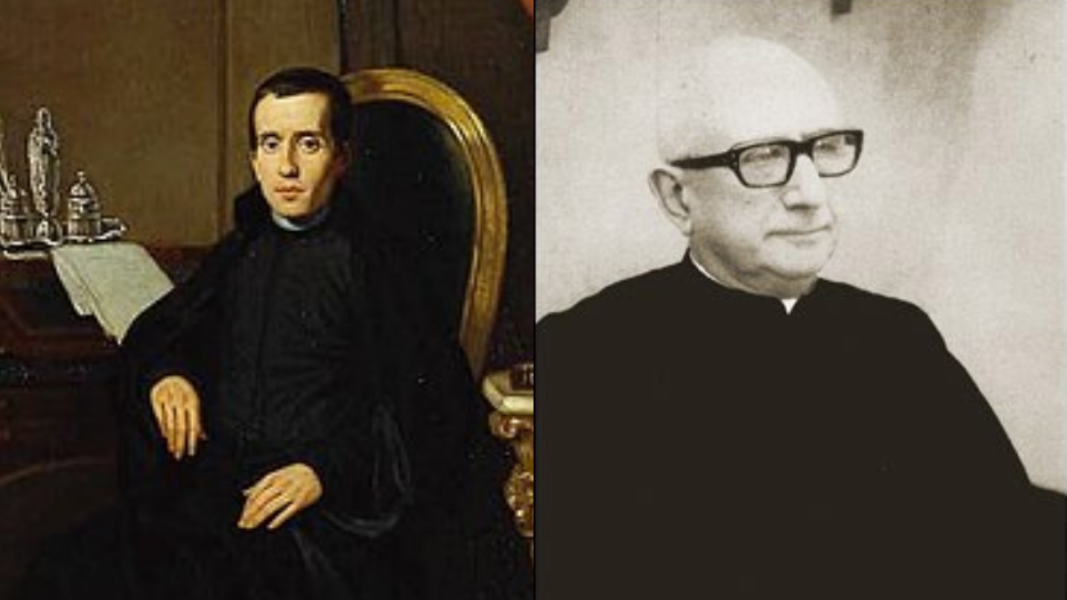
In this article, I would like to recall two priests and intellectuals unequivocally traditionalist, but who had sufficient breadth of vision to intuit, in the time they lived (19th and 20th centuries respectively), the irreversibility of the course of a society that chose the path toward the abyss of freedom over the straight path of truth. And consequently, both thinkers, scrutinizing with an eschatological lens the perpetual revolution (or progressivism) in which they lived, assumed, before the sinister prospect that was unfolding, the need to modulate traditional doctrines upheld by the Church (and unfeasible today) such as the catholicity of the States or religious freedom. Two saintly and wise priests; two sublime philosophers and theologians: one, our Jaime Balmes (1810-1848); the other, the Argentine Julio Meinvielle (1905-1973). The first, in his posthumous work «Pío IX»; the second, in the epilogue of his superb and devastating treatise against Catholic liberalism: «From Lamennais to Maritain» (from 1945, although expanded in 1967, with the commentary on the conciliar text). I evoke them because I honestly believe that both can illuminate with their wisdom—and also with their prophecy—the path that leads to definitive reconciliation.
II
Jaime Balmes’ swan song is his essay «Pío IX», where he does not specifically address religious freedom, but does analyze the compatibility of political forms with the freedom of religion. He considered that the political (but above all spiritual) rebellion movement that sprang from the French Revolution (1789-1799), experienced by him firsthand (liberal uprisings of 1830-1832 and 1848, and the consequent emancipation of the masses), was an irreversible historical fact, with no turning back. Before it, the Catholic Church had to give a response. The understandable bunker mentality initiated by Gregory XVI —»Mirari vos» (1832)—had to be reconsidered. And he valued the first liberalizing measures taken by Pius IX, after being crowned Pope in 1846, as a reasonable and prudent response to the new political climate of a Europe on the eve of the second liberal revolution, that of 1848. Incidentally, that revolt, so close to his enthronement, would give serious troubles to the Holy Father—in fact, it forced him to exile from Rome for a time—and undoubtedly contributed to the Bishop of Rome assuming the subsequent intransigent positions (Syllabus). But in 1848, to Pius IX—who would have thought it—he was considered a liberal. Let us read Balmes:
«Far from Pius IX having been deluded about the spirit of the times, ignoring the elements of dissolution that in various senses and everywhere are stirring, he manifests in his words and works that, deeply penetrated by the gravity of the present evils, and the danger of others that threaten, he proposes to strive to prevent these and remedy those.»
Unfortunately, Balmes died very young in that same chaotic year of 1848. Chaotic because, along with liberalism (and as an inevitable corollary of it), the Marxist movement appeared, thanks to the revolutionary pamphlet by Marx and Engels, the «Communist Manifesto». Our Catalan philosopher did not have time to verify to what extent that repugnant writing poisoned (even more than liberalism) the history of humanity, leading a good part of it to perdition. But he did grasp with great lucidity the crucial fact that we have already pointed out: the enthronement of freedom as an end and not as a means was irremediable. And that led to the tragedy of dethroning Truth, a true catastrophe with no way back. Despite this, Balmes affirms in «Pío IX»:
«Absolute resistance to every idea of freedom may be defended in theory as the only means of salvation for nations; but the fact is that this theory is in contradiction with the facts.»
And it is that, for Balmes, the different political configurations to which that implosion of freedom led are not bad or good in themselves, but only insofar as they allow the freedom of religion (he refers exclusively to Catholicism). There is, therefore, no inexcusable necessity (which many upheld then and many still do today), of the linkage of altar and throne to save religion:
«It is not advisable to be deluded by the cry of freedom, but it is also necessary to guard against another illusion, namely, that under the shadow of the words social order, preservation of monarchies, bastard interests or despotism are sheltered.»
«By that spirit of freedom that invades the civilized world, and spreads everywhere like an overflowing river, are we to fear that religion will perish? No. The alliance of altar and throne may be necessary for the throne, but not for the altar. In the United States religion progresses under republican forms: in Great Britain it has made incredible advances in proportion as freedom has developed; and although it is true that in other countries it has suffered considerable setbacks, we do not believe that these should all be attributed to the ruin of absolute throne.»
It is curious that that same historical reflection of Balmes (from 1848) was used by the Americans John C. Murray, Jesuit, and the Archbishop of Boston Richard Cushing, during the sessions of the Second Vatican Council, when «religious freedom» was debated. The latter proudly affirmed:
«we have managed to be 40 million Catholics thanks to religious freedom.»
Although it is also true that the Archbishop of Madrid-Alcalá, Casimiro Morcillo, sed contra, replied:
«we have maintained 30 million Catholics thanks to not having enjoyed that freedom.”
Which archbishop was right? Although it may seem contradictory, both were telling the truth. The doctrine of religious freedom, enshrined in the U.S. Constitution itself, favored Catholicism (and continues to promote it, as can be seen in the year-after-year increase of American Catholics). However, in the case of Spain, the proclamation of religious freedom in various legislative texts after the Council’s mandate (Fuero de los Españoles, modified by Franco in 1967 and the Constitution of 1978, Art. 16) was progressively reducing the number of Catholics in geometric progression, and worse, their sacramental practice. And in Latin America that defection has been linked to a massive transfer of Catholics to Protestant evangelicalism (which has not happened in our country, where we always go after a priest, whether with a candle or a club). And while it is true that we can speak today of some rebound in Catholicism (especially the traditional one), the reality is that our country, despite preserving Catholic culture and traditions, is a wasteland in matters of faith. The Christianity of the Spanish people is superficial and I wonder if—saving some great figures from the past—it was ever anything else. Cioran said that history—the true one, not the illusions with which we mythologize the past—is always tributary to disappointment. Only Christ and his blessed mother never, never disappoint us:
«The human lineage, even in its life on earth, is led by Providence to a mysterious end, and by unknown paths: he who is unaware of the transformation that is taking place everywhere does not see what is in front of him; to cling solely to past forms is to trust in a frail bush when descending a slope. Let us respect the past, but let us not believe that with our sterile desire we can restore it; and in interesting ourselves in the remains of what was, let us not carry exaggeration to the point of cursing everything present and future.»
And it is that, in short, Balmes recognizes that, even in the most formally Catholic States and with wise constitutions, there were serious dysfunctions.
«In political forms nothing is essential to religion: all offer their inconveniences and advantages. The protection of absolute kings provides it with a good, namely sheltering it against violent perturbers; but that same protection degenerates into scandalous usurpations (…) The tolerance of free forms harms it with license, which misleads ideas and corrupts customs, but on the other hand leaves it more free in the exercise of its august functions (…) It is necessary, therefore, not to link things too intimately with each other, not to cower in the spirit with pusillanimous ideas, and not to utter a cry of dismay at every wall that collapses in the ancient buildings of the political world. Everything human ages; everything reduces to dust; the heavens and the earth themselves will pass away; what will not pass away is the word of God»
In my judgment, Balmes—so intelligent as honest—intuited that, although one pretended to put the immense resources of the State at the service of religion, an authentic living of it in the people was not guaranteed. There would be in that case a massive but uncritical following of rites and customs, coupled with a latent and tolerated social hypocrisy, all of it light-years away from the transformation of our soul by the Trinitarian indwelling that our faith demands of every baptized person. Going to Mass for public convenience is easy; it is not, however, to feel the Mass as an intense act of thanksgiving before the salvific drama of Calvary, and to live the faith in a permanent asceticism, as a militia against ourselves, and against the world, the demon, and the flesh. And, paradoxically, anti-Christian States better foster that spiritual struggle by Grace that the Lord does not deny in the face of persecution. As Saint Paul said: «When I am weak, then I am strong» (2 Cor. 12:10). And Balmes was of course aware of all this, hence his constructive attitude toward the new and deplorable situation.
III
Father Julio Meinvielle (+1973), faithful to his traditionalist convictions, defends the classic Catholic doctrine of the supremacy of the religious order over the civil in his masterful treatise against Catholic liberalism «From Lamennais to Maritain»:
«It has been the Church that has clearly taught the double and irreducible jurisdiction in which human life unfolds. For this reason its energetic reaction against the paganism that erected emperors as Pontiffs. But distinction cannot mean independence and separation as liberalism has insisted, renewing in this, as Boniface VIII warned regarding the first liberals, the legists of the 14th century, the error of the Manicheans. The unity of God, exemplar of the unity of man, requires that there be an essential subordination of one order to the other; and since the subordination of the superior to the inferior, of the Church to the temporal, cannot be admitted, as the most absolute and consistent liberals claim, only the subordination of the civil jurisdiction to the ecclesiastical remains» (p. 79).
Despite such formulation, he will follow Balmes in his refusal to absolutely fulminate liberal states. In the cited book, he will recognize that:
«The modern regime of freedom is precisely bad because it has been erected against the truth. But if the full right of truth is maintained, and of religious truth in human life, there is no doubt that the more that right of truth is realized in a climate of freedom, the more perfect it must be considered» (p. 366).
Even so, in the mentioned work, he dismantles the conciliatory theses that Lamennais attempted in the 19th century and Maritain in the 20th. Above all, those of Jacques Maritain, intimate friend of Paul VI and who influenced him so ideologically (and indirectly in the conciliar texts). Let us read three passages as a sample of his war without quarter against Catholic liberalism:
«But this conciliation of the Revolution with the Church of the current Christian Progressivism is nothing but a repetition of the impossible attempt formulated by Lamennais in L’Avenir and by Maritain in his Integral Humanism, and which, in one way or another, the theologians who are promoting the current currents of Pastoral Theology also adopt» (p. 8).
«But if instead of seeking Truth one seeks freedom as such, that is, one’s own emancipation, one’s own dignity, one walks toward perdition» (p. 57).
«Peoples (not the modern world) can be healed. But for that they must reject those principles of absolute independence that constitute their principles of death. And what is renouncing those principles but renouncing the modern world itself? If the capital sin of formerly Christian peoples is having rejected the Christian public right, which placed at the pinnacle of all values of civilization the intangible rights of God, of which the Holy Church is depositary, and having erected in its place as the supreme norm of life the Rights of Man, what can be the beginning of their health but to cast away from themselves that pride, embodied in what is called the modern world, and turn toward Him who is their health, saying Tibi soli peccavi. Against you alone have I sinned. The peoples will then have achieved their way out; but they will have ceased to be modern» (p. 59).
He destroys Maritain himself with the finesse of his irony:
«Pretending to maintain the invariability of Catholic doctrine on Christendom and at the same time fabricating a theory where an infinity of Christendoms fit, essentially diverse types of it, all equally acceptable and desirable, was going to require an extraordinary dialectical effort, difficult to accomplish for anyone not endowed with the exceptional intellectual gifts that must be recognized in Maritain» (p. 93).
These texts suffice to realize the fierce reproach that our theologian makes to liberalism, but also to other errors unanimously fulminated by the popes up to that Council that renounced anathemas.
«The ‘naturalist’ error which is also called ‘rationalism’ or ‘philosophism’ is the peculiar and distinctive heresy of the modern world. It proclaims the sufficiency of human nature to achieve its happiness. In essence it constitutes the very essence of all heresies» (p. 105).
However, when one would expect in coherence with the above a contundent diatribe against «Dignitatis humanae», Meinvielle restrains himself; moreover, he surprisingly defends the document, although he will recognize its deficiency. He justifies it, admitting that it is an act of mercy before the unmitigated disaster that is modern man (that is, his nature is pastoral and therefore limited to our time), and rejects the interpretation of those who affirm that it enthrones indifferentism. Our theologian will thus counter the fierce criticisms generated by the proclamation of «religious freedom»«, which vilified the Copernican turn produced in relation to the previous doctrine firmly upheld by the popes, from Gregory XVI to Pius XII. And although that turn is recognized by Meinvielle, it was not judged harshly by him but—with indulgence before the dramatic situation of today’s man, drunk on freedom, rebellious to Truth, and slave to his sins. Or in the most apt description of Saint Thomas, whom he opportunely quotes: «the reason destitute of its own order to truth remains wounded by ignorance; the will without order to the good remains wounded by malice; the irascible without order to the arduous remains wounded by weakness; and the concupiscence destitute of the order to the pleasurable moderated by reason remains wounded by concupiscence. Thus these are the four wounds inflicted on the entire human nature as a consequence of the sin of the First Father» (S.T. I, II 85,3).
Consequently, the reason for the prudential change operated in the enunciation of the traditional doctrine can be explained pastorally by the conclusive fact of the multiplication in our time of the disorders of original sin, thanks to the entrenchment in the world of the false antithesis freedom-Truth.
«Placing ourselves from a purely human point of view, we must say that, in formulating in an imperfect expression (sic) the traditional doctrine, the Church fulfills an act of mercy toward today’s man. An equal treatment is not dispensed to a mature and healthy man as to a sick one. An equal treatment is not dispensed to a man—or a civilization—that moves in truth as to that other who, having lost the sense of truth, moves in the idea of freedom. Today’s man does not know where truth is or how to find it. He only claims freedom. But man, far from truth, is a sick man, who does not even have freedom. Since only truth makes us free (John 8:32). Hence, a grave error would be committed if this act of mercy of the Church in the conciliar Declaration on Religious Freedom were taken as an argument for the maturity of current man» (p. 365).
Although there is evidence that certain Masons praised the conciliar Declaration, Meinvielle is emphatic in pointing out that it should not be read in consonance with what is stated by the adversaries of the faith:
«From all this we must conclude that the Religious Freedom that the Church proposes to us in the conciliar Declaration has a sense diametrically opposed to that preached until now by the secular enemies of the Church. In them, religious freedom is an end in itself that serves to distance us from Truth. In the conciliar Declaration, on the other hand, freedom is a simple means, of special significance in the state of health of current man, which must be adopted in view of the end, which is to lead man to health, which is only found in Catholic Truth. (p. 366).
That is the intended end, although with a methodology acorde to our terminal time: to gently lead modern man, drunk on freedom, toward truth; not to keep him in his whim or indifference (a drunkard is not corrected the same as a sober man). But Meinvielle will add, moreover, something very important, which perhaps reveals with greater subtlety the reasons for his, at first glance, striking justification. He will recognize that that change in the formulation of the doctrine must be linked to eschatological events that are already irreversible in the new and dramatic kairós that has opened in the world—his and ours—in a constant progress toward the abyss of unlimited freedom. His words, read today, burn with the fire of prophecy:
«From this aspect, we must say that, being the Church of Jesus Christ under the special direction of the Holy Spirit, a change in the formulation of such a vital doctrine that affects the very essence of the religious act, and a change in a two-thousand-year tradition, seems to signify singular designs of God for the times we live in and for those that approach. These singular designs could be linked to apocalyptic events, which may culminate in what Saint Paul calls Plenitudo Gentium (Rom. 11:25) the entry in fullness of the peoples into the bosom of the Church, free and loving entry; or also in the approach to what the same Apostle calls universal apostasy (2 Thess. 2:3). Be that as it may, it is always necessary to keep in mind that History and above all the History of the Church, moves by mysterious paths that only God knows and only leads» (p. 364)
In short, by exhibiting these clarifying texts we realize that it is possible to make, from good faith, a reading conforme to the Tradition of the Church of those undoubtedly controversial documents. In fact, Dignitatis Humanae itself, significantly, affirms that the traditional doctrine is maintained, and on that very point Meinvielle insists:
«After a superficial reading, it seems that the new conciliar Declaration of Vatican II modifies the traditional Catholic doctrine on the matter. However, this must be firmly excluded and rejected because the Declaration itself excludes and rejects it in its introductory part. We read there, in effect: ‘Finally, as religious freedom that men demand in the fulfillment of the duty they have to render worship to God looks to immunity from coercion in civil society, it leaves intact the traditional Catholic doctrine on the moral obligation of men and societies toward the true religion and toward the one Church of Christ‘” (p. 353).
If to this we add the pastoral nature of this Council, expressly assumed in the opening (10-11-1962) and closing (12-08-1965) speeches by the two Popes who directed it, it seems clear that we cannot qualify that doctrine as definitive. This means—as ratified in the conciliar document itself—that the perennial teaching remains safe. In sum, I believe that what prevents the FSSPX from fully integrating (with its special charisms) into the bosom of our common mother, the Catholic Church, so wounded in our days (and not precisely by the traditional positions of the Lefebvrists), can be overcome. So we wish all Christians of good will, especially those who venerate the liturgical tradition of the Church.
May Our Lord and his blessed mother make it possible!