


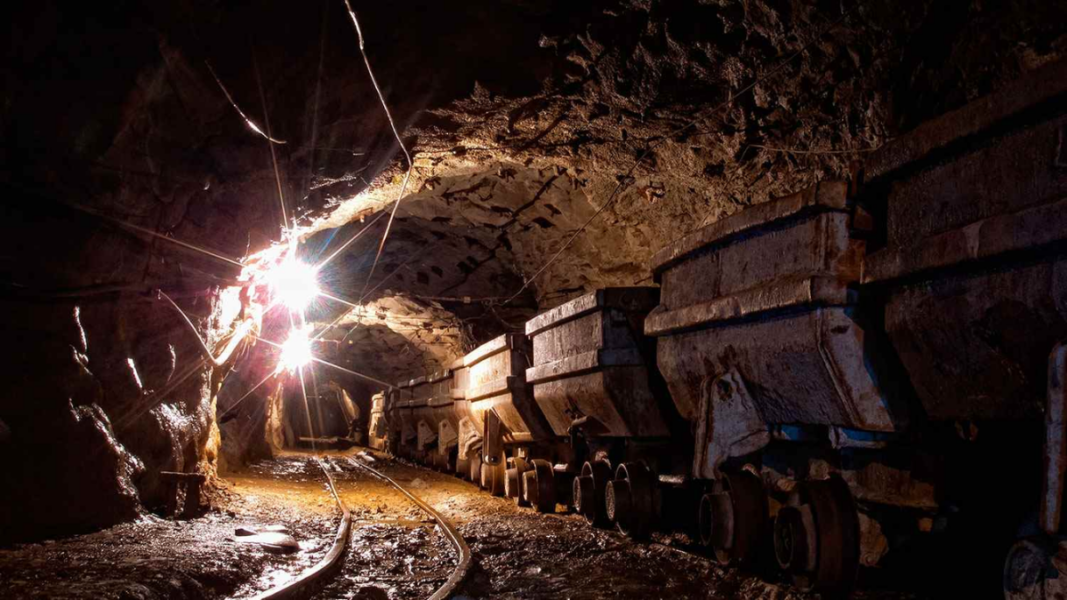
The Holy See presented this Friday a new international platform to promote divestment from the mining industry, an initiative driven by the Churches and Mining network and backed by more than 40 institutions, as announced at a conference held in the Vatican Press Room.
The project, framed within the Dicastery for the Service of Integral Human Development, is presented as a step toward the so-called “ethical coherence” in investments, with the aim of withdrawing financial support from extractive activities considered harmful to the environment and local communities.
An initiative with a strong ideological charge
During the presentation, Cardinal Fabio Baggio defended the need to rethink the current economic model, denouncing the social and environmental effects of mining in various regions of the world. In his speech, he insisted that this is not merely a financial decision, but a moral imperative linked to the care of the “Common Home,” in line with the encyclical Laudato Si’.
The discourse emphasized the idea that the exploitation of natural resources, when guided by economic profit, breaks the relationship between man, nature, and God. This vision, increasingly present in some ecclesial sectors, places the ecological debate at the center of pastoral action.
Testimonies against the extractive industry
The conference included markedly critical interventions on mining activity. Cardinal Álvaro Ramazzini recounted the case of a gold and silver mine in Guatemala, denouncing environmental damage, scant benefits for the local population, and an unfair distribution of profits.
Although he acknowledged that the activity was legal, he questioned its moral legitimacy, emphasizing that “not everything legal is just.”
In the same vein, Brazilian Bishop Vicente Ferreira denounced what he called “green capitalism” and warned about new forms of neocolonialism linked to the exploitation of strategic resources, especially in countries of the Global South.
Divestment as a tool for pressure
One of the central axes of the initiative is to promote the withdrawal of investments by ecclesial institutions in the mining sector. As explained by Combonian Dario Bossi, large extractive companies are deeply connected to the international financial system, making their transformation from within difficult.
In response, divestment is presented as an instrument to pressure the sector and denounce its impacts. The proposal follows similar precedents in areas such as fossil fuels or the arms trade.
However, this strategy raises questions about the role of the Church in the global economy and the boundaries between moral denunciation and the adoption of positions that may be interpreted as aligned with specific political agendas.
Between social doctrine and activism
The promoters of the platform insist that the initiative is based on the Church’s Social Doctrine and recent documents such as Mensuram Bonam, which guides ethical investments. They also recall that some episcopal conferences, such as that of Austria, have already excluded investments in mining and gold trade.
Nevertheless, the emphasis on concepts like “integral ecology,” “martyred territories,” or “resistance to the extractivist model” reflects a rhetoric increasingly close to social and environmental movements.
A new front in the Vatican agenda
The creation of this platform adds to the consolidation of the ecological issue as one of the priority axes in the Holy See’s action. Beyond the denunciation of specific abuses, the initiative aims at a broader review of the global economic system.